Table of Contents
How wonderful it is to be wandering around your garden, relishing the warm weather, balmy evenings and lush growth from recent rain. Until you detect a stench. You carefully check your shoes for dreaded dog poo, all clear. Sniffing around you look for clues. Thankfully, no rotting carcases either.
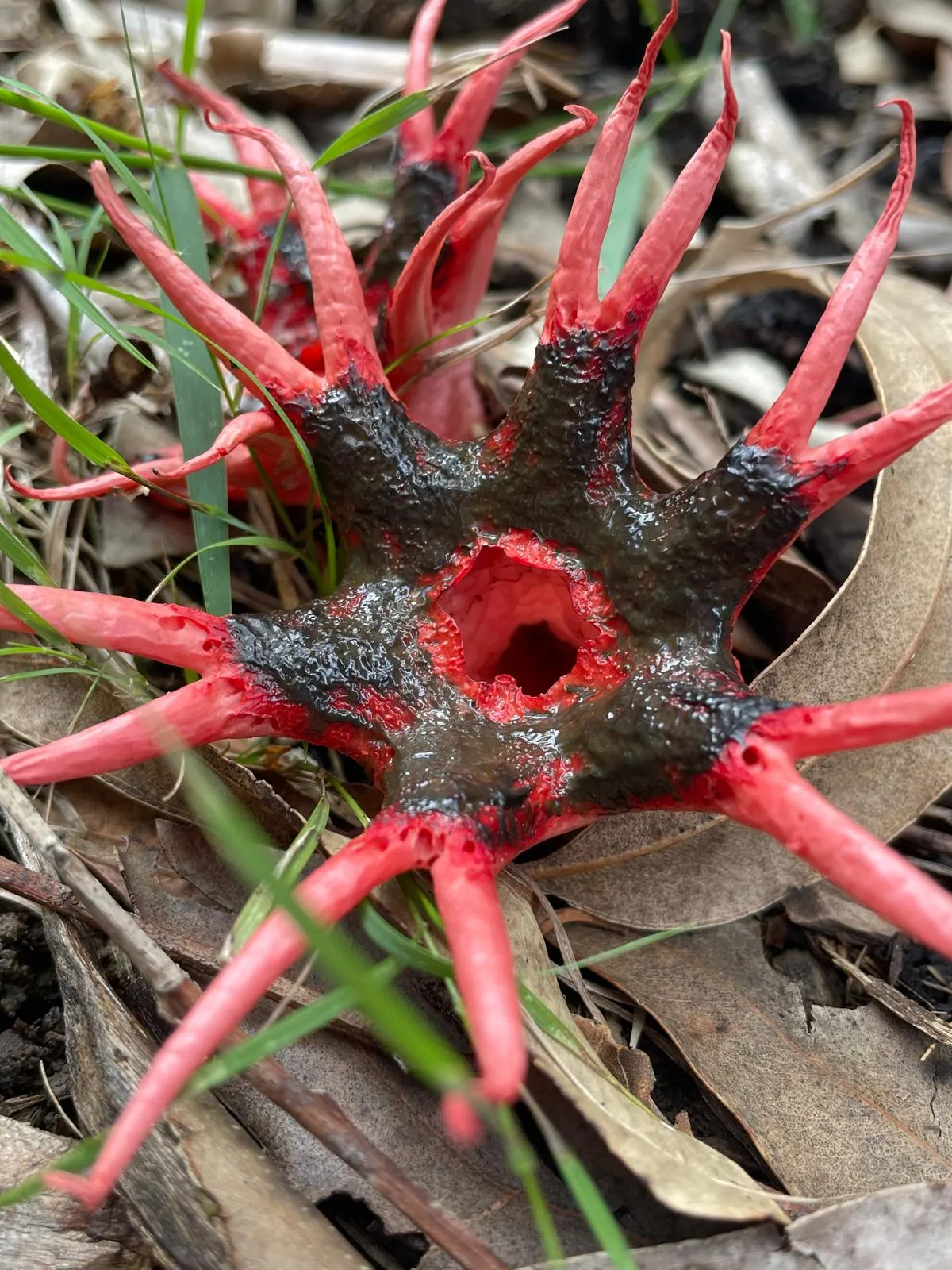
Then you spot something red on the ground. A starfish? Well, almost. It’s actually a stinkhorn fungus, and as you kneel closer to it, its name becomes obvious. Stinkhorns, also known as sea anemone stinkhorn and starfish fungus have evolved to be very attractive to flies. Their parfum de carrion is no accident. The red appearance mimics fresh meat, coated with a dark glistening slime, the source of its putrefying odour. Flies and beetles can’t resist it. Enthusiastically they land on the tempting tentacles where they pick up spores. These are then carried off by these insects, which is how this fungus spreads around. Despite their gruesome appearance, they are completely harmless.
They are one of the many naturally occurring species that are essential to breakdown dead plant material, returning nutrients to the soil. They particularly love wood chips and mulch piles in warm humid environments. They are harmless to touch, but if children or pets insist on eating them it would be wise to remove them. The “starfish” only last a few days and then breakdown into the soil.
Stinkhorns were the first fungus officially described by scientists in the earliest days of European settlement in the 1790s. Their spores were accidentally transported with plant specimens sent back to England and they soon appeared at Kew Gardens and later in north America. They are part of a larger family of fungi the Phallaceae, renowned for their bizarre shapes, some phallic, and with intriguing names such as Devils fingers, bridal veil and craypot stinkhorns.
As the weather cools, keep an eye out for the myriad of fungi and slime molds that relish the cooler wetter conditions. If you’ve never seen dog vomit mold or puffball fungi you are in for a treat! There is a huge array of shapes and colours, but most importantly these quiet achievers are an essential part of a garden ecosystem producing healthy soil.