Table of Contents
By Sarah Thompson
It’s a real scorcher outside, and keeping cool becomes an obsession. But while you’re busy setting up fans and reaching for the ice blocks, spare a thought for our native wildlife, they can’t soak in a spa or flop onto the lounge in air-conditioned bliss. However, there are simple things that you can do that make a big difference to their ability to survive the heat.
Australia’s wildlife is well adapted to the swings of nature’s climate pendulum, from droughts to floods. But when the mercury hits 40 degrees day after day, even they struggle. You might notice the wildlife in your garden are less active and you hear fewer birds calling. They’re saving their energy for the cooler parts of the day, meaning less time hunting for food. Insects and nectar producing plants also shut down during the heat, causing a food shortage for the birds and animals that rely on them.
Where possible, birds and mammals will move to a cool spot in shady gullies or thick, shrubby plants. Reptiles find refuge in rocky crevices or under fallen logs (which is a top reason to not disturb the forest floor). Those living in landscapes disturbed by agriculture and urban sprawl have fewer options.
Ever seen a bird panting with its beak wide open? It’s a sign of heat stress. Birds can’t sweat (imagine that with all those feathers!), so, just like dogs, panting is their way of cooling down. But here’s the kicker: it makes them even thirstier. So, when it’s stinking hot, water is crucial for them and for all the critters out there.
What Can You Do to Lend a Hand?
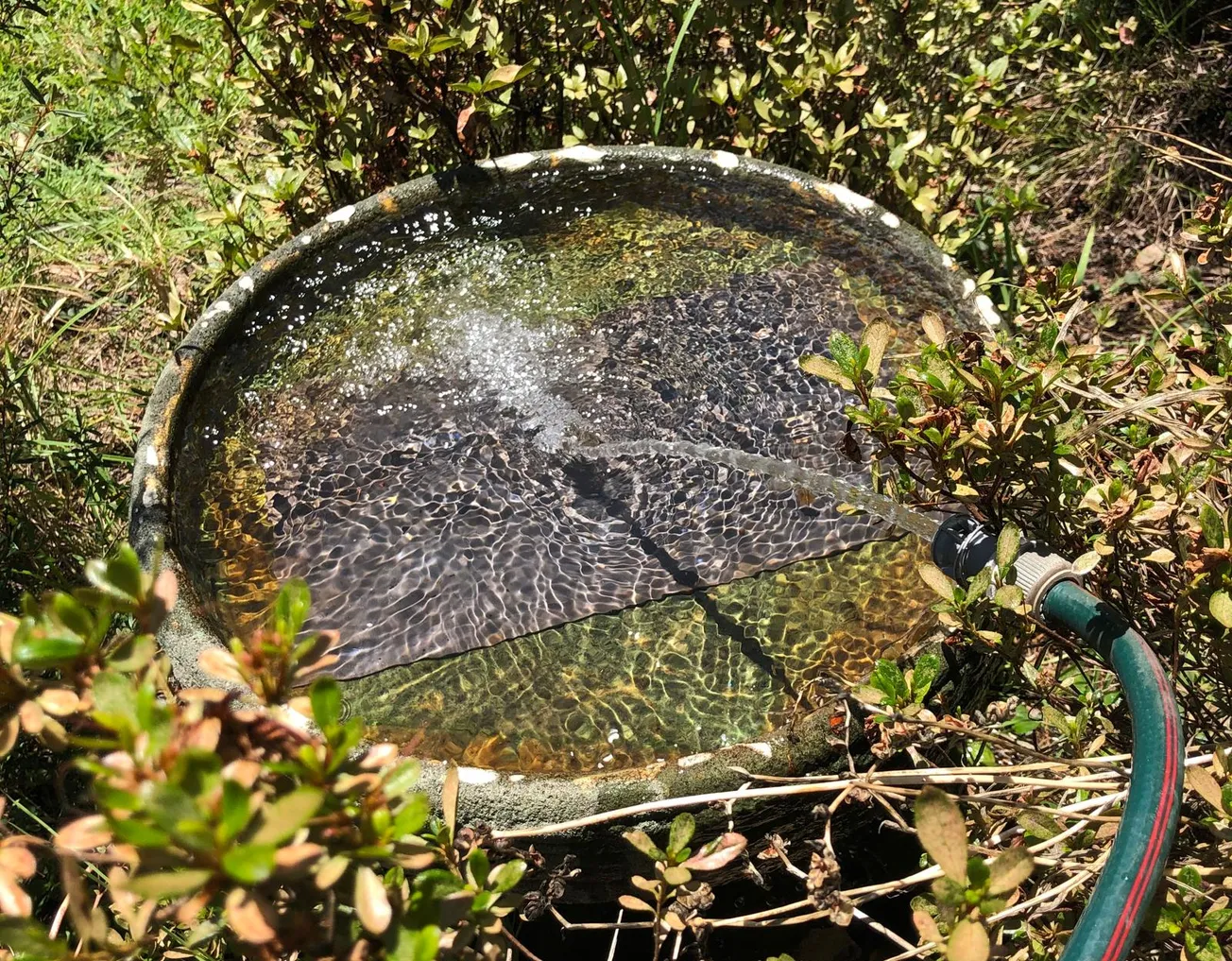
- Set up wildlife watering stations. Pop a few around your garden. Get creative! Ceramic plant pot saucers, upcycled salad bowls, rejuvenate a vintage concrete bird bath or whatever you’ve got handy. Aim for a few at different heights and tuck them near some shrubs so smaller birds can dodge any lurking predators. Locate them away from your pets—no one wants a nasty surprise at the water cooler!
- Keep it shallow: Less is more here—no deeper than 5 cm. Add a rock, branch, or even a chunky bit of rope. That way, small birds or the odd lizard can climb out easily, and you won’t have any accidental drownings.
- Make it lizard-friendly: If you put a bird bath down low to the ground, your garden friendly skinks and blue-tongues will thank you with a flick of their tongues.
- Keep it squeaky clean: Give the baths a rinse and refill every day with fresh water. Dirty water in a communal bowl is a recipe for spreading infections through the wildlife community.
- Top tip! Got a brass or copper plate lying about? Plonk it in the bath. It’ll prevent mozzies from breeding there and slow down any slimy algae too. Less cleaning for you, and a nicer dip for the birds!
Seeing your local birds take a morning bath is a great way to start the day. Remember our wildlife are doing it tough out there. A few simple steps in your garden can help keep them cool and safe plus you’ll get front row seats to some cracking wildlife action.