Table of Contents
Health authorities are warning Hawkesbury residents to be alert for signs of measles, as the highly contagious virus continues to spread across Sydney’s west, with outbreaks now confirmed in St Marys and Blacktown.
NSW Health has confirmed 11 measles cases in just three weeks, prompting an increased risk alert for the state. The latest two cases were diagnosed in Sydney this week after people, who were unknowingly infectious, attended the emergency departments at Nepean Hospital and Concord Repatriation Hospital.
People who visited Priceline Pharmacy at St Clair during the exposure period have also been advised to monitor for symptoms. NSW Health has stressed there is no ongoing risk at the listed locations, but anyone who attended at the specified times should remain vigilant.
“As people return from overseas holidays, it is expected that additional cases may be identified,” NSW Health warned. Measles outbreaks have been reported in several countries popular with Australian travellers, including Bali, Vietnam, Thailand, Cambodia, the Philippines, Malaysia, Pakistan and India.
Health Protection NSW executive director Dr Christine Selvey said residents should check the NSW Health website to see if they visited any exposure sites and closely monitor for symptoms.
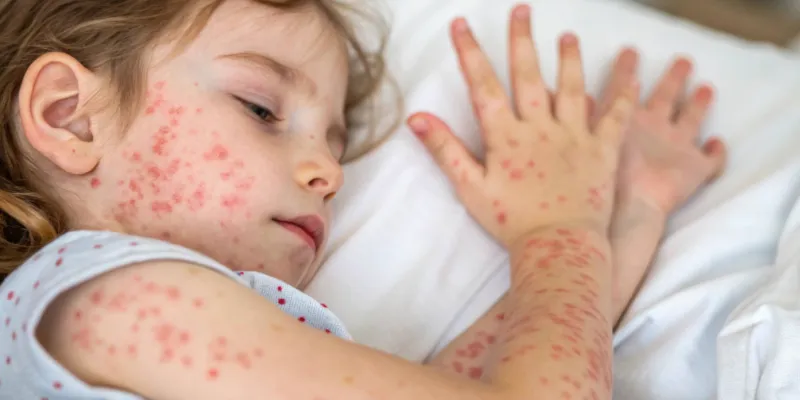
Symptoms include fever, runny nose, sore eyes and a cough, followed several days later by a red, blotchy rash that usually starts on the face and spreads across the body.
“If symptoms develop, and you’ve been at one of the locations at the time listed, see your doctor or health service, including an emergency department,” Dr Selvey said. She urged people to call ahead before attending a medical centre to avoid exposing others in waiting rooms.
Measles spreads through the air when an infectious person coughs or sneezes, and the virus can remain airborne for up to 15 minutes. NSW Health said if 10 unvaccinated people are exposed in the same room, up to nine are likely to become infected.
Children under five who are unvaccinated, adults who missed routine vaccinations, pregnant women and immunocompromised people are at greatest risk of serious complications. Up to one in three cases can lead to complications such as pneumonia, ear infections or diarrhoea, while rare but severe outcomes include brain inflammation and death.
Most recent NSW cases involve people who have travelled to, or visited from, countries where measles is endemic or experiencing outbreaks.
Dr Selvey urged the community to ensure vaccinations are up to date, noting that two doses of the measles vaccine provide lifelong protection in 99 per cent of people, and that vaccination can still prevent illness if given soon after exposure.
Residents are encouraged to remain alert, particularly as outbreaks continue to affect nearby areas including St Marys and Blacktown, and to seek medical advice promptly if symptoms develop.
This story contains information from Kate Aubusson, SMH story on Measles risk for Sydney 21 January 2026.