Table of Contents
Police across New South Wales are preparing to deploy new portable testing devices capable of measuring whether electric bikes comply with Australia’s 25 km/h motor-assist limit a move that is already sparking debate in regional communities like the Hawkesbury.
Under current NSW law, a standard pedal-assist e-bike (known as a pedelec) must cut motor assistance at 25 km/h. Riders can travel faster under their own pedal power, but once the motor continues assisting beyond that speed, the device may be classified as an unregistered motor vehicle.
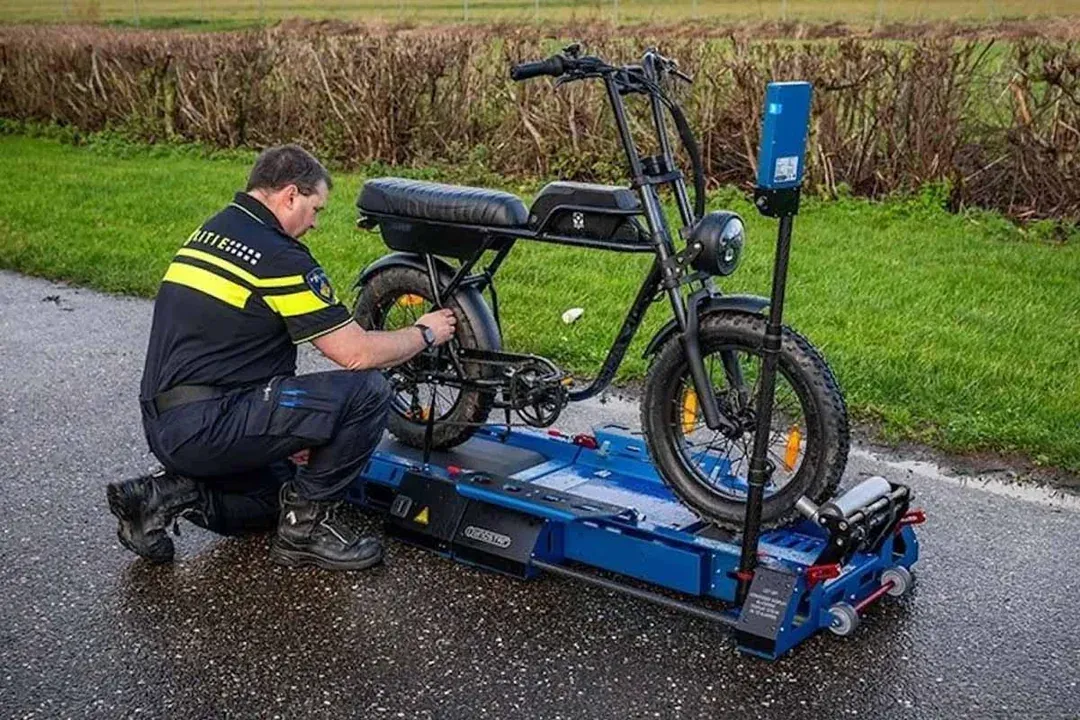
Now, NSW Police will be equipped with portable “dyno-style” testing units designed to check whether an e-bike’s motor cuts out at the legal limit. If a bike fails the test particularly if it has been modified officers will have the power to seize it.
Until now, determining whether a bike exceeded the legal assist threshold often required lengthy inspections and technical analysis. The new portable testing equipment enables roadside compliance checks, similar in concept to how heavy vehicles are tested.
The NSW Government has signalled that illegal high-powered e-bike/motorbike hybrids particularly those modified to travel well beyond 25 km/h will be targeted.
Authorities point to a rise in complaints about high-speed riding in pedestrian areas and on shared paths. Across Sydney and parts of Western Sydney, police have reported incidents involving groups of riders travelling at speed across major infrastructure and through traffic corridors.
While no local Hawkesbury-specific figures have been released, residents here are familiar with the growing presence of e-bikes from delivery riders to recreational cyclists and young commuters.
For communities like the Hawkesbury, e-bikes are more than a trend — they are increasingly a practical transport option.
With limited public transport, long travel distances, and growing fuel costs, electric bikes offer an affordable alternative for workers, students and families. For many young people, particularly in areas west of the river where services are stretched, an e-bike provides mobility that would otherwise be out of reach.
The key question is whether enforcement alone addresses the broader issue.
Transport planners and industry groups argue that infrastructure, education and clear retail standards are just as important as policing. They also warn that some riders may unknowingly purchase non-compliant bikes online without understanding the legal implications.
If an e-bike’s motor continues assisting beyond 25 km/h, it may be treated as an unregistered motor vehicle. Penalties can include fines, vehicle seizure and potential court action
Authorities have also flagged that modified bikes may be destroyed if deemed illegal.
Have you seen increased e-bike use locally? Do you think enforcement is the answer, or do we need better infrastructure?
Email the Hawkesbury Gazette at editor@hawkesburygazette.org.au.