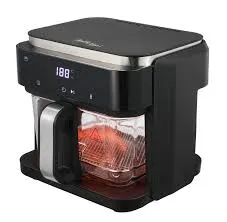
Air fryers have become a fixture in our kitchens, but growing public concern about PFAS chemicals and microplastics has left some households wondering whether the convenience comes with a hidden health risk.
For Hawkesbury residents, particularly those living on the Richmond Lowlands and surrounding areas, the letters PFAS are already familiar.
The Department of Defence has conducted extensive investigations into PFAS contamination associated with the historical use of firefighting foams at RAAF Base Richmond.
Investigations detected PFAS in soil, sediment, surface water, groundwater and some produce both on and off the Base. Authorities identified certain properties where people could potentially be exposed through home-grown produce grown in affected soil or where contaminated groundwater or surface water was used. Precautionary dietary advice was subsequently provided to residents of specific affected properties.
That history means concern about PFAS is understandably more than an abstract environmental issue for some Hawkesbury families.
But experts say the presence of a PFAS-related material in an air fryer does not automatically mean the appliance presents the same kind of exposure risk.
The reassuring message is that air fryers are generally considered safe when they are used and maintained correctly.
What is PFAS?
PFAS stands for per- and poly-fluoroalkyl substances, a very large family of manufactured chemicals.
Some PFAS are extremely persistent in the environment, which is why they are sometimes called “forever chemicals”.
At RAAF Base Richmond, PFAS contamination has been linked to aqueous film-forming firefighting foam used for firefighting and emergency-response activities between approximately 1976 and 2004.
The chemicals have attracted increasing international scrutiny because some forms can persist for long periods in soil, water and the human body.
However, experts stress that PFAS is a broad chemical family and the properties of one PFAS substance should not automatically be attributed to every other substance in the group.
What does this have to do with an air fryer?
Many conventional air fryers contain a non-stick coating called polytetrafluoroethylene, or PTFE, widely recognised through the brand name Teflon.
PTFE technically falls within the very broad PFAS family.
RMIT University chemistry professor Oliver Jones told ABC Lifestyle, however, that PTFE is a very large molecule and should not simply be treated as having the same characteristics or risk profile as some of the smaller PFAS chemicals that have generated environmental and health concerns.
Professor Jones said he regularly uses an air fryer himself and has no concerns about using one normally.
The key issue, experts say, is looking after the coating.
Scratching and peeling are the warning signs
University of Queensland environmental health researcher Dr Elvis Okoffo said the greatest potential concern arises when a non-stick surface becomes damaged.
Repeated use, scratching, chipping or peeling can allow small particles of the coating to detach.
While research specifically measuring exposure from air fryers remains limited, Dr Okoffo says visible damage is a clear indication that the affected basket or tray should be replaced.
Current evidence also suggests air fryers do not typically release microplastics under normal cooking conditions.
Air fryers generally operate below temperatures at which PTFE coatings begin to significantly degrade.
Research into microplastics and nanoplastics is still developing, however, and scientists continue to investigate their behaviour in the body and the possible effects of long-term exposure.
FIVE AIR FRYER SAFETY TIPS
1. Check the non-stick surface regularly
Look closely at the basket, drawer and cooking trays. If the coating is scratched, bubbling, peeling or chipping, consider replacing the affected component or the appliance.
2. Keep metal utensils out
Avoid knives, forks and sharp metal implements that can scratch non-stick coatings. Wooden or silicone utensils are a safer choice for coated baskets.
3. Handwash coated components
Use warm water, mild detergent and a soft sponge wherever the manufacturer's instructions allow. Abrasive scourers can damage the surface, while repeated dishwasher cleaning may accelerate deterioration.
4. Don't exceed recommended temperatures
Use the appliance as the manufacturer intended and remain within its specified temperature range. Unnecessarily overheating a non-stick coating can shorten its life.
5. Consider alternatives when buying a new appliance
Consumers who would prefer to avoid conventional PTFE coatings can look at air fryers using glass, stainless steel, ceramic or ceramic-coated food-contact surfaces.
Glass and ceramic alternatives growing in popularity
Consumer group Choice says the most common air fryers remain drawer-style machines with lightweight aluminium components covered by non-stick coatings.
But consumers now have considerably more choice.
Air fryers with glass bowls, stainless-steel baskets and ceramic or ceramic-coated cooking surfaces are becoming increasingly available.
Choice kitchen expert Fiona Mair says consumers have been showing increasing interest in glass and ceramic models.
Ceramic-coated appliances tested by Choice have performed well, while glass models offer another useful advantage people can see how their food is cooking without continually opening the appliance and allowing heat to escape.
Some glass cooking containers can also be transferred between the air fryer, refrigerator and dishwasher.
There are disadvantages.
Glass models can become extremely hot and are often considerably heavier than traditional drawers.
Stainless-steel baskets avoid conventional non-stick coatings but fine wire and mesh versions can sometimes be frustrating to clean.
What about the Hawkesbury's existing PFAS contamination?
The local history needs to be kept in perspective.
The NSW EPA says investigations associated with RAAF Base Richmond identified PFAS contamination arising from historical firefighting foam use and found potential exposure pathways at certain properties.
However, that does not mean the entire Richmond Lowlands or broader Hawkesbury is subject to the same level of risk.
The EPA has specifically stated that precautionary dietary advice applied to particular properties, rather than the wider area.
More recent testing also provides important context.
In January 2025, the NSW EPA sampled Hawkesbury River water at eight locations, including Richmond Bridge, Richmond Lowlands, Windsor and Pitt Town Bottoms.
All samples contained PFAS at levels well below national recreational-water guidelines.
The EPA said the results meant the community could continue swimming, boating and canoeing in the river in relation to PFAS risk.
At Richmond Lowlands, the January 2025 testing recorded PFHxS plus PFOS at 0.0068 micrograms per litre compared with the applicable recreational-water guideline of 2 micrograms per litre.
Fish sampling associated with the Richmond investigation has also not resulted in additional PFAS-specific dietary restrictions for the general community, beyond normal advice about consuming a variety of seafood.
PFAS nevertheless remains an active environmental issue.
The NSW EPA commenced a broader statewide PFAS ambient monitoring program in 2026, which includes the Hawkesbury catchment, with results expected to be published later this year.
No need to throw out a good air fryer
For consumers worried about PFAS, the expert advice does not suggest people should throw away a properly functioning air fryer simply because it has a PTFE non-stick coating.
Instead, the sensible approach is to look after it.
Don't attack the basket with a metal knife.
Don't continue cooking on a surface that is visibly peeling.
Avoid harsh cleaning methods.
And if buying a new machine and you remain uncomfortable with conventional non-stick surfaces, glass, stainless-steel and ceramic alternatives are readily available.
For Hawkesbury households already familiar with the environmental debate surrounding PFAS, asking questions about the materials used in everyday products is understandable.
The important distinction is that “contains a material classified within the PFAS family” does not automatically mean “presents the same risk as PFAS contamination in soil or water”.
When it comes to the air fryer sitting on the kitchen bench, experts say the practical advice remains reassuringly simple:
Use it properly, keep the coating intact, and replace damaged cooking surfaces.
Information in this story was sourced from ABC Lifestyle by Anna Chisholm on Air Friers https://www.abc.net.au/news/2026-08-07/expert-advice-air-fryers-concerned-pfas-microplastics/106976094?