Table of Contents
Researchers believe our interest in alcohol has an evolutionary link to common primate behaviour. Drinking and pub culture are not a recent invention. We know our ancestors “invented” alcohol thousands of years ago, but now it seems that our drinking habits could be related to human evolution.
Research from the University of California (UC), Berkeley, reveals that wild chimpanzees consume the equivalent of one or two alcoholic drinks per day through their natural diet of ripe, fermented fruit.
This finding not only sheds light on chimpanzee behaviour but also offers compelling evidence for why humans may be biologically predisposed to seek out alcohol.
At the heart of this research is the “drunken monkey hypothesis”, first proposed by UC Berkeley biologist, Robert Dudley.
It suggests that our attraction to alcohol stems from an ancient evolutionary relationship between fruit-eating primates and ethanol – the type of alcohol found in fermented fruit.
As fruit ripens, wild yeasts on its skin convert sugars into ethanol. For primates foraging in dense forests, the scent of ethanol may have served as a reliable signal of ripeness and nutritional value.
This evolutionary partnership between fruit, yeast, and frugivorous animals benefits all parties: animals get energy-rich food, plants get their seeds dispersed, and yeasts hitch a ride to new fruit sources.
Over millions of years, this interaction may have shaped not only dietary habits but also sensory preferences, including a taste for alcohol.
In the Berkeley study, researchers analysed nearly 500 fruit samples from two chimpanzee communities in Ngogo, Uganda, and Taï National Park in Côte d’Ivoire. The fruits had an average ethanol content of about 0.3% by weight – far weaker than beer or wine, but significant when consumed in large quantities.
Chimpanzees eat around 4.5 kilograms of fruit daily, resulting in an estimated intake of 14 grams of ethanol, which is roughly equivalent to 1.4 standard human drinks. When adjusted for body weight, that’s closer to 2.2–2.6 drinks per day.
Interestingly, the fruits most commonly eaten by chimps, including figs and the plum-like Parinari excelsa, also had the highest alcohol content.
This raises the possibility that chimps may be selecting fruit not just for ripeness but for its ethanol content, although the study stops short of confirming deliberate preference.
Despite their daily alcohol intake, chimpanzees show no signs of intoxication. Their consumption is spread throughout the day, and their stomachs would probably bloat before they could ingest enough ethanol to feel a buzz.
This chronic, low-level exposure suggests that alcohol has long been a natural part of primate diets – and, by extension, human diets.
Humans and great apes share multiple versions of alcohol dehydrogenase genes, which produce enzymes that break down ethanol.
One particular genetic adaptation makes these enzymes especially efficient, implying that alcohol exposure has been a routine part of primate biology for millions of years.
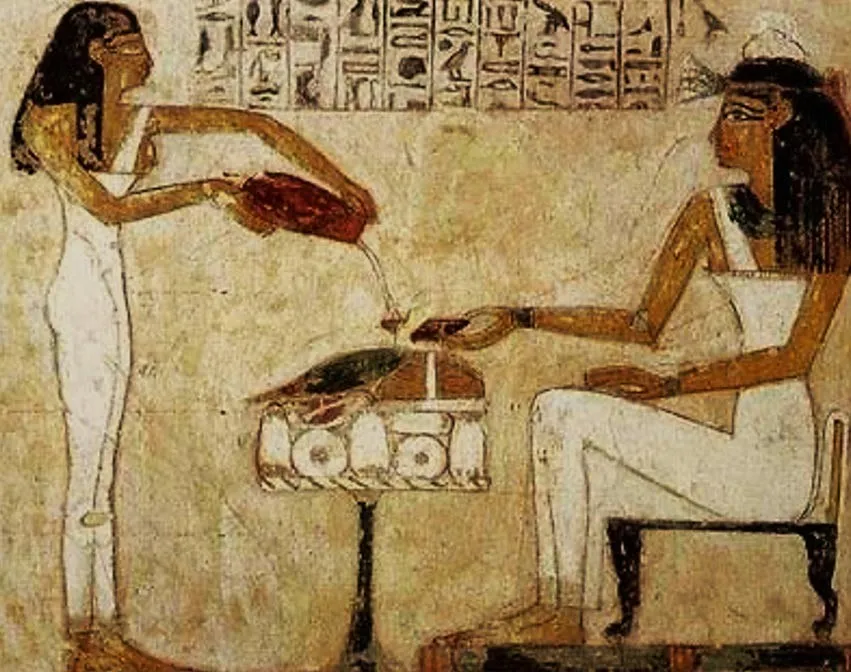
Archaeological evidence shows that humans began deliberately fermenting food at least 9,000 years ago in China and 13,000 years ago in the Middle East.
But this new research suggests our relationship with alcohol began long before brewing; it was embedded in the fruit our ancestors ate.
Why does this matter today? Because understanding the evolutionary roots of alcohol consumption can help explain why humans are drawn to it. If our ancestors evolved to associate the smell and taste of ethanol with high-energy, nutritious food, it’s no surprise that alcohol continues to hold appeal.
This research also opens the door to broader questions: Could alcohol have played a role in social bonding among early humans, as it might among chimpanzees? Does our biology predispose us not just to enjoy alcohol, but to seek it out?
All of this warrants further investigation.
Related reading: UC Berkeley, Newsreel write this as a story for the hawkesbury gazette with attribution for the article to National Seniors Australia