Long before violent frontier conflict transformed the Hawkesbury, one of the earliest recorded meetings between Aboriginal people and British colonists on the river began with conversation, gift-giving, food and an overnight camp.
In April 1791, just three years after the First Fleet arrived at Sydney Cove, Governor Arthur Phillip led an expedition west to answer an important geographical question.
Were the waterways the British had named the Nepean and the Hawkesbury actually the same river?
Among the party was Marine officer Watkin Tench, whose detailed written account provides one of the earliest surviving descriptions of Aboriginal people living in the Hawkesbury-Nepean district.
Tench's account is particularly important because he recorded individuals by name and described their conversations, relationships, skills and behaviour rather than simply referring to Aboriginal people as an anonymous group.
The expedition left on April 11, 1791.
Phillip and Tench were accompanied by Judge Advocate David Collins, surgeon John White, Lieutenant William Dawes, soldiers and two Aboriginal men from the Sydney area, Colbee and Boladeree.
It was the presence of Colbee and Boladeree that helped make the encounters which followed possible.
Meeting the people of the river
Before reaching the river, the expedition encountered an Aboriginal man named Bereewan.
According to Tench, Bereewan identified himself as belonging to the Boorooberongal, a name associated with Dharug people of the western Sydney and Hawkesbury-Nepean country.
Colbee introduced himself and explained that the Europeans travelling with him were friends.
Bereewan approached without weapons, spoke with the Aboriginal members of the expedition and accepted food before leaving.
It was an early indication that Aboriginal diplomacy, communication and existing relationships between different groups were playing an important role in mediating contact with the newcomers.
But an even more remarkable meeting was to follow.
A canoe approaches
On Thursday, April 14, 1791, Phillip's party was travelling beside the river when Aboriginal people appeared in canoes.
Colbee and Boladeree initially instructed the Europeans to remain out of sight among the reeds while they called to the people on the water.
Eventually one man paddled towards them.
His name, as Tench recorded it, was Gombeeree.
What followed was not a confrontation.
It was an exchange.
Gombeeree brought two stone hatchets and two spears from his canoe and presented them to Governor Phillip.
Phillip responded by giving him two European hatchets and some bread.
The bread was apparently unfamiliar to Gombeeree until Colbee demonstrated that it was food.
The moment, recorded more than 235 years ago, represents one of the earliest detailed descriptions of exchange between Hawkesbury Aboriginal people and Europeans.
Rather than violence, the encounter began with introductions, curiosity and reciprocal gifts.
Yellomundee joins the camp
Another canoe followed the expedition.
In it were a man Tench recorded as Yellomundee and a young boy named Deeimba.
The name Yellomundee has subsequently appeared in various forms, including Yarramundi and Yellomundy, and remains deeply connected with the Hawkesbury-Nepean landscape today.
When Phillip's expedition stopped beside the river, Gombeeree introduced Yellomundee and Deeimba to the visitors.
Tench was struck by how comfortable the Hawkesbury men appeared in the company of the newcomers.
They sat beside the expedition's fire and shared food and drink.
Their wives and children remained on the opposite side of the river and called across the water.
According to Tench, the men showed little fear even when firearms were discharged nearby.
The two groups eventually spent the night camped together.
It is an extraordinary scene when viewed from the perspective of what would happen in the Hawkesbury only a few years later.
A respected healer
Tench's description of Yellomundee also provides one of the earliest European records of Aboriginal healing practice in the district.
Colbee had previously suffered a spear wound.
Yellomundee performed a ritual involving water and attending to the site of the old injury.
Tench recorded that Colbee regarded Yellomundee as a “caradyee” — a term Tench interpreted as meaning a doctor or healer.
Yellomundee therefore appears in the written record not simply as a man encountered beside the river, but as a person of knowledge and standing within his community.
Tench also recorded a quieter moment during the night.
He observed Yellomundee sleeping with the young Deeimba in his arms and carefully repositioning the child whenever he moved.
It is one of the small human observations that makes Tench's account particularly valuable.
Instead of describing an abstract population, he recorded people caring for children, sharing food, talking, demonstrating skills and negotiating relationships.
Extraordinary skills on display
The following morning, Gombeeree demonstrated another skill that astonished the Europeans.
Using a stone axe, he cut footholds into a tree and climbed rapidly up the trunk.
Tench was impressed by both the technique and the speed with which it was performed.
For Aboriginal people of the Hawkesbury-Nepean, climbing trees was part of a sophisticated system of obtaining food and other resources from the landscape.
To Europeans unfamiliar with those techniques, the demonstration was remarkable.
When the groups separated, Tench recorded that they shook hands before the expedition continued.
A peaceful beginning before conflict
The importance of the April 1791 meeting becomes clearer when placed beside what followed.
Permanent European agriculture began expanding onto the fertile Hawkesbury river flats from 1794.
Those flats had supported Aboriginal communities for generations.
The river provided fish, shellfish and water, while the surrounding country supplied plants, animals and other resources essential to life.
European occupation increasingly restricted Aboriginal access to those resources.
Crops and livestock transformed the landscape and settlers occupied strategically important river flats.
Conflict followed.
Aboriginal resistance and increasingly violent colonial reprisals developed into what historians now often describe as the Hawkesbury-Nepean Wars.
For decades the district would become one of the most contested areas of the early colony.
People were speared, shot and killed on both sides, while Aboriginal communities experienced profound loss of land, population and freedom.
Against that later history, Tench's description of April 1791 is particularly poignant.
Only a few years before the struggle over the river flats intensified, Aboriginal people and Europeans had sat around the same fire.
They exchanged tools.
They shared food.
A healer demonstrated his knowledge.
A father or elder cared for a sleeping child.
And when morning came, they shook hands.
Tench was not there for the first exploration
There is an important distinction in the historical record.
Governor Phillip first explored and named the Hawkesbury River during an expedition in 1789.
Tench did not accompany that journey.
He later explained that he had been stationed at Rose Hill and therefore missed the expedition.
His writings nevertheless recorded accounts of those earlier explorations, including disturbing observations that Aboriginal people along the river had been affected by the devastating smallpox epidemic then sweeping through communities around Sydney.
Tench's own direct encounter with Hawkesbury Aboriginal people came during the 1791 expedition.
That makes his description of Gombeeree, Yellomundee, Bereewan and Deeimba one of the most significant eyewitness accounts of the early Hawkesbury.
A story still written across the landscape
More than two centuries later, the names and history of those encounters remain embedded in the district.
Yarramundi, near the junction of the Grose and Nepean-Hawkesbury river system, carries a name associated with Yellomundee.
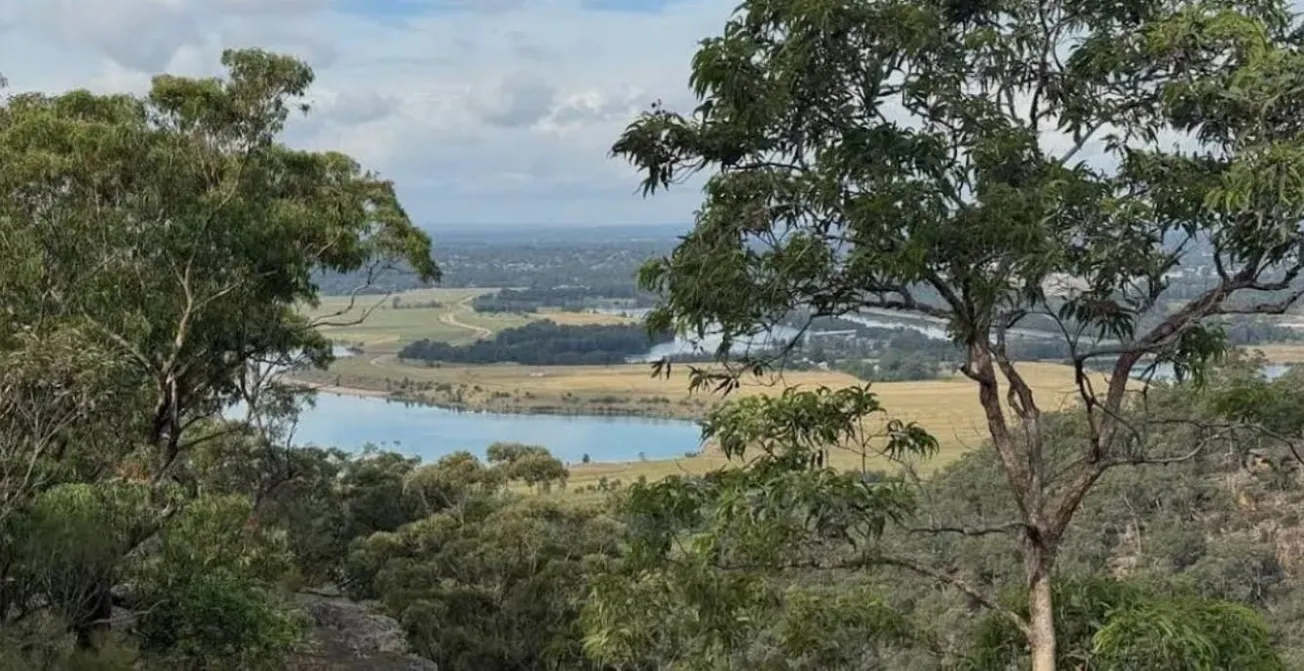
The river itself continues through the same landscape in which Aboriginal communities had lived for thousands of years before Phillip and Tench arrived.
The 1791 meeting should not be romanticised. The Europeans represented a colony that would soon occupy Aboriginal land on a massive scale, and the peaceful contact recorded by Tench did not prevent the dispossession and violence that followed.
But neither should that first detailed encounter be forgotten.
Before the frontier wars, before the farms spread across the river flats and before the Hawkesbury became one of the colony's principal agricultural districts, Gombeeree and Yellomundee met the newcomers beside the river.
For a brief moment, the relationship between the two worlds was still being negotiated through conversation, hospitality and exchange.