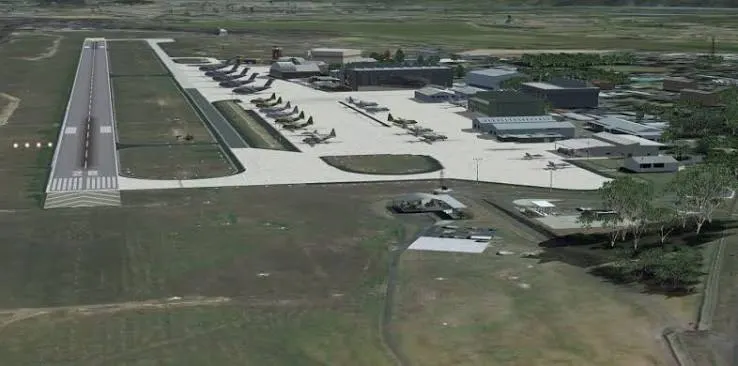
An engineer with a commercial interest in PFAS-remediation technology has argued that governments should focus on controlling contamination at its source rather than relying on monitoring alone, a principle that has relevance to the continuing remediation program at RAAF Base Richmond.
Grant Scott, a chartered engineer, lawyer and co-founder and principal consultant of Ambiolock, made the general argument in an article published by engineering and construction website Sourceable on August 17. His article did not specifically assess RAAF Base Richmond.
“Testing tells us where PFAS is but it does not stop where PFAS goes,” Mr Scott wrote.
Ambiolock markets products intended to immobilise PFAS in contaminated soil and infrastructure. That commercial interest is relevant when considering Mr Scott’s proposed approach, although the broad principle of addressing major source areas is consistent with Defence’s stated Richmond remediation strategy.
Defence says PFAS contamination associated with the historic use of firefighting foam at the base moves primarily through surface-water drains to the east. Its website, last reviewed on February 20, said further remediation works that began in 2025 were expected to be finalised during 2026. The Gazette has asked Defence to confirm their current status and provide any available measurements of their effectiveness.
The latest location-specific Hawkesbury River results published by the NSW EPA come from samples collected at eight locations on January 29, 2025. The measured concentrations were well below the recreational-water guidelines used by the EPA. A newer statewide monitoring program that includes the Hawkesbury catchment is expected to report results later in 2026.
What is PFAS?
PFAS is the collective name for thousands of manufactured per- and polyfluoroalkyl substances.
The chemicals have been used in firefighting foams and numerous industrial and consumer products because they resist heat, water, grease and oil.
That same chemical stability means many PFAS compounds break down extremely slowly. They are commonly described as “forever chemicals” because they can remain in soil, water, wildlife and the human body for years.
Mr Scott said PFAS could move through drainage systems, waterways and food chains, potentially extending contamination well beyond the place where the chemicals were originally used.
He said firefighters were among the first people seriously exposed after using PFAS-containing foams for emergency responses and training, often without knowing the possible long-term consequences.
The Richmond contamination pathway
The Department of Defence has conducted extensive investigations into contamination associated with the historic use of firefighting foam at RAAF Base Richmond.
Defence says its PFAS movement assessment found that most contamination leaving the base travels through surface-water drains on its eastern side.
Water moving through the upper layer of contaminated soil was identified as the principal pathway. Groundwater along the base’s northern boundary contributed less than 10 per cent of the PFAS leaving the site, according to Defence.
That finding strengthens the case for concentrating remedial work on contaminated source areas and the drainage pathways that allow PFAS to move beyond the base.
Defence says the overall human exposure risk associated with RAAF Richmond is generally low. However, its assessment identified potentially elevated exposure scenarios for some people regularly consuming home-grown produce from affected areas.
Precautionary dietary advice has previously been issued to help residents reduce possible exposure.
Work underway at the base
Defence completed remediation work at the former fire-training area in 2021.
The process involved treating PFAS-affected soil with activated carbon. The carbon binds with PFAS and is intended to reduce the amount released when rainwater moves through the soil.
The treated soil was returned to the site and covered with uncontaminated topsoil to reduce erosion.
Further work began in 2025 around the fire station, foam-cannon testing area and aircraft taxiways near the former training ground. Defence expects those works to be completed during 2026.
The department says the objective is to minimise the quantity of PFAS leaving the base by treating and managing the principal source areas.
It anticipates that completing the remediation program will reduce PFAS entering the base drainage system and, over time, lower the amount reaching the wider management area.
Surface water, groundwater and sediment continue to be monitored on and around the base.
Hawkesbury River results provide reassurance
Recent NSW Environment Protection Authority testing provides some reassurance about recreational use of the Hawkesbury River.
In January 2025, the EPA sampled water at eight locations between North Richmond and Pitt Town Bottoms. The locations included Richmond Bridge, Richmond Lowlands, Rickabys Creek, Windsor Beach and Windsor Bridge.
The EPA reported that all PFAS detections were well below the national recreational-water guidelines and assessed the risk associated with community use of the river as low.
It said swimming, boating and canoeing could continue, subject to the usual advice to avoid swimming for three days after heavy rain.
Testing of sea mullet, estuary perch and Australian bass from the Hawkesbury River also led the NSW PFAS Taskforce to conclude that no additional PFAS-specific dietary precautions were required. General advice to eat two to three servings of seafood each week from a variety of species and sources remains in place.
These results do not mean PFAS has disappeared. They indicate that concentrations measured in the river were below the applicable recreational guidelines at the time of sampling.
Who carries the long-term burden?
Mr Scott said the broader public-policy question was whether governments should accept an indefinite cycle of testing and managing contamination after it has spread or invest more heavily in preventing further migration from highly contaminated areas.
He argues that an effective PFAS strategy requires a combination of:
- preventing additional use and release;
- identifying and controlling source areas;
- containing contaminated soil and infrastructure;
- treating affected material where practicable;
- interrupting exposure pathways; and
- maintaining long-term environmental monitoring.
Mr Scott said there was no single technology capable of removing all PFAS from the environment.
Ambiolock Australia, the company he represents, markets Australian-developed products intended to immobilise PFAS in contaminated soil and infrastructure, including concrete pavements at firefighting training areas.
That commercial interest should be disclosed when considering his proposed approach. However, the broader principle of controlling contamination at its source is consistent with Defence’s stated remediation strategy at RAAF Base Richmond.
Public accountability
The long-term challenge for the Hawkesbury is ensuring that remediation is judged by measurable reductions in contamination leaving the base—not simply by whether planned works have been completed.
Important questions include:
- How much PFAS was leaving RAAF Base Richmond before remediation began?
- How much is leaving now?
- What reduction is expected after the current work is completed?
- How long will monitoring continue?
- What action will be taken if contamination levels do not decline?
- How will affected landholders be informed about changing risks?
- Who will carry the cost if continuing contamination restricts the use or value of private land?
Mr Scott’s central argument is that communities should not be left with an indefinite environmental and financial burden created by historic chemical use.
For Richmond and the surrounding Hawkesbury floodplain, the test will be whether remediation at the base produces a sustained and independently verifiable reduction in PFAS entering drains, waterways and neighbouring land.
Defence’s RAAF Base Richmond PFAS program and the NSW EPA’s Hawkesbury River results provide current official information. Mr Scott’s original argument is available in his Sourceable article.