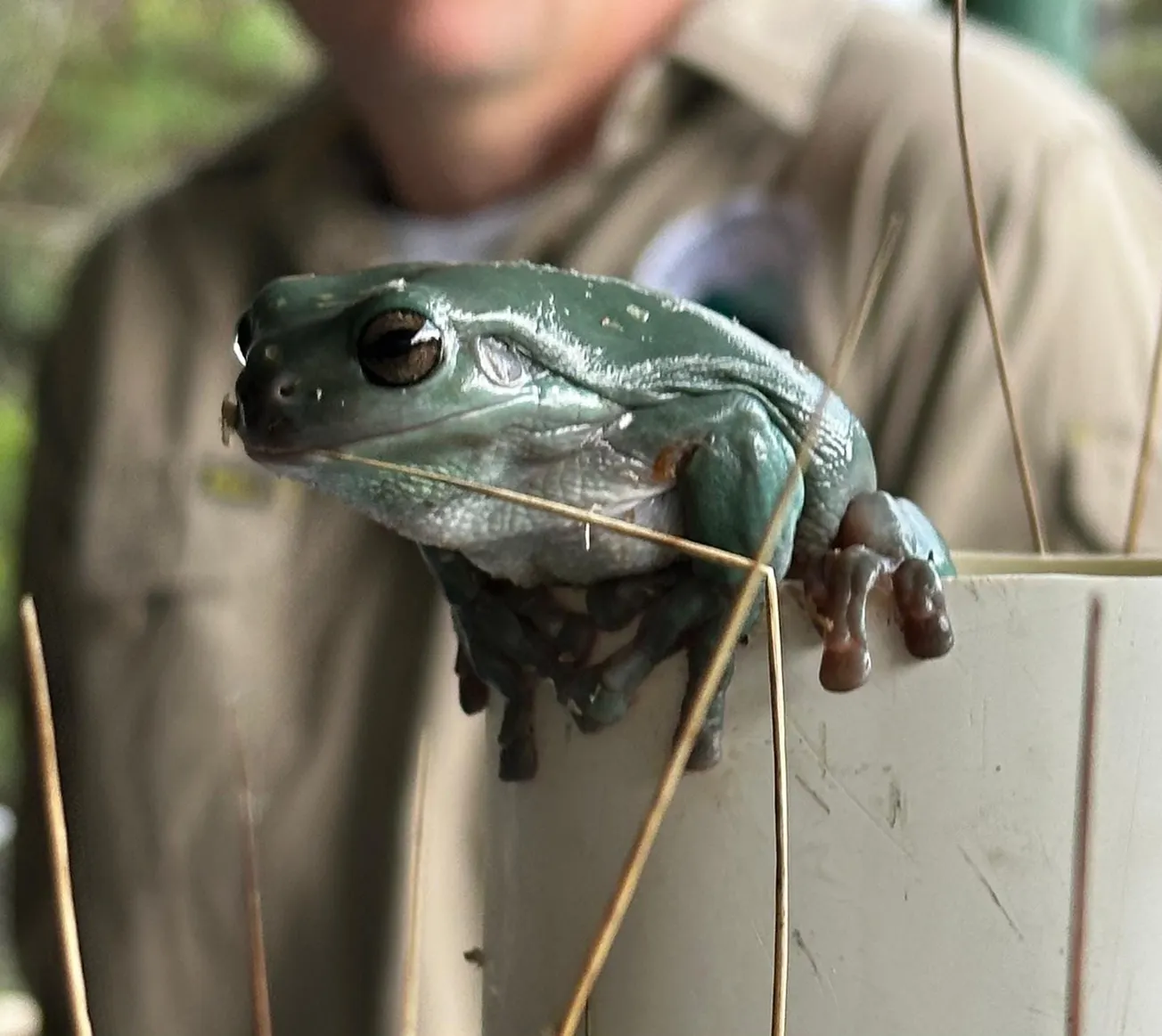
An enthusiastic knot of frog fanciers hopped into Kurrajong Heights Bowling Club last Sunday for a free community event hosted by Mountains for Wildlife. Evergreen ecologist Tom Covell from Hooked on Nature had his audience entranced for Frog Funday Sunday. Toms' key message was that healthy habitat underpins all aspects of nature, and it is the basis of a complex and functioning ecosystem. The theme of the day was how to turn your backyard into a 5 STAR Frog Resort. Participants made their own frog hotels and learned why frogs need a “sauna” in winter. The star of the show was Freddo the green tree frog, who loved the frog Hilton created for him and posed obligingly.
A frog-friendly garden is basically nature’s five-star review. Because frogs breathe and drink through their delicate, permeable skin, they are understandably fussy about clean water, healthy soil and a balanced ecosystem. In other words, if your garden isn’t croaking, it may be cooked. When frogs, lizards, birds and beneficial insects are allowed to get on with the job, your garden needs far fewer chemical interventions. Herbicides, insecticides and fungicides don’t stop neatly at weeds, snails or caterpillars; they send shockwaves through the entire backyard buffet, affecting bees, butterflies, moths, bugs and the many animals that rely on those insects for food. The famous “windshield effect” tells the story: decades ago, a country drive often ended with a windscreen plastered in insects; today, far less so. Habitat loss, pesticide use and climate change have all played their part. With around 80 percent of the world’s flowering plants relying on pollination, including many of our food crops, every garden that welcomes wildlife becomes part of the solution. Frogs happily feast on mossies, aphids, beetles, slugs and other garden gate crashers hanging around your veggie patch, flower beds and summer BBQ. Let them do the dirty work. In the ultimate act of self-sacrifice, frogs also become dinner for birds and reptiles, helping keep your garden’s food web ticking along with balance and diversity.
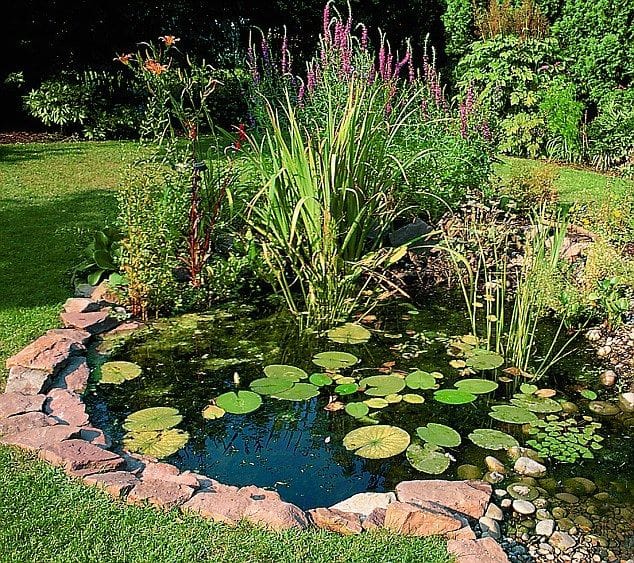
So, let’s hop straight into why and how of your 5 STAR frog resort, complete with a pool, hotel and sauna. The pool is the nursery and tadpole training centre where the next generation gets its start. The hotel is the daytime hideaway, especially handy in new gardens or compact spaces where dense planting is still on the way. Think cool pipes, shady pots and secret little rooms where frogs can avoid the heat, the sun and nosy neighbours. And the sauna? That’s the winter wellness centre. Solar-heated frog saunas give frogs a warm retreat that may help them resist chytrid fungus, a deadly skin disease threatening frogs around the world. Build the pool, open the hotel, warm up the sauna, and before long they will be hopping into your luxury amphibian retreat.
Mountains for Wildlife – Hawkesbury and Blue Mountains is a community-led, not-for-profit conservation group based in the lower Blue Mountains. The organization focuses on hands-on activities to regenerate habitat and to enhance community awareness of native and introduced wildlife in the region. They host free events during the year and can be contacted through their Facebook page.
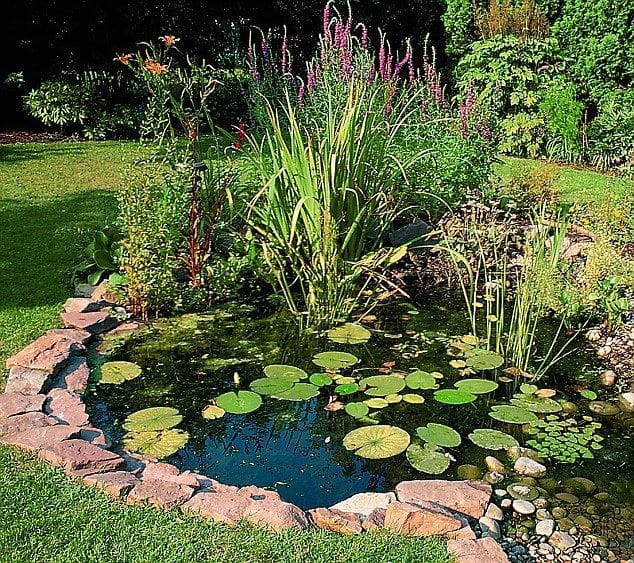
A Perfect Pond
Location Location Location
- Choose a quiet, sheltered spot with nearby plants, logs or leaf litter for cover.
- Aim for morning sun and afternoon shade so the pond does not overheat.
- Keep it away from pesticide, herbicide and fertiliser runoff.
- Avoid placing it under trees that drop leaves or too close to bedrooms
How to build
- Use a non-toxic pond liner, old spa bath or prefabricated pond shell.
- Make gently sloping sides so frogs, froglets and small wildlife can get out easily.
- Include shallow shelves, a damp bog edge and a section about 50–70 cm deep.
- Add rocks, logs, branches and washed gravel for shelter, texture and safe entry points.
Planting and habitat
- Plant local native grasses, sedges, rushes and groundcovers around the pond edge.
- Add native aquatic or semi-aquatic plants suited to your area.
- Keep some open water, plus dense edge cover for hiding and calling.
- Before you add plants check out Sydney Weeds Network as some pond weeds will take over
- Leave mulch, leaf litter, rocks and logs nearby as daytime shelter.
Maintenance and safety
- Top up during dry weather from tank water or stored (chlorine-free) tap water
- Remove excess rotting leaves by hand.
- Trim plants lightly rather than clearing all cover.
- Check local pool safety requirements if children can access the pond.
- Keep pets away.
- Be patient: frogs will arrive if they already live nearby and the habitat stays moist, quiet and chemical-free.
- Resist the temptation to “seed" it with tadpoles from another pond. Allow nature to choose who stays at your resort.
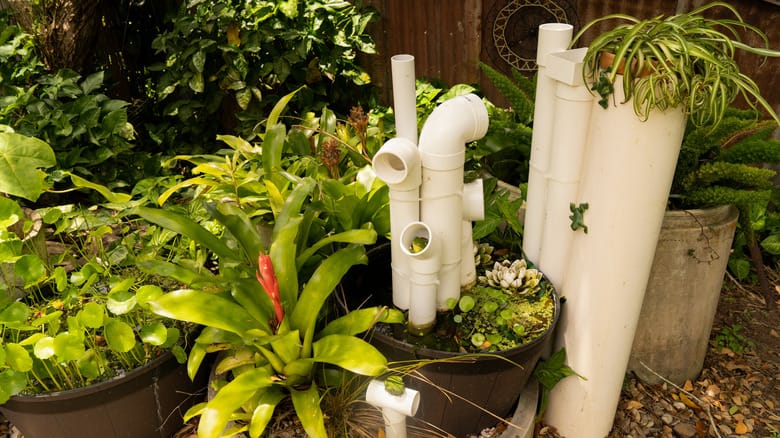
Your Frog Hilton Hotel
What You Will Need
- A ceramic pot with no drainage hole, or a plastic bag to line a pot with holes
- Clean gravel, pebbles or small river stones
- Plastic pipes or PVC pipes in a few widths and lengths
- Sandpaper for smoothing cut pipe edges
- Frog-friendly plants, such as native sedges, reeds, rushes or other moisture-loving plants suited to your area, garden herbs work well too
Get the Site Right
Position the pot so it gets enough light for plants to grow but is protected from hot blazing sun. Frogs like warmth in winter. In summer they will move to the deeper cooler part of the pipe, in winter they will sit in the warmer above ground section. If you’re planting herbs keep the pot near your kitchen.
Prepare the Pipe Rooms
Cut the plastic pipes into different lengths so the finished hotel has a varied skyline. Smooth every cut edge with sandpaper. The pipes will stand upright inside the pot.
Add Gravel and Secure the Pipes
If your pot has a hole in the bottom, line it with a plastic bag, then pour in the gravel deep enough to hold the pipes in place. The gravel anchors the pipes, keeps them upright and creates gaps where water can collect without making the hotel too deep.
Add Water and Plants
Plant moisture-loving native plants or herbs around the pipes, back fill with potting mix. The goal is to create shade, cover and humidity without blocking every pipe entrance.
Finish the Five-Star Details
Add a few larger stones, bark pieces or leafy plants around the pot so frogs can approach safely and hide nearby. For the “Hilton” touch, arrange the pipe openings at different heights like a luxury tower.
Care and Maintenance
- Keep the hotel damp, especially during hot or dry weather.
- Top up with rainwater or dechlorinated tap water only.
- Avoid pesticides, herbicides and harsh chemicals – they harm the frogs and the insects they eat
- Leave the hotel mostly undisturbed once frogs discover it.
A Solar Sauna
Why frogs need a sauna
- A frog “sauna” is a small, warm shelter that they love!
- Australian research has shown that this clever design can help frogs raise their body temperature and fight the deadly chytrid fungus which attacks their skin.
- Chytrid fungus kills frogs around the world and has made some species extinct.
- It thrives in cold moist conditions, so winter is when frogs are most vulnerable
- Late autumn/Winter/early Spring are the key seasons to have your sauna available.
- Place it where frogs already live such as near a pond or dam, in the sunniest spot
- Choose a spot that receives winter sun, because the sauna works by absorbing sunlight.
- The shelter should offer a choice, with easy entry and exit.
What you will need
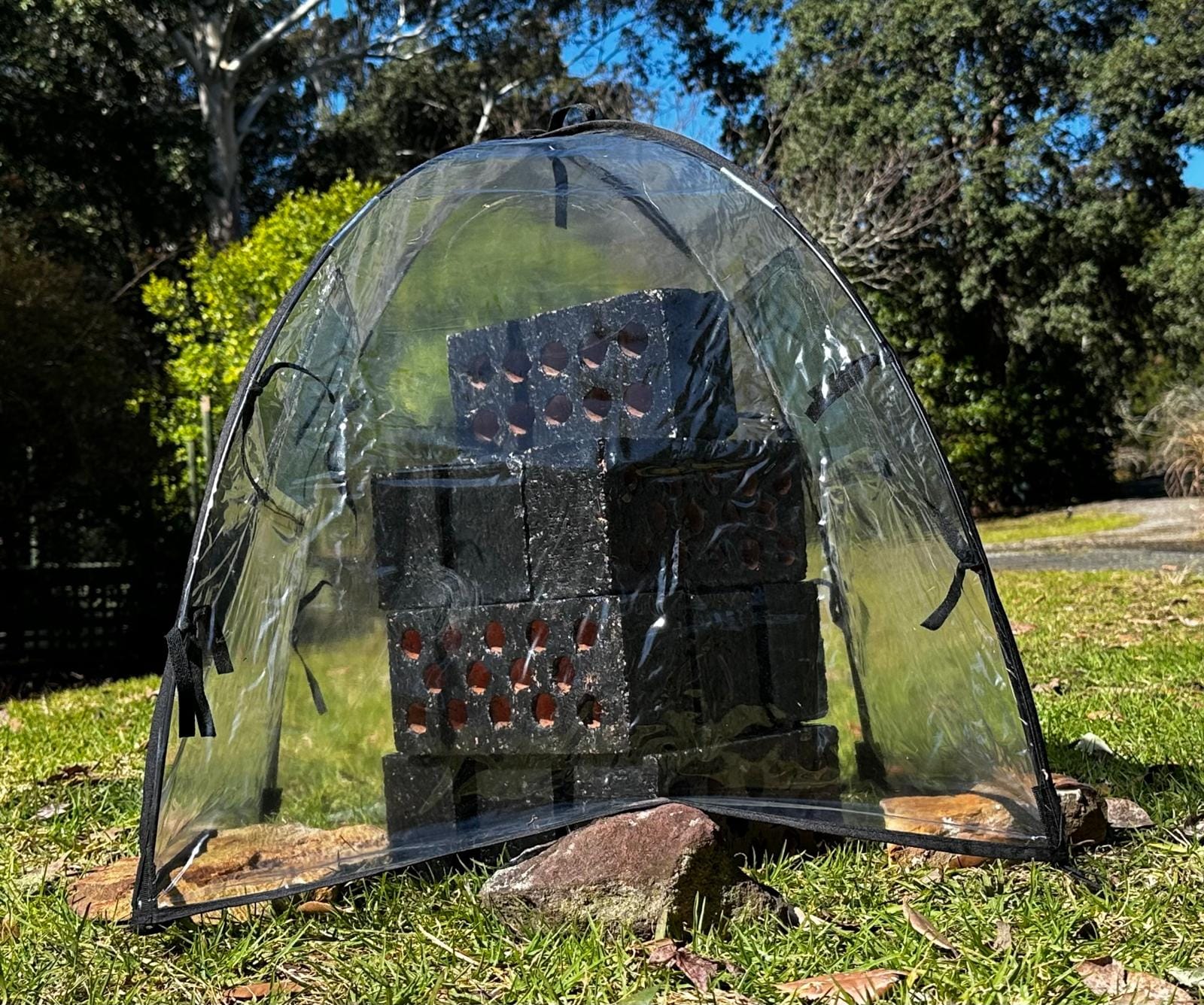
- 10 masonry bricks with holes through them.
- Black, water based outdoor paint.
- A small clear greenhouse to trap the suns heat
- Tent pegs to secure the greenhouse
- Flat rocks or small logs to create gaps at the base for frogs to access the sauna
How to Build
- Clean off the bricks with a wire brush
- Chip off sharp edges inside the holes with a long flat blade screwdriver
- Paint every surface of the bricks black and let them dry completely.
- Lay three bricks on their sides with the holes running horizontally so frogs can hide inside the openings.
- Leave small gaps between the bricks so frogs have several entry points.
- Stack another three bricks across the first layer at a right angle to make the structure stable.
- Add a third layer of three bricks, then place the final brick on top for extra weight and stability.
- Place the clear greenhouse or cover over the bricks to trap solar warmth, secure it with tent pegs.
- Place rocks/wood to raise the bottom of the cover so frogs can get in and out freely.
Maintenance and Safety Checks
- Keep the surrounding garden moist and frog-friendly by using leaf litter, native plants, clean water, and pesticide-free gardening.
- If you find sick, injured, or dead frogs, contact a local wildlife rescue group or amphibian expert rather than handling them unnecessarily.
Become a call connoisseur with FrogID
If you’re wanting to differentiate a screamer from your whistling tree frog download the FrogID app on your phone. Record your frogs’ calls and they will be identified by experts from the Australian Museum. It’s one of the most successful citizen science projects in the world with over 1.5 million recordings of aussie frogs submitted. You will be helping scientists monitor frog populations and you may be lucky enough to record a rare species!