Hawkesbury’s strong shooting and firearms culture has been drawn into a wider national debate over whether gun clubs could become part of Australia’s early-warning system for violent extremism, after evidence to the Royal Commission on Antisemitism and Social Cohesion that people can now self-radicalise in just weeks.
A NSW psychologist who is also an official of a shooting organisation has told the Royal Commission that gun clubs are “uniquely positioned” to identify behavioural warning signs among people who have access or are seeking access to firearms.
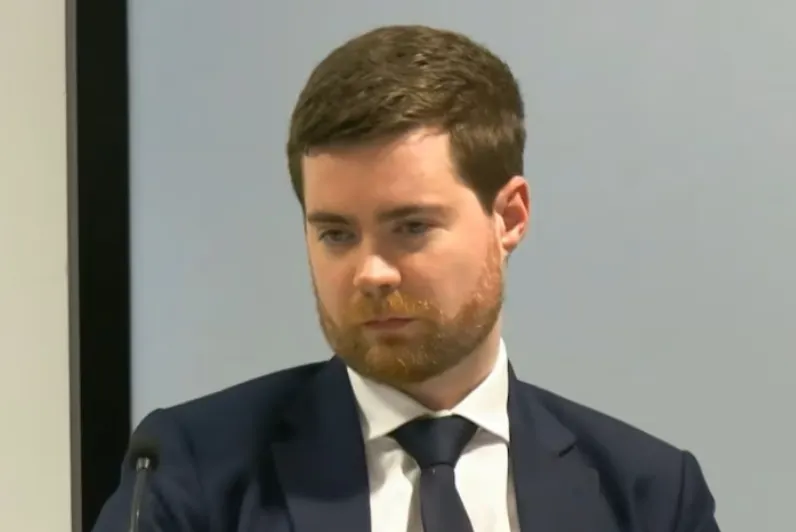
Daniel Gregg, who works professionally with people at different stages of radicalisation, told the Commission on Wednesday that shooting clubs could play an important preventative role if officials and members were taught what to look for and where to refer concerns.
“If you taught clubs to notice those things and then refer those to the more appropriate pathways that we could be preventing further radicalisation,” Mr Gregg told the inquiry.
“We don't want bad actors in our organisations … because we wear the collective consequences if something goes wrong.”
His evidence is particularly relevant to rural and semi-rural communities such as the Hawkesbury, where licensed firearm ownership and sporting shooting are significantly more visible parts of community life than in many inner-city areas.
Thousands of guns registered across Hawkesbury postcodes
The latest detailed postcode figures published by the NSW Firearms Registry, current at 31 December 2025, show firearm ownership is substantial across postcode areas covering much of the Hawkesbury. NSW had 257,309 individual firearms licence holders, excluding collectors, at that date.
Postcode 2756, covering Windsor and a number of surrounding Hawkesbury communities, recorded 2,229 individual firearms licence holders, while postcode 2758, which includes Kurrajong and surrounding districts, recorded 898. Postcode 2753 had 1,092 licence holders, postcode 2754 had 399 and postcode 2757 had 84.
Those five postcode areas alone account for about 4,700 individual firearm licence holders.
The number of registered firearms is substantially higher because many licence holders own more than one firearm.
NSW Police data recorded 8,598 firearms in postcode 2756, 4,361 in 2753, 1,416 in 2754, 355 in 2757 and 3,497 in 2758 more than 18,000 registered firearms across those five postcode areas.
The figures should not, however, be read as an exact Hawkesbury City Council total. Firearms Registry statistics are published by postcode rather than council boundary, and some postcode areas cross or extend beyond local government boundaries.
Hawkesbury has longstanding shooting clubs
The Hawkesbury also has an established sporting-shooting community.
Kurrajong Pistol Club, at Kurrajong Heights on Bells Line of Road, was founded in 1966 and offers competitive pistol shooting including International Shooting Sport Federation disciplines. The club is affiliated with the NSW Amateur Pistol Association.
Further north, the Colo Benchrest Rifle Club at Mellong, on Putty Road, operates as a rifle shooting facility and promotes benchrest target shooting.
The Hawkesbury Hunting Club, associated with Windsor, also appears on the NSW Government's list of approved hunting organisations.
These organisations overwhelmingly exist for lawful sporting, recreational and hunting purposes, and Mr Gregg's evidence did not suggest gun clubs themselves were sources of extremism.
Rather, his argument was that clubs could provide an additional protective layer precisely because they have regular personal contact with licensed shooters.
Interview and mentor before joining
Mr Gregg told the Commission he had introduced a behavioural screening system at his own club.
Prospective members are interviewed and then assigned a mentor who guides them through the organisation's rules and the legal obligations applying to firearms owners.
That personal contact, he argued, could reveal behavioural changes which would never appear in an ordinary criminal history or firearms licence check.
Commissioner Virginia Bell AC SC raised the possibility that Australia may need tighter controls governing access to the types of firearms involved in the Bondi Beach terrorist attack.
Mr Gregg disagreed that tougher licensing requirements were necessarily the answer.
He told the Commission that one of the difficulties facing authorities was that people who self-radicalised might have no criminal history and no previous warning markers that police could detect.
A person could therefore satisfy conventional licensing requirements before subsequently becoming radicalised.
Radicalisation accelerating
Perhaps the most disturbing part of Mr Gregg's evidence concerned the speed at which radicalisation is occurring.
He said that in the past, when people were recruited into an extremist network, he commonly saw radicalisation occur over 12 to 18 months.
Since COVID, he said, some people self-radicalising online had progressed to commitment to an extremist ideology within only two to four weeks.
That dramatically compressed timeframe presents a challenge for conventional policing and intelligence systems.
The Royal Commission has this week been examining how authorities, families, workplaces and community organisations might identify people moving towards violent extremism before they act.
Not about treating shooters as suspects
The significance for Hawkesbury gun clubs is potentially substantial.
With thousands of licence holders across the district, clubs have direct contact with a section of the community that government agencies may only encounter during a licence application or compliance process.
Mr Gregg's proposal effectively turns that relationship around: rather than imposing responsibility solely on police to detect extremists, trained club officials could recognise concerning behavioural changes and refer a person for professional assessment.
Such a system would need careful safeguards.
Lawful firearm owners should not be treated as potential extremists merely because they participate in shooting sports, hunting or primary production. At the same time, access to firearms means credible warning signs of violent intent cannot simply be ignored.
NSW firearms law itself states that firearm possession and use is a privilege conditional upon the overriding requirement of public safety and requires a genuine reason for firearm possession.
The question raised by the Royal Commission is whether responsible gun clubs can become another part of that public-safety framework.
Families and friends also part of the answer
Countering violent extremism expert Professor Michelle Grossman told the Commission Australia also needed a much broader public-awareness campaign so families, friends, colleagues and community organisations understood what radicalisation might look like.
She argued violent extremists were ordinary people living within communities, workplaces, schools and families making community awareness crucial to early intervention.
The Commission also heard about Step Together, a NSW-established service that provides advice and support where people are concerned somebody may be becoming involved in violent extremism. For people seeking more information see https://steptogether.gov.au/
NSW Department of Communities and Justice director Heather Jackson told the inquiry that the state's Engagement and Support program had lowered its eligibility age from 14 to 10, reflecting cases involving increasingly young people displaying the willingness and capability to undertake extremist violence.
For a district such as the Hawkesbury, the evidence presents a different way of looking at gun clubs.
Rather than seeing firearms regulation and shooting organisations as opposing sides of the gun-control debate, the Royal Commission is now examining whether the people who know shooters personally could become one of the earliest lines of defence when someone's behaviour takes a dangerous turn.