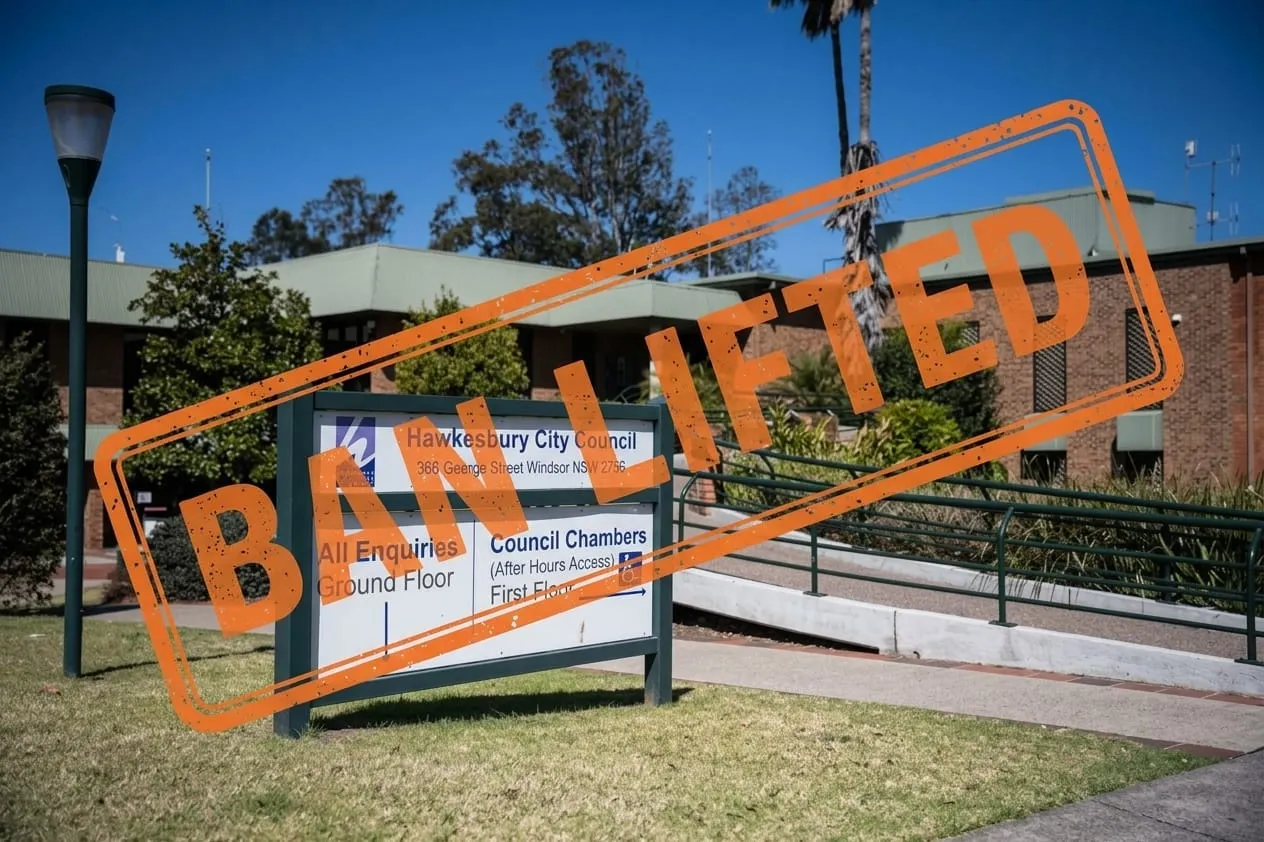
Hawkesbury’s detached dual occupancy proposal is now on public exhibition, offering a possible new housing option for rural families and farm workers while raising questions about flood restrictions and which properties could qualify.
Residents have until Thursday, 29 October 2026 to comment on the proposed change and its accompanying development controls. The exhibition opened on 30 September.
The central change would allow two separate dwellings on a lot in six rural and conservation zones where two attached dwellings are already permitted with consent. It remains a proposal, with no immediate approval to build.
Two homes, attached or detached
The proposal covers RU1 Primary Production, RU2 Rural Landscape, RU4 Primary Production Small Lots, RU5 Village, C3 Environmental Management and C4 Environmental Living.
A dual occupancy consists of two dwellings on one lot. Attached dwellings are joined; detached dwellings are separate. A secondary dwelling, commonly called a granny flat, is a different planning category.
Council’s exhibited planning proposal says detached dual occupancy should not place a significant additional burden on public infrastructure compared with attached dual occupancy, particularly where services are shared.
That comparison matters when considering restrictions: both forms accommodate two dwellings. Their physical separation alone does not establish how many additional residents, vehicles or evacuation movements the reform would generate.
Existing flood controls and the PMF recommendation
Council’s published Schedule of Flood Related Development Controls bases its hazard categories on the 1:100 average recurrence interval flood event and groups attached and detached dual occupancies together as multi residential uses.
That existing framework is different from a blanket ban on every dual occupancy within the probable maximum flood extent. It also considers evacuation constraints and warning times; the 1:100 benchmark does not mean larger floods or risks to life can be disregarded.
The NSW State Emergency Service response, dated 13 August 2026, recommends that, if the proposal proceeds, sites inundated by high-hazard flooding or located on low flood islands be excluded across any flood event up to and including the probable maximum flood, or PMF.
The SES warns that intensifying development below the Flood Planning Level would increase risks to life, particularly where evacuation is constrained. It calls for assessment across the full range of floods and warns against relying on rescue operations or private flood management plans to resolve underlying risks.
Its specific exclusion recommendation concerns high-hazard sites and low flood islands. It does not, by itself, exclude every property within the PMF extent, and remains agency advice rather than an adopted rule.
Draft controls cover both forms of dual occupancy
The accompanying draft Development Control Plan chapter expressly covers attached and detached dual occupancy in the nominated zones.
Its flood provisions propose development land above the applicable Flood Planning Level, an evacuation path at or above that level connecting to a regional evacuation route, evacuation before roads are cut, and a hydraulic engineer’s Evacuation Capability Assessment.
These provisions refer to the Flood Planning Level; they should not be confused with the SES’s separate recommendation about high-hazard sites and low flood islands through to PMF.
A question for consultation is how the proposed controls compare with those applying to attached dual occupancy today, and what evidence supports any additional restrictions.
Greater uptake of dual occupancy could increase cumulative evacuation demand even where each lot still contains two dwellings. However, the published SES letter and draft DCP do not provide an affected-property count or quantify the increase in uptake attributable to allowing detached homes.
What the other agencies say
The NSW Reconstruction Authority’s response also recommends considering floods through to PMF, climate change, cumulative evacuation road capacity and emergency management complexity.
It identifies the 2024 Hawkesbury–Nepean River Flood Study as the best available information and advises against earthworks that alter flood storage or behaviour. Its letter provides recommendations for assessing the proposal and future applications, rather than an outright objection.
The Gateway determination required consultation with Local Land Services, WaterNSW, the NSW Department of Climate Change, Energy, the Environment and Water, the NSW Department of Primary Industries and Regional Development, Transport for NSW, Sydney Water, Heritage NSW and the Rural Fire Service, alongside the SES and Reconstruction Authority.
It specifically required Rural Fire Service consultation before exhibition.
As at 5 October, only the SES and Reconstruction Authority responses are listed in Council’s exhibition document library. The absence of other responses does not establish whether those agencies supported, opposed or requested changes to the proposal.
Other practical limits on rural properties
Flooding is only one consideration in the draft DCP.
Its acceptable solutions include a second detached dwelling within 50 metres of the principal dwelling, shared road access and services, and no exemption from existing minimum subdivision lot sizes.
Other provisions address farming conflicts, vegetation, bushfire, landslip, wastewater, water supply, stormwater and heritage, with site assessments and professional reports for relevant matters.
These details matter to the reform’s stated housing purpose. Permission for a detached dwelling would still depend on a suitable site and an application addressing the relevant controls. Zoning alone would not guarantee approval.
How to have your say
Residents can read the documents and make a submission through Your Hawkesbury Your Say. Documents are also available at Council’s Administration Office, 366 George Street, Windsor, from 9am to 4pm, Monday to Friday during the exhibition.
Written submissions should quote LEP002/25 and can be emailed to council@hawkesbury.nsw.gov.au or posted to Hawkesbury City Council, PO Box 146, Windsor NSW 2756. Submissions close on 29 October 2026.
Council will review submissions and forward the proposal and associated material to the NSW Department of Planning, Housing and Infrastructure, which retains authority for the final decision.
Earlier Gazette coverage
The exhibition follows the delay reported in Rural Dual Occupancy Reforms Delayed Until End of Year. The confirmed dates of 30 September to 29 October replace the indicative dates in that earlier report.
The Gazette has also covered Council’s endorsement of detached dual occupancy, the Gateway determination and deadline, and the rural housing debate and families seeking reform.