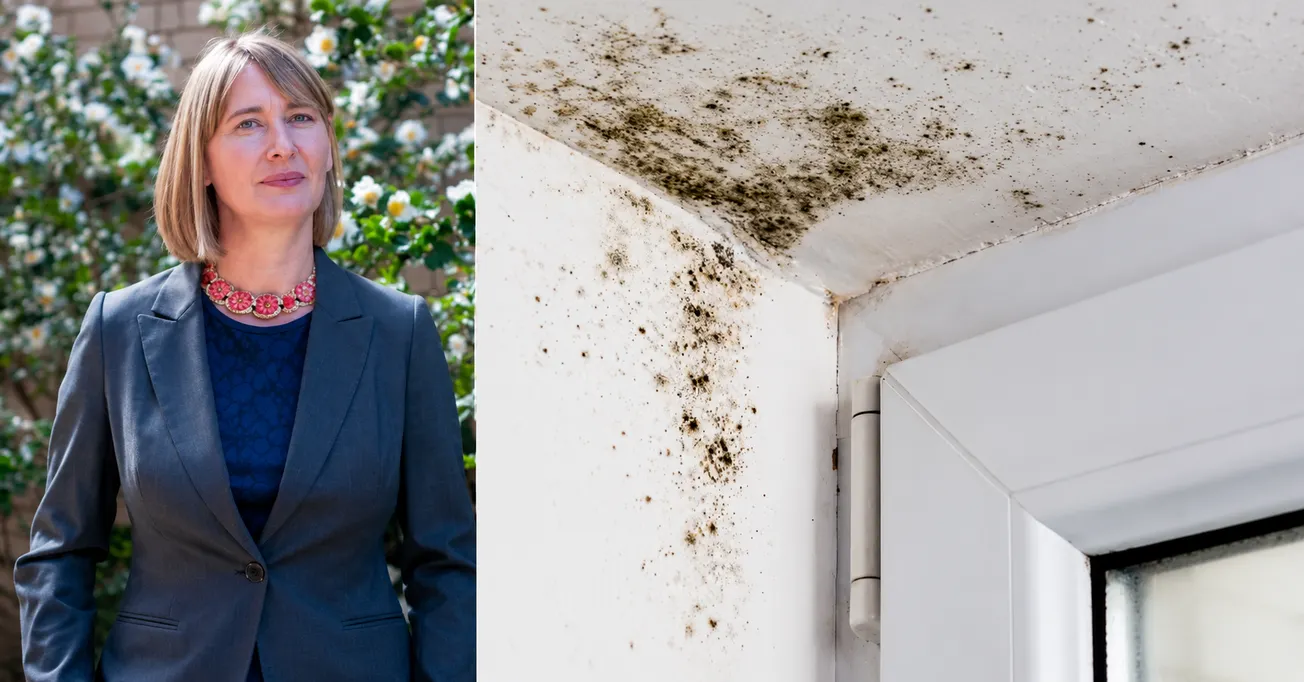
An estimated 2.5 million Australian households live in unhealthy housing, according to researchers warning that the housing crisis reaches beyond affordability and supply into people’s physical and mental health.
The Australian Healthy Housing Handbook, being launched at Parliament House on November 26, calls for health to become a central consideration in housing policy, rental standards and building design.
Drawing on research led by the University of Melbourne’s Healthy Housing Unit, the handbook examines the consequences of mould, damp, poor ventilation, unsafe conditions and homes that become too cold in winter or too hot in summer.
It also considers the health pressures associated with unaffordable energy bills and insecure tenancies.
The findings have particular relevance in the Hawkesbury, where households have experienced mould problems following flooding and during periods of persistent high summer humidity. For affected residents, drying out a home and keeping moisture under control can remain a challenge well beyond the initial clean-up.
Flood recovery is therefore about more than making a house look habitable. The condition of the indoor environment and whether residents can afford repairs, ventilation and temperature control also matters.
Professor Rebecca Bentley, Director of the NHMRC Centre of Research Excellence in Healthy Housing, said suitable housing could prevent illness and help people recover.
“A home that is suitable, secure and affordable can prevent illness, support recovery, enable participation in work and education, and protect people from climate-related hazards,” Professor Bentley said.
“Conversely, unhealthy housing shifts avoidable costs onto households, health services, social services and the wider economy.”
Researchers estimate that eliminating mould alone could reduce health spending by $3.8 billion over the next 20 years and increase working-age incomes by $5.9 billion through improved productivity.
Those figures are estimates of potential benefits, rather than savings already achieved.
The handbook describes housing conditions as influencing lung and heart health, mental wellbeing, children’s development and life expectancy.
Professor Bentley said the burden fell unevenly, with some households more exposed to unhealthy conditions and less able to pay for improvements or secure repairs.
“We can no longer afford to treat housing and health as separate,” she said.
People on lower incomes, renters, Aboriginal and Torres Strait Islander peoples, older adults, people with disability and people living with chronic conditions were among those facing greater risks, she said.
Housing for the Aged Action Group chief executive Fiona York said older people renting privately faced particular difficulties.
“Australia’s retirement system is built on the assumption that older people will own their home at retirement,” Ms York said.
“What we are seeing through our service is that this is not the reality for many older people who are retiring into poverty in the private rental market.”
She said older women were overrepresented in poor-quality and unaffordable housing, with serious consequences for physical and mental health.
The handbook’s authors want the health sector involved in decisions about rental standards, renter protections and building codes.
Tenants Victoria chief executive Jennifer Beveridge said renters needed protection from both unhealthy conditions and the insecurity that could discourage requests for repairs.
“Renters should not become sick because their home is too cold, too hot, poorly ventilated or affected by mould, and they should not have to risk eviction simply to ask for essential repairs,” Ms Beveridge said.
She called for clear, enforceable national rental standards covering temperature, ventilation, energy efficiency, repairs, mould and damp.
Lung Foundation Australia chief executive Mark Brooke said indoor air quality deserved greater attention.
“The air we breathe at home is fundamental to lung health,” Mr Brooke said.
“Clear, health-led standards for ventilation, indoor air quality, temperature and moisture can prevent harmful exposures, reduce inequity and help ensure every Australian has a healthier place to live and breathe.”
For Hawkesbury residents dealing with flood damage and recurring summer damp, the handbook’s message connects housing recovery with long-term health: a home needs to be safe to live in, as well as available and affordable.
“Every Australian deserves a home that is suitable, secure and affordable,” Professor Bentley said.