A damning report by the NSW Auditor-General into the state's flagship flood recovery programs has raised a question that goes well beyond the Northern Rivers:
If governments struggle to relocate flood-affected residents in northern NSW, could they realistically relocate large communities in the Hawkesbury-Nepean Valley?
The Auditor-General's report examined the NSW Government's $980 million Resilient Homes Program and Resilient Lands Program, established following the devastating 2022 floods.
Its findings were sobering. Most notably, the $100 million Resilient Lands Program had not delivered a single completed home or housing lot by 31 March 2026 despite being operational for more than three years.
The program was established to create replacement housing for residents whose flood-prone homes were purchased through government buyback schemes.
While governments have successfully acquired hundreds of flood-affected properties in the Northern Rivers, creating somewhere for those residents to relocate has proven far more difficult.
The audit found the programs commenced without a business case, cost-benefit analysis or detailed implementation plan, contributing to significant delays and uncertainty.
For Hawkesbury residents, the findings are likely to strike a chord.
The Hawkesbury Question
For decades, flood management in the Hawkesbury-Nepean Valley has centred on a difficult balancing act.
How do governments reduce flood risk while maintaining the viability of communities that have existed for generations?
Following major floods in 2021 and 2022, public discussion increasingly focused on options including:
- Voluntary buybacks.
- House raising.
- Relocation assistance.
- Restrictions on future development.
- Strategic rezoning.
- Improved evacuation planning.
Supporters argue such measures reduce risk to life and property. Critics question whether relocation is practical, affordable or socially sustainable. The Northern Rivers experience suggests the challenge may not be purchasing homes. It may be replacing them.
Where Would People Go?
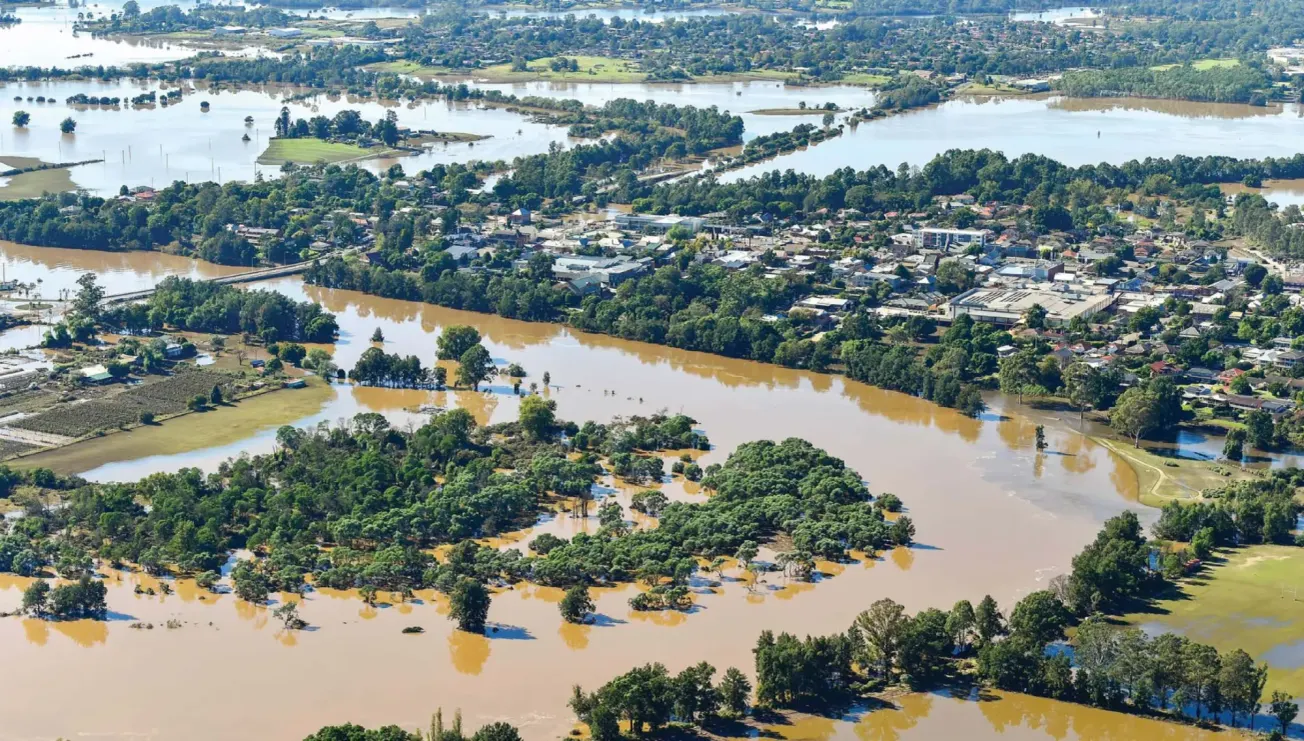
The Auditor-General's report raises difficult questions for communities such as Windsor, Pitt Town, North Richmond, Wilberforce, Freemans Reach, Sackville and the Richmond Lowlands.
If large-scale buybacks were ever offered:
- Where would residents relocate?
- How quickly could replacement housing be built?
- What would happen to schools, sporting clubs and local businesses?
- How much would it cost?
- Could new flood-free communities be established at the scale required?
For many residents, these questions remain unanswered.
Hawkesbury Business Group: Mitigation Is the Answer
The Hawkesbury Business Group Inc (HBG) believes the focus should be on reducing flood impacts rather than relocating entire communities.
"Flood mitigation is the key to the Hawkesbury community's future," the organisation said.
"We believe that mitigation will secure Hawkesbury's future."
The group has advocated for a regional flood mitigation strategy developed by flood engineer Stephen Brain of Mott MacDonald.
According to HBG, the concept plan would:
- Reduce the frequency and ferocity of flooding.
- Lower flood heights by up to two metres.
- Increase evacuation times.
- Reduce recovery periods following flood events.
- Reduce flood damage to homes, businesses and infrastructure.
- Create downward pressure on insurance premiums.
- Help ease cost-of-living pressures for residents.
The organisation argues that the benefits would extend beyond the Hawkesbury to neighbouring local government areas throughout the broader Hawkesbury-Nepean catchment.
A Different Approach
Rather than relying primarily on relocation, HBG supports a coordinated strategy involving:
- Construction of flood mitigation infrastructure.
- More resilient building design.
- Strategic land-use planning.
- Targeted rezoning.
- Improved emergency management.
The group notes that governments already collect significant revenue through insurance taxes and levies.
"It is estimated that government collects approximately $2 billion per year in taxes and levies on insurance premiums and this money should be used to construct flood mitigation infrastructure," HBG said.
Lessons for the Hawkesbury
The Auditor-General's report does not directly examine the Hawkesbury-Nepean Valley.
However, it highlights the practical realities governments face when moving from policy theory to implementation.
Buying homes is one challenge.
Creating replacement communities is another.
For a region like the Hawkesbury, where tens of thousands of residents live and work on the floodplain, the scale of the task would be vastly greater than anything attempted in the Northern Rivers.
The report raises a fundamental question for future flood policy:
Should governments focus primarily on moving people away from flood risk, or on investing in infrastructure and mitigation measures that allow communities to remain where they are?
The answer may shape the future of the Hawkesbury for generations.
Questions for the NSW Reconstruction Authority
The Hawkesbury Gazette has asked:
- What lessons from the Auditor-General's review of the Northern Rivers flood recovery programs are being applied to flood planning and recovery policy in the Hawkesbury-Nepean Valley?
- Does the NSW Reconstruction Authority envisage voluntary buyback, land swap or community relocation programs ever being used in the Hawkesbury-Nepean Valley? If so, under what circumstances?
- Has the Authority identified any potential relocation sites within or near the Hawkesbury Local Government Area that could accommodate residents displaced through future flood mitigation, buyback or relocation programs?
- If so, how many potential relocation sites have been identified and what is their estimated capacity?
Responses will be published when received.