Table of Contents
In early March 2026, a national security debate that has simmered for years suddenly acquired a distinctly local angle in the Hawkesbury region.
A media release issued on 4 March 2026 by Pauline Hanson, leader of Pauline Hanson's One Nation, claimed that governments were preparing a new prison wing in the Hawkesbury area to house returning women who had travelled to the Middle East to join the extremist group Islamic State of Iraq and Syria.
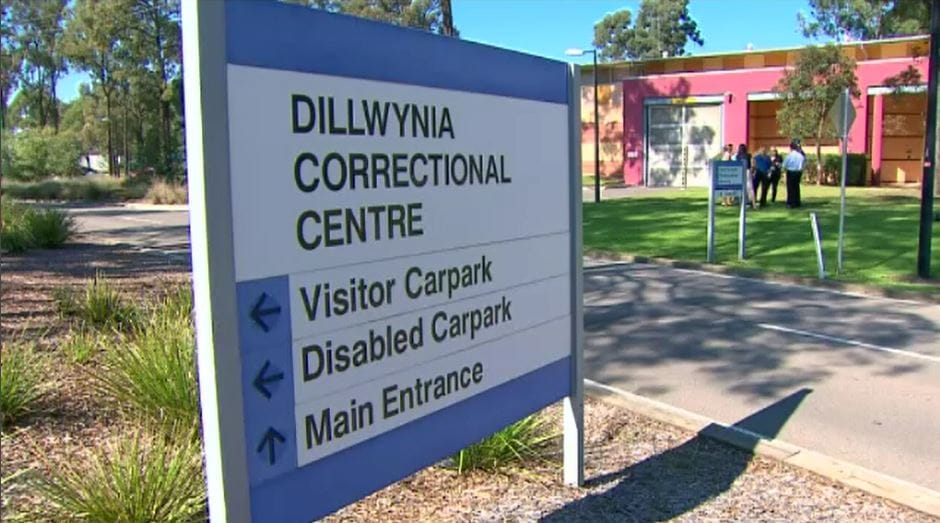
The claim centres on the Dillwynia Women's Correctional Centre at Windsor, which sits within the Hawkesbury region and houses female inmates in the New South Wales prison system.
According to Hanson’s statement, corrections officers had approached her office raising concerns about training modules related to violent extremist prisoners and renovations to a 50-bed wing of the prison.
Whether or not the claims reflect confirmed government plans, the issue has thrust an international security question into local discussion in the Hawkesbury Gazette’s readership area.
It also highlights a deeper story: how a small group of Australians who travelled to join ISIS became one of the most complex legal and political challenges facing Western governments.
From Australian suburbs to the Syrian war
Between 2012 and 2018, roughly 230 Australians travelled to Syria and Iraq to join ISIS or other extremist groups. Among them were around 40 women and dozens of children. Some women travelled alone. Others followed husbands or partners who had already joined the organisation.
ISIS, which declared a so-called “caliphate” in 2014 across large areas of Syria and Iraq, did not see women merely as supporters. It saw them as essential to building a functioning state.
Recruitment propaganda portrayed life in the caliphate as a religious duty and a meaningful new society. Women were encouraged to marry fighters, raise families and help build the next generation of the movement.
For some young women, particularly teenagers, the messaging was persuasive.
How ISIS targeted Western women
ISIS used an unprecedented online recruitment strategy.
Social media accounts run by supporters inside Syria contacted potential recruits around the world, including in Australia.
The propaganda focused on several themes:
- belonging to a new Islamic society
- the promise of marriage and family
- religious duty
- adventure and purpose
Often the recruiters were women already living under ISIS rule, who answered questions and reassured recruits about daily life.
But the reality was very different.
The reality inside the caliphate
Women who travelled to ISIS territory soon discovered that life was far harsher than the propaganda suggested. Their roles were tightly controlled.
Many were expected to remain in the home, care for children and follow strict religious rules enforced by morality police. Movement outside the home was restricted. Access to education, healthcare and employment was extremely limited. Some women lost husbands who were killed in combat. Others were widowed repeatedly as successive husbands died on the battlefield.
For those who wanted to leave, escape was extremely difficult.
The collapse of ISIS and the camps in Syria
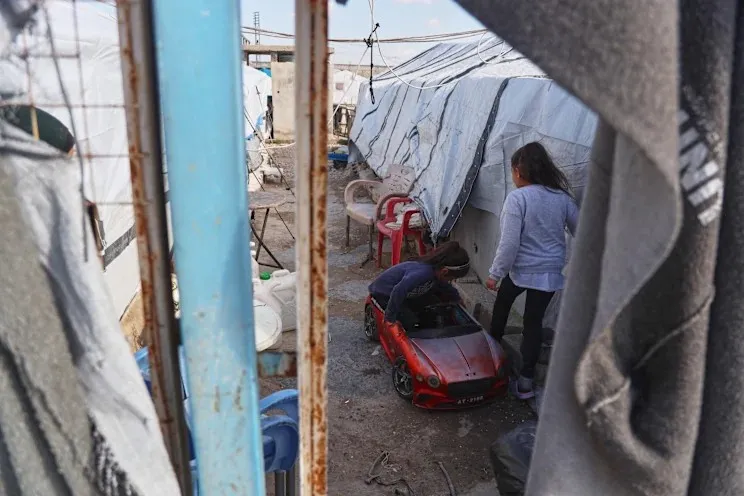
In 2019, ISIS lost its last territory. Thousands of foreign women and children were detained by Kurdish forces in camps in northern Syria, including the massive al-Hol camp. Among them were Australian women and children. Conditions in these camps are widely described as harsh.
Families live in crowded tents with limited healthcare, poor sanitation and ongoing security risks. Children, many of whom are Australian citizens have spent years growing up in these camps.
Why governments are struggling with the issue
For governments around the world, including Australia, the problem presents a difficult balancing act.
On one side are national security concerns. Authorities worry that returning ISIS supporters could pose a threat or continue spreading extremist ideology. On the other side are legal obligations and humanitarian considerations.
Many detainees in Syria have never been formally charged with crimes. They are effectively held in legal limbo by local authorities. And crucially, many remain citizens of their home countries.
The legal reality: Australians have the right to return
Under Australian law and international legal principles, citizens generally have the right to enter their own country.
This means that if a person remains an Australian citizen, the federal government cannot permanently prevent them from returning to Australia.
Authorities can investigate and prosecute individuals suspected of terrorism offences. They can also impose monitoring orders and restrictions.
But the fundamental principle remains: citizens cannot simply be barred from their own country indefinitely.
This legal reality is at the heart of the debate.
The political debate in Australia
Australian governments of both major parties have taken a cautious approach.
Some children have been repatriated from Syrian camps, while adult returnees have faced investigations and monitoring by counter-terrorism authorities. But the issue remains politically explosive.
Many Australians believe individuals who joined ISIS made a conscious choice to support a terrorist organisation and should not be allowed to return.
Others argue that leaving citizens, particularly children, in dangerous camps is neither humane nor sustainable.
A Hawkesbury angle emerges
The debate reached the Hawkesbury region this week following Senator Pauline Hanson’s media release alleging that returning ISIS-linked women could be housed in a specialised wing of the Dillwynia Women’s Correctional Centre at Windsor.
In her statement, Hanson claimed corrections officers had informed her office about training for handling violent extremist inmates and the refurbishment of a prison wing intended for female terrorism offenders.
She argued the move could place costs on taxpayers and pose security concerns.
Hanson also questioned whether federal and state governments were coordinating plans to house returning detainees in prison facilities.
The federal government and NSW authorities have not publicly confirmed such plans. However, corrections systems regularly prepare for a range of security scenarios, including the management of extremist prisoners.
Why the Hawkesbury Gazette is covering the story
For readers of the Hawkesbury Gazette, the issue is no longer purely an abstract international debate.
The Windsor prison facility sits within the Hawkesbury community, and any policy affecting its operations has direct local relevance.
Even if the allegations remain unconfirmed, the discussion raises broader questions for the community:
- how extremist prisoners are managed in Australia
- where such detainees would be held if they returned
- what security measures would be required
It also highlights how global conflicts can sometimes intersect with local communities in unexpected ways.
An unresolved national dilemma
The story of Australia’s ISIS brides is not simply about individuals who travelled to join a militant group.
It is about the long aftermath of a conflict that continues to challenge legal systems and political leaders.
Governments must balance security concerns with the rule of law. Courts must determine whether crimes committed overseas can be proven.
Communities, including places like the Hawkesbury must grapple with the implications of national decisions made far away.
Years after the fall of ISIS, the question remains unresolved.
What should a country do when its own citizens joined one of the world’s most notorious extremist movements and now want to come home?