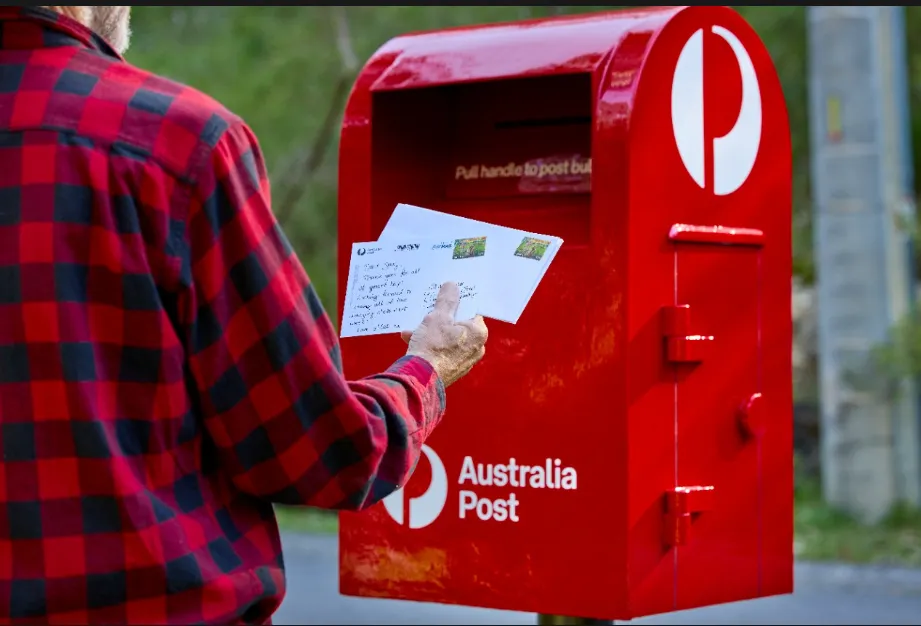
Australia Post says home delivery will remain, but falling letter volumes could bring less frequent deliveries and push the price of a stamp to $2.
Australia Post has ruled out replacing home delivery with community mailboxes but warned that letters could be delivered less frequently as the service confronts volumes not seen since the 1930s.
For the Hawkesbury’s rural villages, the future of Australia Post is about considerably more than letters and stamps.
Post offices in communities including Bilpin, Kurrajong, Glossodia, Wilberforce, Pitt Town, Ebenezer, Wisemans Ferry and St Albans provide an important connection with services that are often concentrated in larger towns.
Many rural outlets operate as licensed post offices or community postal agencies, frequently alongside another small business. Depending on the outlet, residents may be able to collect parcels, pay bills, undertake banking transactions, obtain identity services, buy packaging and lodge important documents without travelling to Richmond, Windsor or further into metropolitan Sydney.
They also provide something more difficult to measure: regular human contact.
For older residents, people living alone and those without reliable internet access or transport, a village post office can be an informal community meeting place and a familiar point of assistance.
That role becomes particularly important during bushfires, floods, telecommunications failures and power outages—events with which Hawkesbury communities are well acquainted. When online services are inaccessible and roads are disrupted, local businesses and community facilities become part of a village’s social infrastructure.
Stamp price could reach $2
Australia Post chief executive Paul Graham told SBS News that ordinary letter volumes fell by almost 15 per cent during the latest financial year.
The organisation delivered 1.42 billion letters, despite the growing Australian population. Mr Graham said letter volumes had now fallen to levels not experienced since the 1930s.
The price of an ordinary stamp is currently $1.85, but Mr Graham warned it could eventually increase to $2 as Australia Post tries to cover the cost of maintaining a nationwide network for a shrinking number of letters.
He argued that the increase would have a relatively small effect on most households, adding less than $1 a year to the average household’s postal costs.
That average, however, may not reflect the experience of community organisations, small businesses, older residents and people who continue to rely on paper correspondence.
The Hawkesbury has a large geographical area, scattered settlements and communities with uneven mobile and internet coverage. Digital communication has not removed the need for physical mail equally across the region.
Letter deliveries could become less frequent
Australia Post has already moved regular letter delivery to every second business day across most of the country.
Mr Graham said further efficiencies would be required if letter volumes continued to fall, potentially including another reduction in delivery frequency.
However, he ruled out following overseas postal services that have moved away from traditional home delivery in favour of centralised community mailboxes.
Australia’s widely dispersed suburbs and regional towns did not lend themselves to that model, he said.
Australia Post remains subject to community service obligations requiring it to provide a letter service that is reasonably accessible to Australians on an equitable basis, regardless of where they live.
Delivery arrangements can nevertheless vary in rural areas. Depending on location, mail may be delivered to a street address, roadside letterbox, post office box, local post office or another delivery point along an established mail run.
Parcels now driving the business
While the letter business continues to contract, parcel delivery and other services are growing.
Australia Post’s parcels and services division generated a record $8.01 billion in revenue during the latest financial year.
The organisation recorded a pre-tax profit of $31.8 million, although that result was supported by proceeds from property sales. Without those returns, its underlying financial position would have been substantially weaker.
Australia Post operates more than 4,000 retail outlets nationally, about 2,500 of which are in regional, rural and remote communities. It says it remains committed to maintaining that network.
The postal service is encouraging Australians to continue using their local post offices and supporting the licensees who operate many smaller outlets.
In the Hawkesbury, that support has implications beyond the survival of the traditional letter.
Every transaction completed locally helps sustain a business that may also employ local people, attract customers to nearby shops and save residents a lengthy drive for services taken for granted in metropolitan areas.
The challenge for Australia Post is to adapt to a world dominated by parcels and digital communication without weakening the physical network on which rural communities continue to depend.
For the Hawkesbury’s small villages, a post office is not simply the place where mail arrives. It is part of the infrastructure that keeps a community connected.
This report is based partly on reporting by Mikele Syron for SBS News, with additional information from Australia Post and the Australian Government.