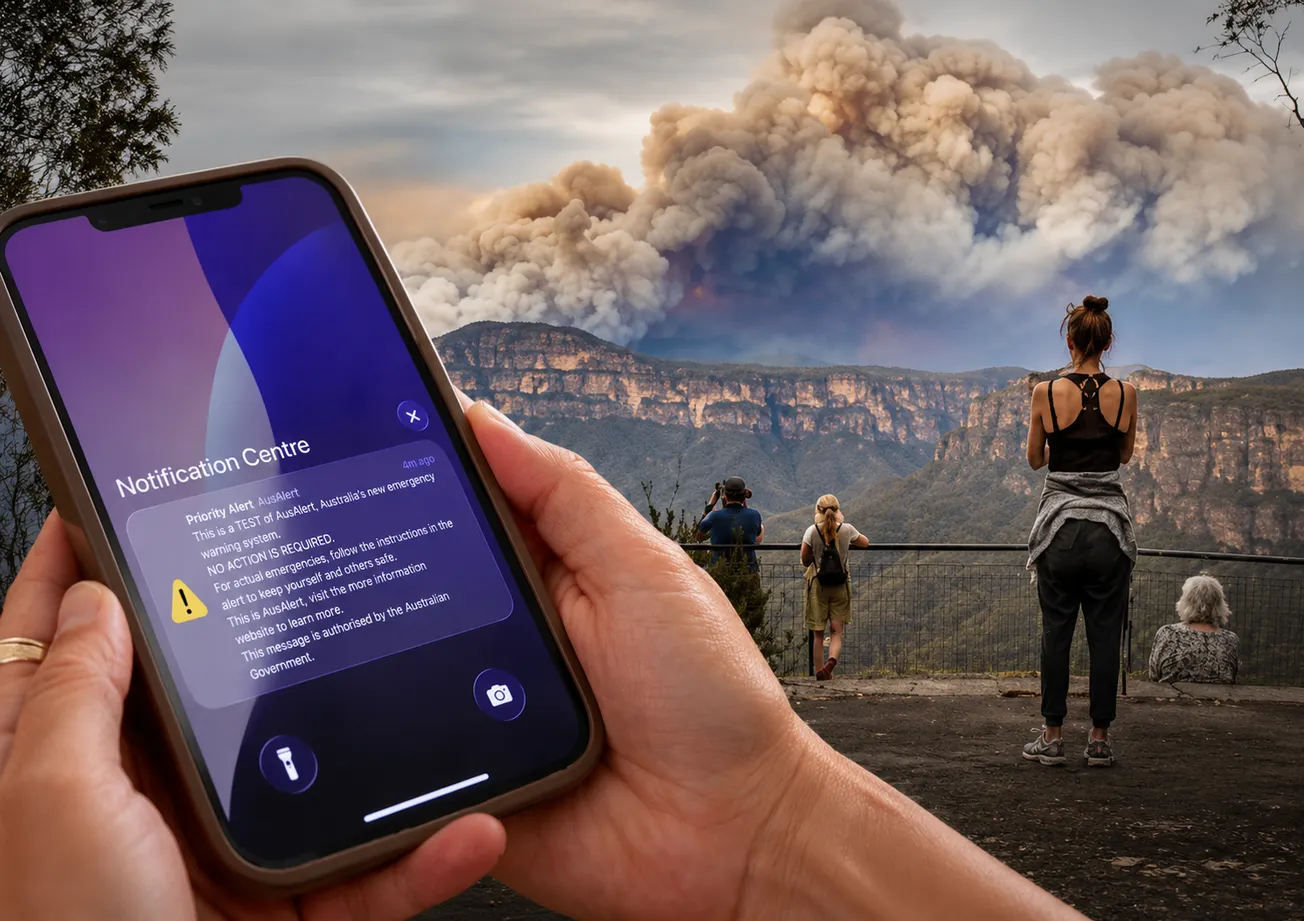
Every mobile phone in Australia will sound a loud emergency warning on Monday afternoon as authorities conduct the first nationwide test of AusAlert, a new emergency warning system developed in response to the lessons of the Black Summer bushfires.
At 2pm on Monday, 27 July, compatible mobile devices across the country will vibrate and emit a siren-like alarm for around 10 seconds before displaying a test message advising that no action is required. The alert will sound even if a phone is set to silent or "Do Not Disturb".
For residents of the Hawkesbury, the test represents far more than a technology upgrade. It is the culmination of years of work to address shortcomings in Australia's emergency warning systems that became apparent during the devastating 2019–20 bushfire season.
A system shaped by Black Summer
AusAlert was developed following recommendations of the Royal Commission into National Natural Disaster Arrangements, established after the Black Summer bushfires claimed lives, destroyed thousands of homes and burned millions of hectares across Australia.
The Royal Commission found Australia's warning systems needed to be faster, more reliable and better able to reach people in danger.
The Hawkesbury was among the communities that experienced the consequences of those shortcomings.
During the Black Summer fires, residents in Bilpin, Berambing, Mt Tomah, Mt Wilson and surrounding districts faced rapidly changing fire conditions as the strategic backburn lit near Mt Wilson on 14 December 2019 escaped containment and developed into the fire later known as the Grose Valley Fire.
For many residents, those events reinforced the importance of timely, accurate and dependable emergency warnings.
Faster warnings when every minute matters
Unlike the existing Emergency Alert system, which primarily sends individual SMS messages, AusAlert uses cell broadcast technology.
Rather than transmitting millions of separate text messages, the system broadcasts an alert simultaneously from mobile phone towers to every compatible device within the affected area.
The technology offers several important advantages.
Warnings can be delivered much more quickly during large-scale emergencies, they are not affected by SMS network congestion in the same way as traditional text messages, and they reach anyone within the warning area including tourists, visitors and travellers without requiring authorities to know their mobile phone number.
Emergency agencies expect the new system to improve the speed and reach of warnings for bushfires, floods, severe storms, cyclones, tsunamis, major public safety incidents and other life-threatening emergencies.
Designed to get your attention
One feature of AusAlert is deliberately impossible to ignore.
The warning will override silent mode and "Do Not Disturb" settings, ensuring the alert is heard even if a device would normally remain quiet.
Authorities say this is essential because the system is intended only for emergencies where immediate action may be required to protect life.
People who believe the national test may cause distress or disrupt important activities are advised to switch their mobile devices off or place them in aeroplane mode before 2pm on Monday and leave them off for at least an hour.
Timely for bushfire communities
The national rollout comes just months before the 2026–27 bushfire season.
For the Hawkesbury, one of New South Wales' most bushfire-prone regions, the introduction of AusAlert is particularly significant.
Communities including Bilpin, Kurrajong Heights, Berambing, Mt Tomah, Colo, Mountain Lagoon and the Upper Macdonald Valley remain vulnerable to bushfire each summer, with many residents still carrying memories of the Black Summer fires.
Emergency authorities hope the new system will ensure future warnings are delivered more quickly and more reliably when conditions deteriorate.
Technology is only part of the solution
Emergency services stress that AusAlert is designed to complement, not replace, existing emergency planning.
Residents are still urged to prepare a Bush Fire Survival Plan, monitor official warnings during severe weather and follow evacuation advice when issued.
The new technology can deliver warnings faster, but personal preparedness remains one of the most important factors in surviving a major emergency.
What to expect on Monday
At 2pm on Monday, 27 July, compatible mobile phones across Australia will:
- vibrate;
- sound a loud emergency warning tone for about 10 seconds, even if set to silent;
- display a test message confirming that it is only a national test and that no action is required.
For most Australians, it will be an unexpected interruption to the afternoon.
For many Hawkesbury residents, however, it is a reminder that the lessons of Black Summer continue to shape how Australia prepares for the next major emergency.