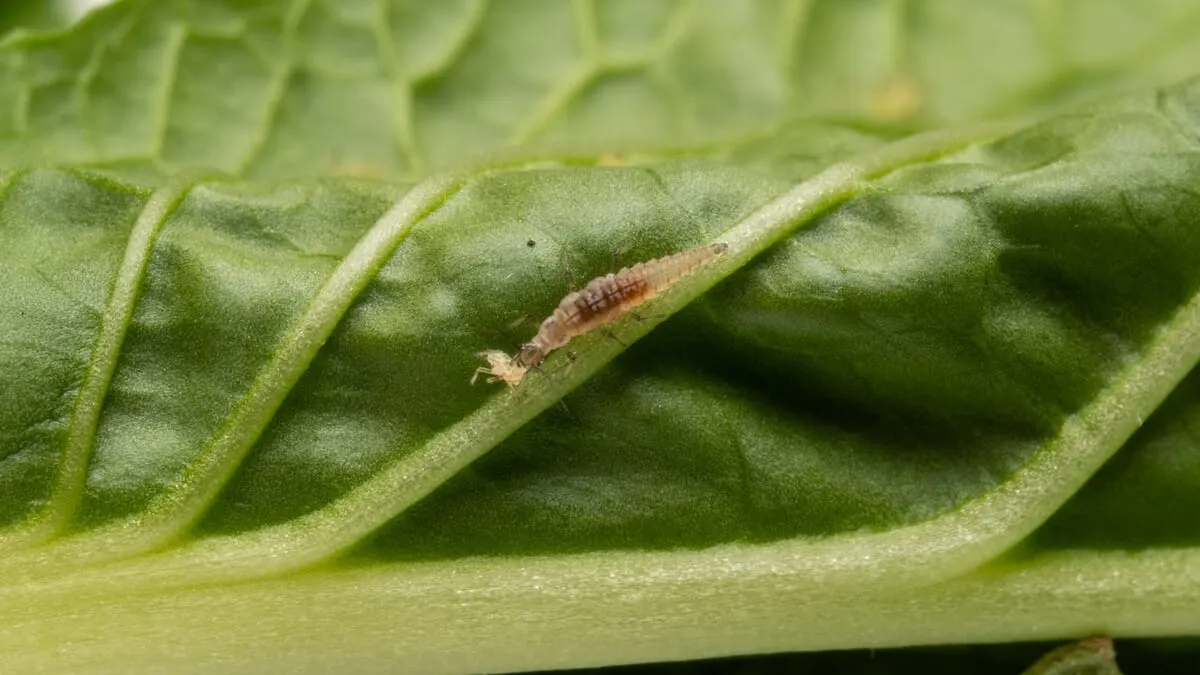
A brown lacewing larva feeding on an aphid is doing a good job for vegetable growers. And a spray used to control a pest can harm the insects already helping to keep it in check. A new guide from Cesar Australia gives Hawkesbury growers a way to compare those effects before choosing a product.
The Beneficials Chemical Toxicity Table for vegetable crops uses colour-coded ratings to show how different insecticides and miticides can affect beneficial insects and mites. Growers can compare products across several groups or look up the particular species they have found in their crop or released for biological control.
For market gardeners on the Hawkesbury River flats, that means weighing up two questions when pest numbers rise. Will a product control the pest, and what could it do to the insects already keeping pest numbers down? Hawkesbury City Council’s Rural Lands Strategy identifies vegetable production as a significant part of local agriculture, with irrigated crops clustered around the river flats.
How the guide works
Growers first check the product label to see whether it is suitable for the crop and target pest. They can then use the table to compare the options. A split-colour rating shows that effects vary, for example because species within the same group can respond differently. The ratings draw on laboratory testing by Cesar Australia and existing research.
The guide was developed through the Australian Grains and Horticulture Pest Innovation Program, with support from Hort Innovation, the Grains Research and Development Corporation, the University of Melbourne and Cesar Australia.
Download the free guide for vegetable growers from Cesar Australia.