COMMENTARY
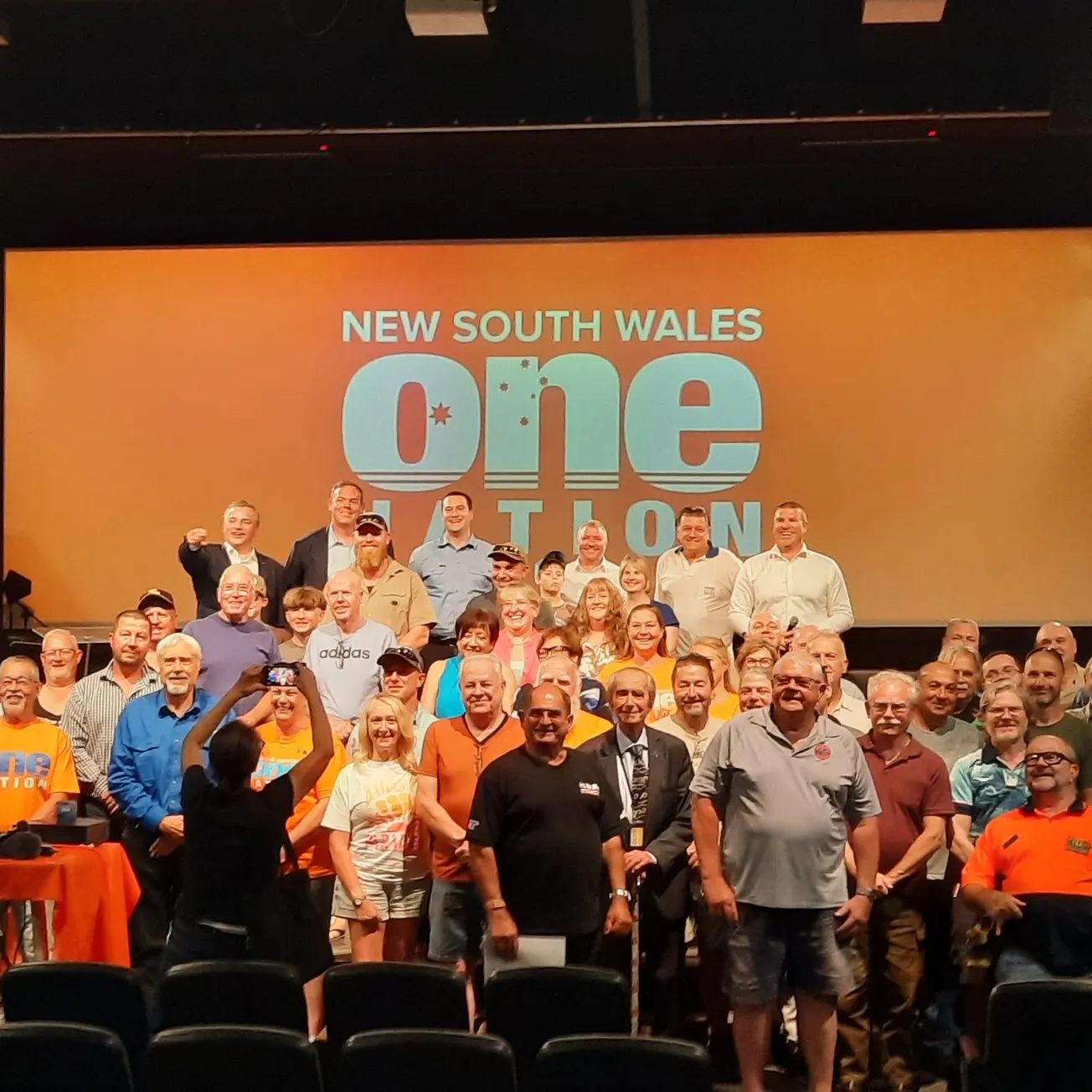
About 100 people attended a meeting in Windsor on Saturday, 21 November, addressed by representatives of Shooters Union Australia and One Nation. The meeting brought the competing arguments to a district where firearms have practical agricultural uses as well as a place in recreational hunting and club sport.
Laws introduced immediately after the Bondi terrorist attack aim to reduce firearm risks, but opponents question their reach, cost and impact on licensed owners.
NSW is operating the first buyback under the Commonwealth’s new national gun scheme, bringing a debate about terrorism, public safety and the rights of licensed owners to Hawkesbury farmers, sporting shooters and firearms businesses.
The NSW Government says reducing firearm availability will make the community safer. Opponents argue its restrictions burden compliant owners while leaving the underlying problems of extremism, illegal weapons and intelligence failures unresolved.
Research into earlier Australian reforms supports the potential for reduced firearm access to prevent deaths. It does not establish that every element of the current NSW package will achieve its intended result.
As at 21 November 2026, NSW is the only state operating the current national scheme. The ACT has confirmed its support but has not settled its timetable, while Western Australia completed a separate buyback earlier this year.
From Bondi to new firearms laws
The immediate trigger for the proposed changes was the antisemitic terrorist attack at Bondi Beach on 14 December 2025, in which 15 victims were killed.
According to the NSW Police Commissioner, one of the attackers, Sajid Akram, held a firearms licence and legally owned six guns. The connection to lawful ownership made licensing and access to registered weapons part of the government response, alongside counterterrorism measures.
That matters to the debate. A scheme directed at legally held firearms is not automatically disconnected from the attack. Equally, the fact that a licensed owner participated does not establish that a particular ownership cap would have prevented it.
NSW passed the Terrorism and Other Legislation Amendment Act 2025, commonly called TOLA, on 24 December 2025. It amended the State’s firearms framework, introducing ownership limits, classification changes and enhanced eligibility requirements. Its provisions have been implemented in stages.
Changes effective from 1 July 2026 included reducing the maximum term for newly issued firearms licences from five years to two, additional identity and storage checks, and terrorism-related considerations for firearm acquisition applications.
NSW Police says those acquisition checks include whether an applicant has been investigated over terrorism-related offences or associations, and whether they associate with or live at the same address as someone investigated on those grounds.
The Commonwealth established the national buyback framework through the Combatting Antisemitism, Hate and Extremism (Firearms and Customs Laws) Act 2026, which received assent on 21 January.
That legislation also addressed firearms background checks, information sharing and import controls.
The two legislative layers have different roles: NSW changed what owners may possess and the conditions of licensing; the Commonwealth provided a framework supporting compensation for surplus and newly restricted firearms.
A national scheme with an uneven rollout
NSW surrender appointments began on 2 November. The scheme is scheduled to run for 12 months, with receiving police stations opening progressively.
For Hawkesbury residents, Windsor is listed for surrender appointments from 8 February 2027, with bookings opening on Tuesday 24 November 2026 according to NSW Police — National Gun Buyback Scheme, participating police stations, under Stage Four.
The ACT’s stated support means NSW is not the only jurisdiction preparing to participate. The ACT Government says eligibility and timing will be announced once those arrangements have been settled. Home Affairs says discussions with additional states and territories continue.
What the buyback is intended to achieve
The NSW program compensates eligible owners surrendering firearms affected by ownership limits, citizenship requirements or classification changes. The Commonwealth scheme does not compensate for illegal firearms; those can be surrendered through the separate permanent national amnesty.
The distinction is central to criticism that criminals will not hand in their guns.
The buyback is not principally a mechanism for recovering weapons already held illegally. Its preventive argument is that reducing lawful stocks and restricting access can reduce opportunities for future misuse and theft.
The NSW Government cites Australian Criminal Intelligence Commission advice identifying theft of lawful firearms as a primary source of weapons entering the illegal market. That provides a reason to consider security and diversion risks, although it does not establish which numerical ownership limit is most effective.
NSW Police specifies different limits by licence purpose, including ten for primary production and sport or target shooting, with provision for greater numbers for some purposes under the regulations. Recreational hunting and vermin-control licences generally face a four-firearm limit.
However, the cost of holding a gun licence has increased with renewal required every two years instead of five years and the right to appeal fire arm prohibition any decision to the NSW Civil and Administrative Tribunal has been removed.
The campaign against the scheme
The Stop the Buyback campaign, spearheaded by Shooters Union Australia and supported by the Shooting Industry Foundation of Australia, argues the changes unfairly target compliant owners.
Through a petition and volunteer recruitment, it seeks pressure on Parliament to halt the buyback and reverse restrictions. Its arguments include taxpayer cost, damage to regional businesses and disruption to farming and pest control.
What One Nation would change
One Nation proposes repealing the firearms provisions of TOLA, ending the buyback, removing ownership caps and restoring earlier firearm classifications.
It also promises five-year licences, application-processing deadlines, better registry staffing and information sharing, and restored NSW Civil and Administrative Tribunal review of licence refusals and cancellations.
Five-year licences reduce renewal work, while two-year terms provide more frequent formal reassessment. The safety of either approach depends on whether authorities receive and act on relevant information between renewals.
Other commitments include stronger penalties for firearm theft and criminal use, expanded licensed hunting access in state forests, support for shooting clubs and supervised participation, and less regulatory burden on lawful businesses.
A separate compensation proposal would assist businesses suffering losses attributed to the reforms, including businesses that have closed. The published announcement does not explain the overall cost, payment amounts or method for separating reform-related losses from other changes in trade.
What earlier buybacks tell us
Australian experience offers evidence for reducing firearm access, but no simple forecast for this scheme.
Following the 1996 Port Arthur massacre, governments adopted the National Firearms Agreement and a major buyback of newly prohibited weapons. Those reforms provide a historical comparison, although the firearms, legal changes and national coverage differed from today’s NSW package.
Research by Patrick Duenow and Luke Connelly, published in Health Economics in 2024, used international comparisons and estimated substantial reductions in firearm homicide and suicide from Australia’s reform package. It also found some evidence that other methods partly substituted for firearms.
The Australian Institute of Health and Welfare notes that firearm suicide rates were declining before 1996 and continued declining after the reforms. Researchers must therefore distinguish policy effects from trends already underway.
Together, this evidence challenges the claim that removing legally held guns cannot improve safety. It does not prove that NSW’s particular four- and ten-firearm limits, or every classification change, are the best available measures.
The current buyback has only recently begun. It is too early to assess its eventual effects on deaths, theft or violence.
The test is reduced harm
The buyback itself cannot resolve radicalisation or failures to act on intelligence. It can potentially reduce access to weapons; preventing terrorism also requires effective investigation, licensing decisions and action when warning signs emerge.
Similarly, describing someone as a lawful owner does not settle every question about future risk. Licensing is an assessment that must remain responsive to changing circumstances.
For Hawkesbury owners and businesses, the immediate questions concern lawful use, compensation and workable administration. For the wider community, the test is whether the program produces measurable safety benefits proportionate to its costs.
That requires more than reporting how many firearms are surrendered. Evaluation should examine firearm theft, deaths and injuries, compliance, registry performance, costs and the impact on lawful activities.
A fall in firearm numbers would establish that the program removed guns. Demonstrating that it achieved its wider purpose will require evidence that the removal reduced harm.