Table of Contents
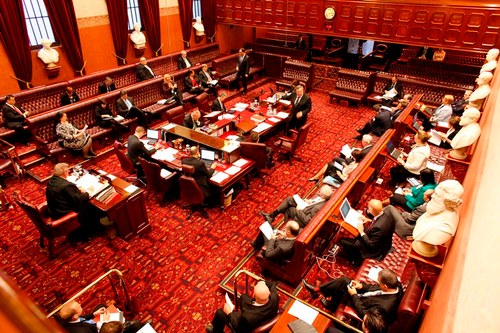
Concerns about the performance and accountability of Hawkesbury City Council have been formally raised in NSW Parliament, with Members of the Legislative Council (MLCs) questioning Ministers for Emergency Services, Planning and Local Government on issues directly affecting Hawkesbury businesses and residents.
During Budget Estimates hearings February and March, a series of questions, along with detailed supplementary questions taken on notice, focused on the Hawkesbury’s ability to prepare for and manage natural disasters, deliver critical infrastructure projects, and meet its statutory planning obligations.
The scrutiny reflects growing unease within the community about whether the systems meant to support the region are functioning as intended.
Disaster Preparedness Under the Microscope
MLCs raised concerns about how well councils, including Hawkesbury, are equipped to manage increasingly frequent and severe natural disasters.
Supplementary questions sought clarification on:
- The adequacy of local disaster planning
- Coordination between state agencies and councils
- The delivery of on-ground infrastructure designed to improve resilience
For a region repeatedly impacted by bushfires and floods, the line of questioning underscores a central issue: whether planning frameworks are translating into real-world preparedness.
A Decade Without a Local Environmental Plan
Another major issue raised was Hawkesbury Council’s failure to deliver an updated Local Environmental Plan (LEP) over more than a decade.
MLCs questioned how a council could remain without a contemporary planning framework for such an extended period, and what oversight mechanisms exist when statutory responsibilities are not met.
The delay has implications not only for housing and development, but also for economic growth and investment across the region.
Project Delivery and Use of Government Funding
Questions also focused on the Council’s ability to deliver projects after receiving state and federal funding.
This included scrutiny of:
- Delays in project delivery
- Whether funding is being effectively managed
- What accountability exists when projects stall or fail
The issue has particular resonance in the Hawkesbury, where many infrastructure projects have faced prolonged delays despite funding being allocated.
Culture of Blame Shifting
A recurring theme in the questioning was what some described as a culture of blame shifting.
MLCs raised concerns that responsibility for delays and failures is often redirected toward the State Government, despite funding and support being provided.
This dynamic where funding is secured but outcomes are not delivered has prompted calls for clearer accountability at the local level.
When Does the State Intervene?
Central to the hearing was the threshold for intervention under Section 438A of the Local Government Act (commonly referred to in discussion as a pathway to administration).
MLCs pressed the Minister for Local Government on what conditions must be met before action is taken against a poorly performing council.
In response, the Minister indicated that intervention is a serious step and suggested action would generally occur only where legal thresholds are clearly breached.
This has raised concern among some observers that systemic underperformance may persist without triggering formal intervention.
Minister “On Notice” Over Council Functioning
With multiple questions taken on notice, the Ministers are now expected to provide further detail on the functioning of Hawkesbury City Council, including governance, performance, and oversight.
For local businesses and residents, the parliamentary scrutiny represents a significant moment. Their concerns are now formally recorded at the highest levels of State government.
While the Hawkesbury community has consistently demonstrated resilience and leadership, this resilience should not be a substitute for effective governance.
Parliamentary scrutiny aims to move beyond the allocation of blame; the intention is to ensure that when funding is provided, plans are made, and risks are known, delivery follows. And when it does not, the community deserves answers.