11 November 2026
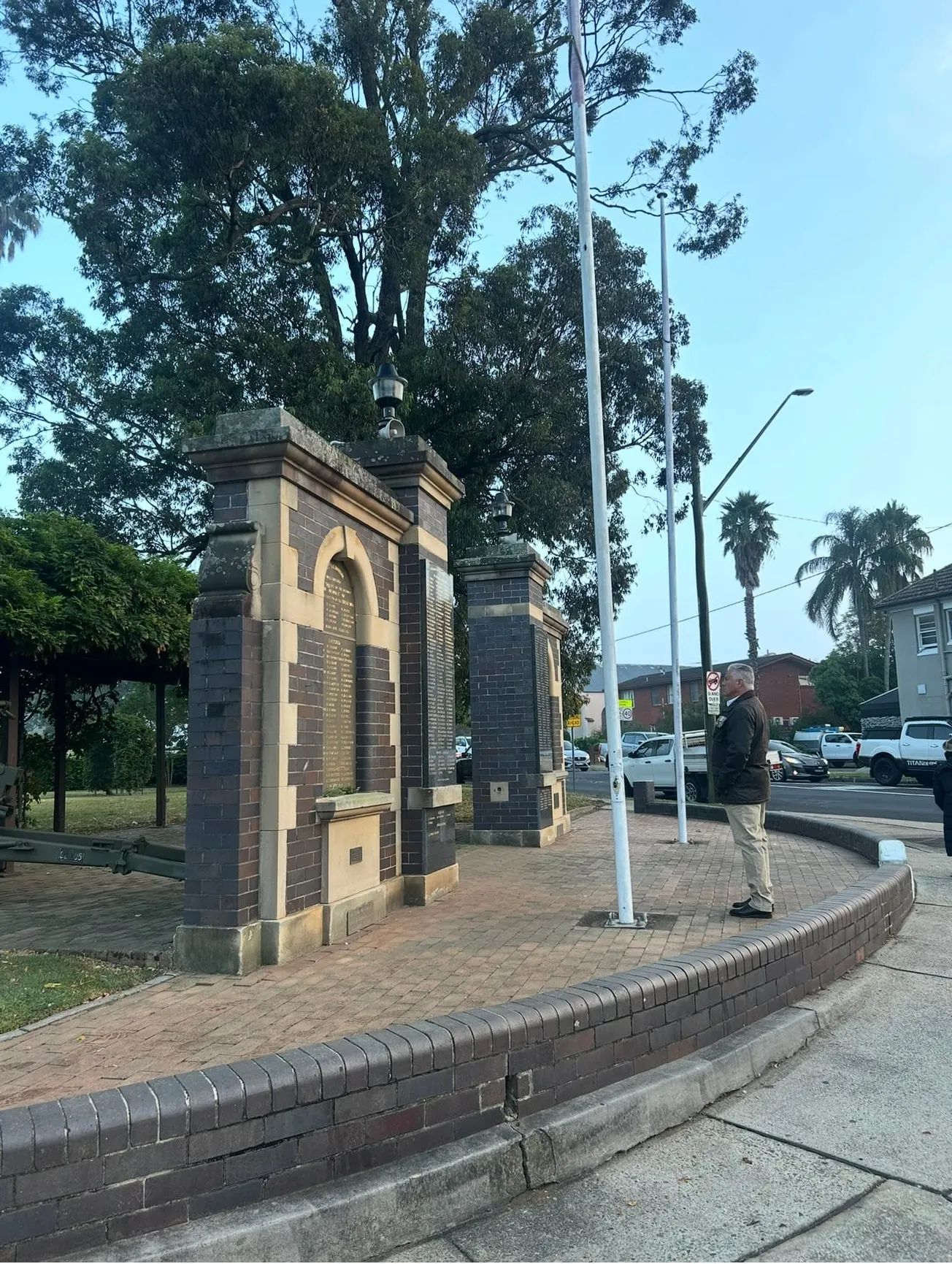
At the eleventh hour, of the eleventh day, of the eleventh month, Australians stop to remember.
We remember the fallen, the wounded, the families who never saw their loved ones return, and those who came home carrying the invisible scars of war.
As a former member of the Royal Australian Air Force, Remembrance Day means something deeply personal to me.
But this year, I find myself asking a question that perhaps we Australians should be asking more often.
Are we remembering the sacrifices of our servicemen and women, or are we simply remembering the wars without questioning why we fought them?
From the Boer War to Afghanistan, Australia has repeatedly committed its young men and women to conflicts far from our shores, often alongside powerful allies whose strategic interests were not necessarily identical to our own.
First, it was the British Empire.
Later, it became the United States.
And throughout that history, Australians have paid the price.
Breaker Morant: When loyalty to an empire came at a cost
In 1902, two men associated with Australia, Harry “Breaker” Morant and Peter Handcock, faced a British firing squad in South Africa.
They had been convicted of murdering Boer prisoners during the Second Boer War.
Their defence centred partly on the claim that they had been following orders from their British superiors. Whether those orders were ever given remains disputed.
The killings themselves were not seriously in doubt.
But the controversy surrounding their trials, their executions and the conduct of the British military continues more than a century later.
Australia had entered the Boer War as part of the British imperial world, fighting a conflict largely concerned with British power and control in southern Africa.
It was not a war fought to defend Sydney, Melbourne or the newly federated Australian nation against invasion.
Yet Australians fought and died.
And when two of those men were condemned, it was British military authority that decided their fate.
It raises a question that has echoed throughout our military history.
When Australia follows a powerful ally into war, who ultimately controls the decisions, and who carries the consequences?
Afghanistan: A different century, familiar questions
More than a century later, Australia found itself fighting alongside the United States and its coalition partners in Afghanistan.
The circumstances were different.
The September 11 terrorist attacks provided the immediate context for the American-led intervention, and Australia had legitimate security and alliance considerations.
But after two decades of fighting, the Taliban returned to power in 2021.
Australia had lost 41 military personnel in Afghanistan, and many more returned carrying physical and psychological injuries.
The case of Victoria Cross recipient Ben Roberts-Smith has brought another difficult chapter of that conflict into public view.
In April 2026, Roberts-Smith was charged with five war-crime offences relating to the alleged murders of Afghan nationals between 2009 and 2012.
He denies wrongdoing and is entitled to the presumption of innocence. His criminal proceedings remain unresolved.
His case is legally different from that of Morant and Handcock. Nevertheless, both histories raise questions about command responsibility, the treatment of prisoners and the pressures placed on soldiers operating in prolonged conflicts.
The Brereton Inquiry identified credible information concerning the alleged unlawful killing of 39 people by or involving Australian special forces personnel.
It also identified serious problems within elements of military culture.
These findings should never be used to condemn every Australian who served in Afghanistan.
The overwhelming majority served honourably.
But respecting their service should not prevent us from examining what happened, why it happened and whether the political objectives justified the human cost.
We can honour the courage of our soldiers without automatically endorsing every war in which they were ordered to fight.
Gaza: When even our war dead cannot rest in peace
Perhaps one of the most confronting developments of 2026 has been the reported destruction of Australian and Commonwealth war graves in Gaza.
Australian soldiers who served during the First and Second World Wars were laid to rest in cemeteries in what was historically Palestine.
Their graves were maintained through generations of conflict.
Yet satellite imagery and reporting have documented extensive damage to the Gaza War Cemetery, including areas containing Australian graves.
Israeli military operations have been linked to the destruction, including bulldozing of sections of the cemetery.
The Israel Defense Forces have stated that military measures were necessary in response to threats during operations in the area.
Whatever the military explanation, the damage is deeply distressing.
The Australian Government has acknowledged the damage, while the Commonwealth War Graves Commission has been unable to conduct a complete assessment because of unsafe conditions.
These are not simply stones in a foreign field.
They are the resting places of men who served Australia and the Commonwealth.
Some were young Australians who never returned home.
Their families were promised that their sacrifice would not be forgotten.
And now, more than 80 years after the Second World War, their graves have been caught in another conflict.
There is a bitter historical irony in Australian soldiers having fought in Palestine under the British Empire, only for their graves to be damaged during a modern conflict in which Australia is not a combatant.
It also raises legitimate questions about how strongly Australia should respond when the military actions of another country damage the resting places of our servicemen.
Israel has its own security concerns, including the consequences of Hamas’s attacks on 7 October 2023.
But military necessity does not remove the importance of protecting civilians, cultural heritage and the dead wherever possible.
Nor should Australian concern stop at our own graves.
The suffering of Palestinian civilians and Israeli families must also be acknowledged.
Remembrance should encourage humanity, not selective compassion.
Britain yesterday, America today — and Australia tomorrow?
The Boer War was closely tied to Britain’s imperial ambitions.
Australia’s participation in Afghanistan reflected a combination of national security considerations and its strategic alliance with the United States.
These conflicts were not identical, and neither can be explained entirely by alliance loyalty.
But both invite us to examine how much independence Australia exercises when deciding to send its Defence Force overseas.
The ANZUS alliance has contributed significantly to Australia’s security.
Intelligence cooperation, advanced technology, training and access to military capabilities are all important advantages.
However, an alliance should never mean unquestioning agreement.
Australia must retain the capacity to disagree with its partners, refuse participation in conflicts that do not serve Australian interests, and make independent decisions about the deployment of its military personnel.
Our Defence Force exists first and foremost to defend Australia and its national interests.
It should not be treated as an automatic contribution to every military campaign undertaken by a powerful friend.
What should the Australian Defence Force become?
Australia faces a changing strategic environment in the Indo-Pacific.
We have legitimate concerns about regional security, maritime trade, cyber threats, critical infrastructure and the defence of our northern approaches.
Our Defence Force needs the equipment, personnel, training and industrial support necessary to respond to those challenges.
But perhaps we should be asking whether our defence policy has become too closely tied to the priorities of our allies.
Should Australia invest more heavily in sovereign defence manufacturing, logistics, maintenance, fuel security and the ability to sustain operations independently?
Should every overseas military commitment be subject to greater parliamentary scrutiny?
And should governments be required to explain more clearly how a proposed war serves Australia’s own security interests?
These are not arguments for abandoning our allies.
They are arguments for ensuring that Australia remains responsible for its own decisions.
A mature friendship allows disagreement.
A mature alliance respects national sovereignty.
And a mature democracy should never be afraid to question the decision to send its citizens into war.
Lest We Forget must mean more than remembering
Remembrance Day should never become a celebration of war.
It is a day to recognise sacrifice, service, loss and the extraordinary burden carried by those who wear the uniform.
We should remember Breaker Morant and Peter Handcock as part of a difficult and contested chapter of our military history.
We should remember the Australians who served in Afghanistan, including those whose courage and professionalism should not be overshadowed by allegations against individuals.
We should remember the Australians buried in Gaza, whose graves deserve protection and restoration.
And we should remember the civilians who suffer when wars are fought around them.
But remembrance must also involve asking difficult questions of our political leaders.
Who decides when Australia goes to war?
Whose interests are being defended?
What is the objective?
What is the exit strategy?
And what price are we prepared to ask another generation of Australians to pay?
As someone who has worn the uniform, I believe supporting our Defence Force means more than thanking its members for their service.
It means ensuring that when Australia asks its servicemen and women to risk their lives, the decision has been made independently, carefully and for a clearly defined Australian purpose.
Because perhaps the greatest tribute we can pay to those who never came home is to learn from the decisions that sent them away.
Lest We Forget.
But more importantly, lest we fail to learn.
Sparky SeanThe Common PointRemembrance Day — 11 November 2026


