Today, June 21, marks the winter solstice, the shortest day and longest night of the year. It is the point at which the sun reaches its lowest path across the sky before beginning its slow return. From here, the days will gradually lengthen again, even if the coldest weeks are still to come. Across the world, this moment has been recognised for thousands of years. Many cultures built traditions around it, with festivals, fires, and ceremonies marking the turning point from darkness back toward light.
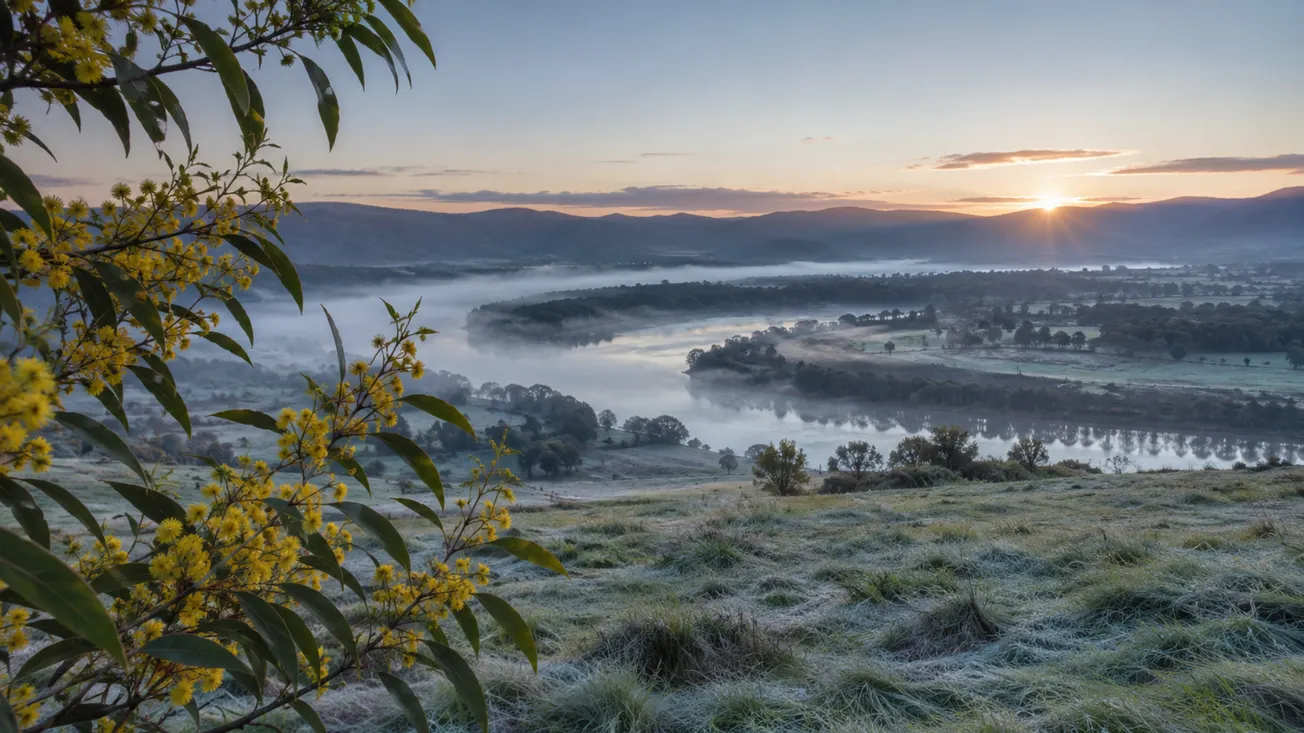
But here in the Hawkesbury, on Dharug Country, the way seasons were understood was different. For the Dharug people, time was not defined by a single date or astronomical event like the solstice. Instead, the seasons were read from the land itself through changes in plants, animals, weather, and waterways. A local example is the flowering of Sydney green wattle, also known as early green wattle. As winter deepens, its yellow flowers begin to appear across the broader Sydney region, offering one of many natural signs that the season is shifting. The movement of birds, the behaviour of fish, the arrival of cold winds, and the spread of frost were also real indicators of seasonal change.
Around this time of year, the region enters its coldest period in these knowledge systems. Importantly, that shift is not tied to a fixed date like June 21. It arrives when the environment shows that it has arrived. Rather than dividing the year into fixed months and anchoring meaning to a single celestial moment, Aboriginal seasonal knowledge is local, responsive, and grounded in what is actually happening on Country.
That perspective still resonates today. In the Hawkesbury, winter does not arrive all at once. You notice it in the early morning fog rolling along the river, in the stillness before sunrise, and in the bite of the westerly wind. Often, the coldest part of the year comes weeks after the solstice itself.
In that sense, the solstice is less the beginning of winter and more a turning point within it, the longest night and the moment from which the light begins to return. It is a reminder that the Hawkesbury has always followed its own rhythms, and that those rhythms are still there to be read.