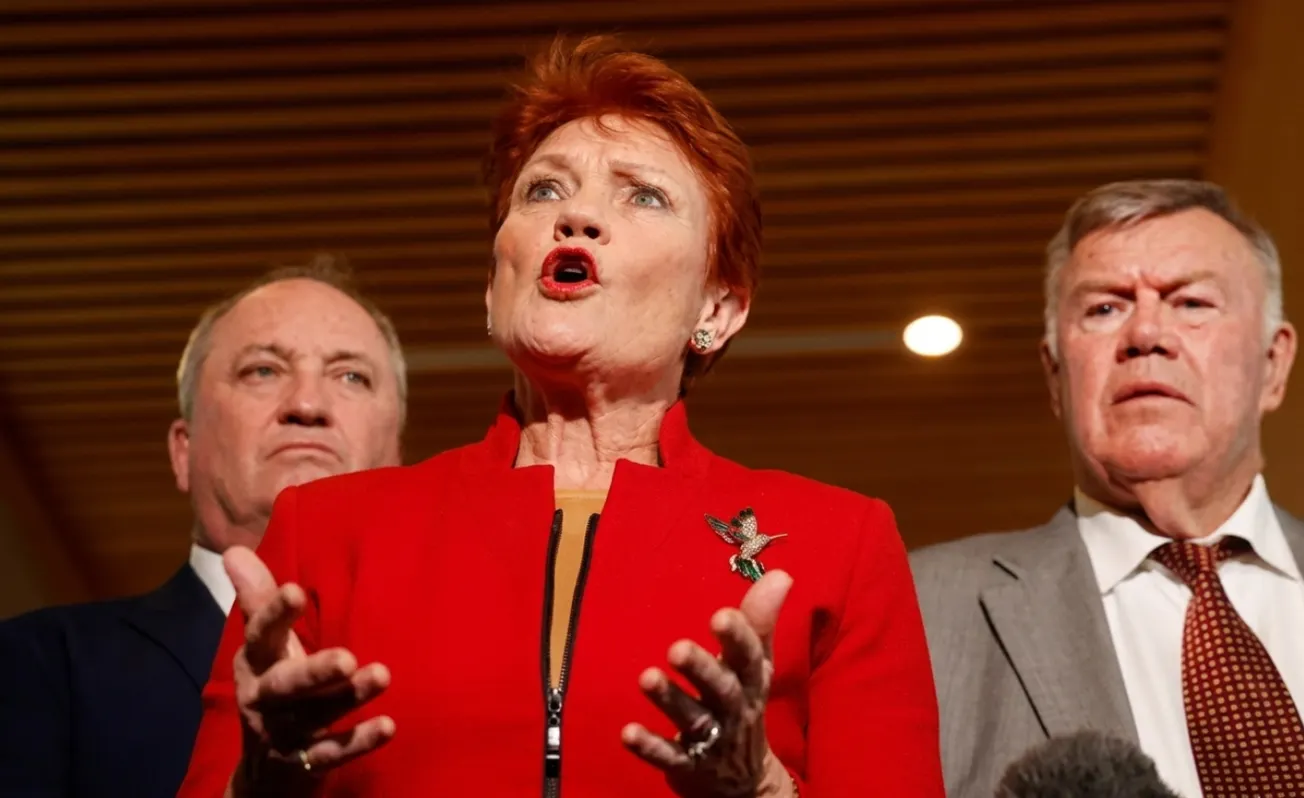
Senator Pauline Hanson and One Nation have launched a high-stakes legislative bid to dismantle Australia’s newly minted cash mandate, sparking a fierce debate over the future of legal tender in a rapidly digitising economy. While cash use is appearing to make a resurgence, increasing from 13% to 15% of total sales from 2022 to 2025, the debate surrounding appropriate regulation to protect consumer-rights continues.
In a move that has blindsided both government and consumer advocacy groups, One Nation senators moved a 'dis-allowance motion' in the Senate late last month, seeking to strike down the Competition and Consumer (Industry Codes—Cash Acceptance) Regulations 2025.
The mandated cash-acceptance legislation, which came into effect on January 1, 2026, requires major grocery and fuel retailers to accept cash for in-person transactions under $500. The mandate was designed as a "safety net" for the estimated 1.5 million Australians who rely on physical currency, including the elderly, regional communities, and those vulnerable to digital outages.
While Pauline Hanson has historically been a vocal critic of the "cashless society", her party's latest tactical move, seeking to remove the only legal protection currently forcing businesses to accept cash, has left many observers confused.
During a heated Senate debate on March 31, 2026, Coalition and Labor senators questioned the logic of the move.
"Why would any Senator who says they care about people who use cash actually want to remove the only cash acceptance obligation that has ever existed in Australian law?" posited the Deputy Leader of the Opposition and Shadow Minister for Employment and Workplace Relations, Michaelia Cash. "The tactic of One Nation is bizarre."
Senator Cash argued that the removal of the new consumer protections would leave Australians with no legal protection at all, reverting the law to a state where no business had any obligation to accept physical currency.
For the Hawkesbury region, which encompasses a mix of suburban centres and isolated rural communities, this creates a significant vulnerability.
In many regional and peri-urban areas, digital connectivity is not a given. The Hawkesbury often faces reliability issues with telecommunications and power, especially during the frequent flood events and bushfire seasons that define the local landscape. Without the "safety net" of the cash mandate, residents in these areas could find themselves unable to purchase essential food or fuel during a network outage if local supermarkets choose to pivot entirely to digital payments.
For the estimated one-third of Australians who rely on cash for inclusion or as a fallback, the removal of this mandate would strip away their legal right to use sovereign currency for life's necessities.
Furthermore, the impact would be felt most acutely by the Hawkesbury's significant population of seniors and lower-income households. Data from the Reserve Bank of Australia (RBA) in 2026 indicates that one in two Australians over 65 still uses cash regularly.
In semi-regional towns, such as in the Hawkesbury, where local bank branches have been closing at an accelerated rate, the ability to use cash at the supermarket or petrol station is more than just a preference - it is a critical link to the economy. By striking down these protections without an immediate, stronger replacement, the disallowance risks leaving these vulnerable groups in a "regulatory void" where businesses have no obligation to accept their money.
One Nation’s push is reportedly rooted in a broader opposition to government overreach and what the party describes as "watered-down" regulations. Senator Malcolm Roberts argued that the current mandate is too narrow, applying only to supermarkets and petrol stations while leaving other sectors free to "debank" cash users.
Hanson has previously linked the push toward digital payments to the "Digital ID" roll-out, which she claims is a step toward a "one-world government" and total state surveillance. By moving to disallow the current regulations, One Nation appears to be signalling that the existing laws are a "tokenistic" distraction from a more comprehensive "Cash as Legal Tender" bill the party prefers.
Hanson and One Nation Senator Malcolm Roberts contend that by removing the current regulations, they can force the government back to the drawing board to pass a more comprehensive "Cash as Legal Tender" bill that would apply to all businesses with a much higher transaction limit (up to $10,000).
This "all or nothing" approach is what sparked the intense debate with the Coalition and Labor, who argue that removing the current "safety net" before a new one is built leaves regional Australians with no protection at all.
The potential removal of the mandate has caused concern among consumer groups like CHOICE and Financial Counselling Australia. If the disallowance motion succeeds, major retailers like Coles, Woolworths, and BP would no longer be legally bound to accept notes and coins.
The Coalition has indicated it will not support One Nation’s disallowance motion, despite agreeing that the mandate is limited. Instead, the Opposition has flagged its own private senator’s bill to expand the mandate rather than scrap it.
As the 2026 legislative calendar continues, the fate of the $20 note at the checkout remains at the centre of a growing political firestorm.
Sources:
- Senate Hansard, "Competition and Consumer Regulations: Disallowance Motion," March 31, 2026.
- Treasury Portfolio, "Mandating Cash Acceptance for Essential Purchases," December 2025.
- Reserve Bank of Australia, "Cash Use in Australia: 2025 Consumer Payments Survey," April 2026.
- The Guardian, "Pauline Hanson’s One Nation and the Politics of Cash," April 16, 2026.