Table of Contents
A legal case involving repeated refusals of rides to a passenger travelling with a guide dog has prompted rideshare company Uber to agree to an external review of its Australian operations, a development disability advocates say could have important implications for communities across regional NSW, including the Hawkesbury.
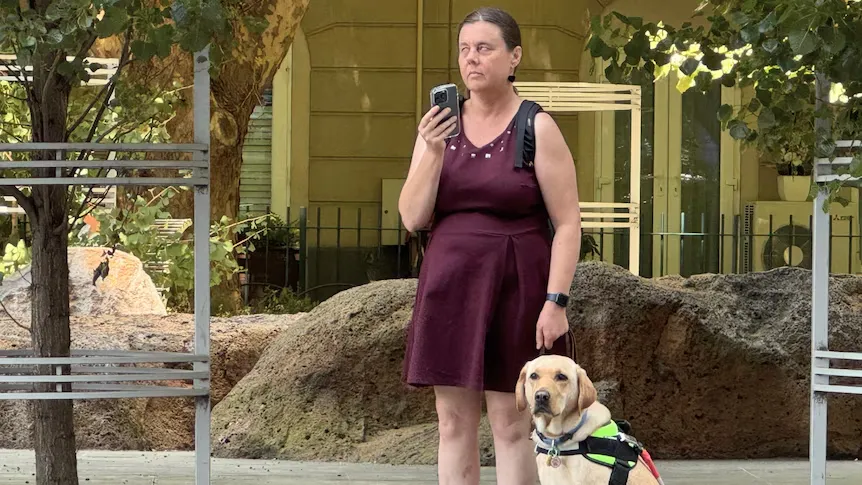
The review follows a Hobley v Uber Technologies Inc action brought in the Federal Court of Australia by Victorian woman Paula Hobley, who alleged she was refused rides on more than 30 occasions because she was travelling with her guide dog.
The case was settled late last year after mediation, without an admission of liability from Uber.
However, as part of the settlement, the company agreed to an independent review examining why drivers refuse passengers travelling with assistance animals and what changes may be needed to address the issue.
Alleged Breaches of Disability Discrimination Law
Ms Hobley first began documenting refusals in 2021 after multiple drivers declined to pick her up when they realised she was travelling with a guide dog.
Under the Disability Discrimination Act 1992, assistance animals such as guide dogs must be accepted in taxis and rideshare vehicles, and refusing a passenger because of a guide dog may breach the law.
Speaking after the settlement, Ms Hobley said pursuing the case had been exhausting but necessary.
“It’s one person taking on an entire company to forge a path towards justice,” she said, describing the experience as at times feeling like “David versus Goliath.”
Independent Review to Examine Refusals
The review will investigate how often Uber drivers refuse passengers travelling with assistance animals and what measures could reduce those incidents.
The process will be overseen by a chairperson who has lived experience of disability.
Legal advocates say the review is an important step but acknowledge it may take time before meaningful changes occur.
Mitchell Skipsey, a senior solicitor with the Justice and Equity Centre, which represented Ms Hobley, said the agreement to conduct a review offered some hope.
“I think the review process is a meaningful commitment to identify a solution and implement it,” he said.
“The shame here is that it hasn’t happened sooner, that the two years, as it were, starts from now, when it’s been a problem for a long time and it’s the kind of thing that could have been tackled earlier.”
Guide Dogs Raise Ongoing Concerns
Disability advocates say the case reflects a broader issue experienced by people who rely on assistance animals for mobility.
Tamara Searant, General Manager of Social Change at Guide Dogs NSW/ACT, said discrimination in transport services remains widespread.
“A staggering 56% of assistance dog handlers experienced rideshare or taxi refusals in the last year,” Ms Searant said.
“This information is from the international Paws for Access report and demonstrates the ongoing, global need to combat discrimination in the transport sector for people with low vision and blindness who use a guide dog as a mobility aid.”
“Every refusal causes emotional harm, loss of independence and reduced participation in public life.”
Ms Searant said the organisation is working with the NSW Point to Point Transport Commission to strengthen regulations to ensure guide dog handlers are not refused transport.
“Guide Dogs NSW/ACT is working with the Point to Point Transport Commissioner on strengthening regulations to ensure Guide Dog handlers are not refused transport. Enforcement of rights must be taken seriously and applied consistently by regulators.”
She said the organisation will also continue working with rideshare companies to improve awareness among drivers.
“We will continue to work with rideshare operators to ensure platforms and drivers understand the rights of those with low vision and blindness in NSW as we aim for zero rideshare refusals.”
Guide dogs for NSW are also trained locally at the Guide Dogs NSW/ACT Glossodia Campus in the Hawkesbury region, highlighting the area’s direct connection to the program that supports people with low vision and blindness across the state.
Why It Matters for the Hawkesbury
For regional communities like the Hawkesbury, accessible transport can be particularly important.
While metropolitan areas may have multiple public transport options, residents in outer-regional areas often rely more heavily on rideshare services, taxis and community transport to access employment, medical appointments and essential services.
For people who use guide dogs or other assistance animals, being refused transport can make everyday activities far more difficult.
Advocates say the case highlights the need for stronger protections to ensure people with disability can travel freely and independently.
As rideshare services continue to expand into regional areas, the outcome of the review may influence how companies enforce policies designed to protect passengers with assistance animals.
The case and settlement were first reported by ABC News, which also covered the story on national television news.
The external review is expected to take up to two years to complete.