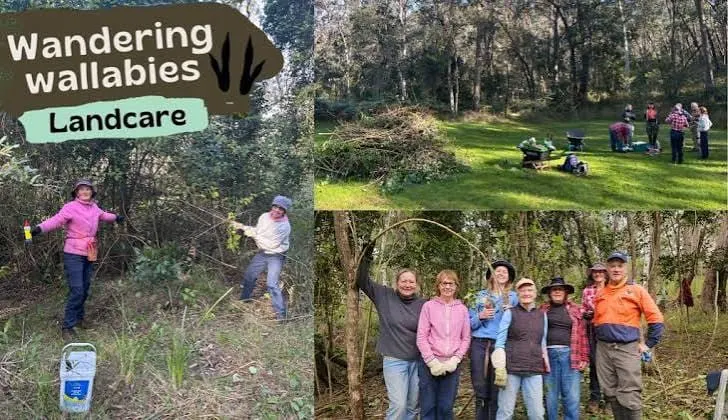
Hawkesbury residents are being invited to roll up their sleeves and help restore wildlife habitat during a Landcare working bee at Wilberforce next month.
The Wandering Wallabies Landcare Working Bee will be held on Monday, September 21, from 9am to 12.30pm at a registered Land for Wildlife property.
The Hawkesbury-Nepean Landcare Network is organising the event, which will combine practical conservation work with training in plant identification, weed management and bush regeneration.
No previous Landcare or bush-regeneration experience is required, and tools and gloves will be supplied.
Learning while helping
Volunteers will learn how to distinguish native plants from environmental weeds and how different weeds should be safely removed or treated.
The morning will cover:
- native and weed identification;
- weed-removal and treatment techniques;
- how invasive plants disperse their seeds;
- containing weeds to prevent further spread; and
- general bush-regeneration practices.
Participants will then apply those skills while helping the landholder improve the condition of the property.
The work is intended to reduce invasive weeds, give native plants more room to regenerate and improve habitat for local wildlife.
Why weed control matters
Environmental weeds are among the most persistent threats to bushland across the Hawkesbury.
Species including lantana, privet, Madeira vine, African olive, green cestrum and Crofton weed can spread into native vegetation and compete with local plants for light, water, nutrients and space.
Some weeds form dense thickets that change habitat structure, restrict the natural regeneration of native plants and reduce the variety of food and shelter available to wildlife.
Others can spread through seeds carried by birds, animals, vehicles, water, soil or clothing. Some species can regenerate from small pieces of stem, root or tuber left behind after removal.
Knowing how a plant reproduces is therefore essential. Pulling or cutting a weed without using the correct method can sometimes spread it further.
The working bee will help participants understand not only which plants should be removed, but how to treat them without causing additional dispersal.
Conservation on private land
The event will take place on a property participating in the Land for Wildlife program.
Land for Wildlife supports landholders who want to conserve wildlife habitat on their properties while retaining private ownership and control of their land.
Private properties play an important role in conservation because wildlife does not remain within national parks, reserves or other publicly managed areas.
Remnant vegetation, creek lines, paddock trees and regenerating bushland can provide food, shelter and movement corridors between larger habitat areas.
Cooperation between neighbouring landholders can also improve landscape connectivity, allowing animals to move more safely in search of food, breeding sites and refuge.
Wandering across the catchment
The Wandering Wallabies is a roaming Landcare group operating across the Hawkesbury-Nepean catchment.
Unlike groups attached to one reserve or locality, its volunteers travel to different properties and restoration sites where help is needed.
Previous working bees have targeted invasive plants including lantana, Madeira vine, green cestrum and privet. Volunteers have also supported planting projects, learned to identify native and introduced grasses and assisted existing Bushcare groups.
The roaming model provides an opportunity for people without a nearby Landcare group to participate when they are available.
Volunteers can attend a single event without making an ongoing commitment, although repeat participation is welcomed.
The model also encourages landholders to help at other properties, building a reciprocal network through which participants share labour, knowledge and practical experience.
What volunteers should bring
Participants must wear enclosed shoes. Long-sleeved shirts and long pants are also recommended to protect against scratches, insects and sun exposure.
Volunteers should bring:
- drinking water;
- a hat;
- sunscreen; and
- a raincoat and gumboots if wet conditions are expected.
Tools and gloves will be provided, although experienced volunteers may bring their own equipment if preferred.
Refreshments, tea and coffee will be available.
Event details
What: Wandering Wallabies Landcare Working Bee
When: Monday, September 21, from 9am to 12.30pm
Where: A Land for Wildlife property at Wilberforce
Cost: Free
Experience: None required
Organiser: Hawkesbury-Nepean Landcare Network
Because the working bee is being held on private property, the street address will be emailed to registered participants before the event.
Questions can be directed to organiser Monique on 0410 616 139.
Registration is available through the official Eventbrite listing.