IN BRIEF
- Australians consume 40–50% of their daily calories from ultra-processed foods (UPFs), among the highest rates in the world.
- Researchers say diets high in UPFs are associated with obesity, type 2 diabetes, cardiovascular disease, some cancers and poorer mental health, although not every UPF carries the same health risk.
- Nutrition experts say the focus should remain on eating mostly whole foods while enjoying processed foods as a treat.
What exactly is ultra-processed food?
Australians are among the world's biggest consumers of ultra-processed foods, with experts estimating they account for between 40 and 50 per cent of the average person's daily calorie intake. That figure has prompted growing concern among health researchers, who are increasingly linking diets high in ultra-processed foods with a range of chronic illnesses.
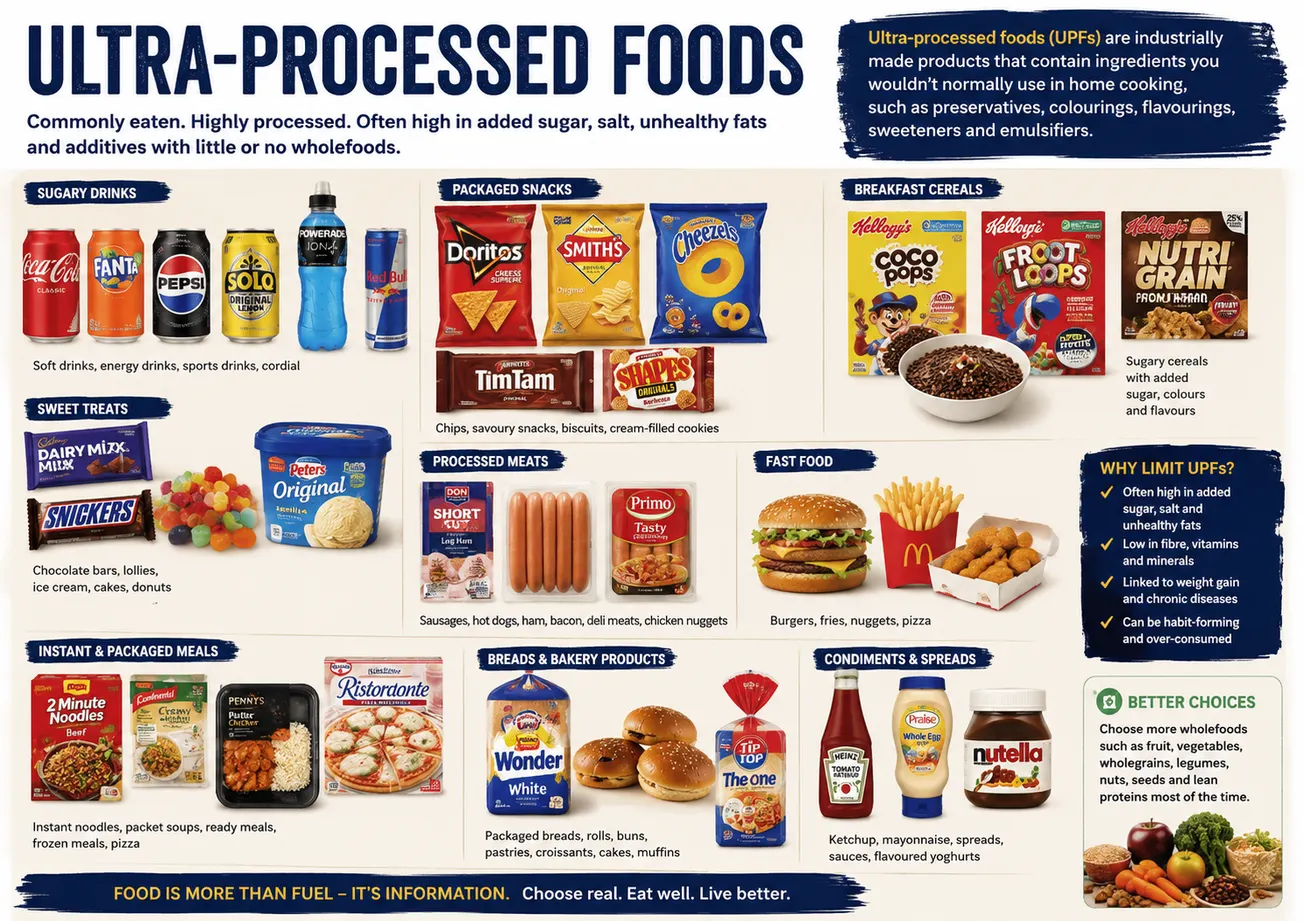
Ultra-processed foods, often referred to as UPFs, include products that have been industrially manufactured using ingredients and additives rarely found in a home kitchen. Unlike simply processed foods such as canned vegetables, cheese or bread, many UPFs contain multiple additives, flavourings, preservatives, emulsifiers and modified starches designed to improve taste, texture and shelf life.
Common examples include sugary breakfast cereals, confectionery, soft drinks, packaged snack foods, fast food, flavoured chips and many ready-made convenience meals.
A cancer diagnosis prompts lifestyle change
For Melbourne fitness coach Danni Duncan, a diagnosis of stage two bowel cancer at just 39 years of age became the catalyst for examining her lifelong eating habits.
After researching possible contributing factors, she noticed one common theme.
"One of the common denominators was this big influx of ultra-processed food through the 90s," she said.
Danni stressed that ultra-processed foods are unlikely to be the sole cause of bowel cancer and acknowledged many factors influence disease risk. However, she questioned whether the highly processed diet common during her childhood may have played a role.
She recalled growing up on foods such as Coco Pops, Rice Bubbles with sugar, Tiny Teddies, Shapes, chips, Nutella, white bread and frequent fast food meals.

Growing evidence, but not every expert agrees
Public health researcher Phillip Baker from the University of Sydney says evidence increasingly points to strong associations between high consumption of ultra-processed foods and poor health outcomes.
He says research links diets high in UPFs with obesity, weight gain, cardiovascular disease, type 2 diabetes, chronic kidney disease, inflammatory bowel disease, some cancers and mental ill health. Researchers also believe these foods contribute to low-grade inflammation throughout the body.
However, not all nutrition scientists agree that the label "ultra-processed" is the best way to guide healthy eating.
Nutrition scientist Flavia Fayet-Moore argues the NOVA classification system, which categorises foods according to their level of processing, is too broad and can unintentionally discourage people from eating nutritious foods such as wholegrain breads and yoghurt simply because they fall into the UPF category.
She believes consumers should focus on the nutritional value of foods rather than relying solely on whether they are classified as ultra-processed.
Healthy eating isn't always affordable
The report also highlights the challenges many Australians face in avoiding processed foods.
Queensland resident Janine Petherick, who lives on a disability pension, says limited income and food availability often leave her relying on shelf-stable processed foods supplied through food banks.
"It's what we need, not what we want. We don't have many options," she said.
Chef and former food educator Angie Prendergast Sceats says lack of time also makes it difficult for busy families to prepare everything from scratch.
Despite cooking mostly whole foods at home, she acknowledges that convenience foods still have a place in family life.
"There's a reason we don't drop dead when we eat a pack of chips," she said.
"But if you're eating those chips like every single day, there's the problem."
A balanced approach
Following successful treatment, Danni has removed most ultra-processed foods from her household but says she has not banned them completely.
Instead, she believes moderation is the key.
She still enjoys chocolate with a cup of tea and occasionally shares a packet of crisps with her family on weekends, believing that healthy eating is about long-term balance rather than perfection.
For Hawkesbury families, where busy lifestyles often mean convenience foods become part of weekly shopping, nutrition experts say the message is not to eliminate every processed food but to make whole foods such as fresh fruit, vegetables, legumes, lean proteins and minimally processed grains the foundation of a healthy diet.
As research into ultra-processed foods continues to evolve, one point appears to attract broad agreement: the less heavily processed our diets are overall, the better our long-term health is likely to be.
For further information see https://www.sbs.com.au/news/insight/article/danni-was-diagnosed-with-bowel-cancer-at-39-it-made-her-rethink-what-she-ate-growing-up/