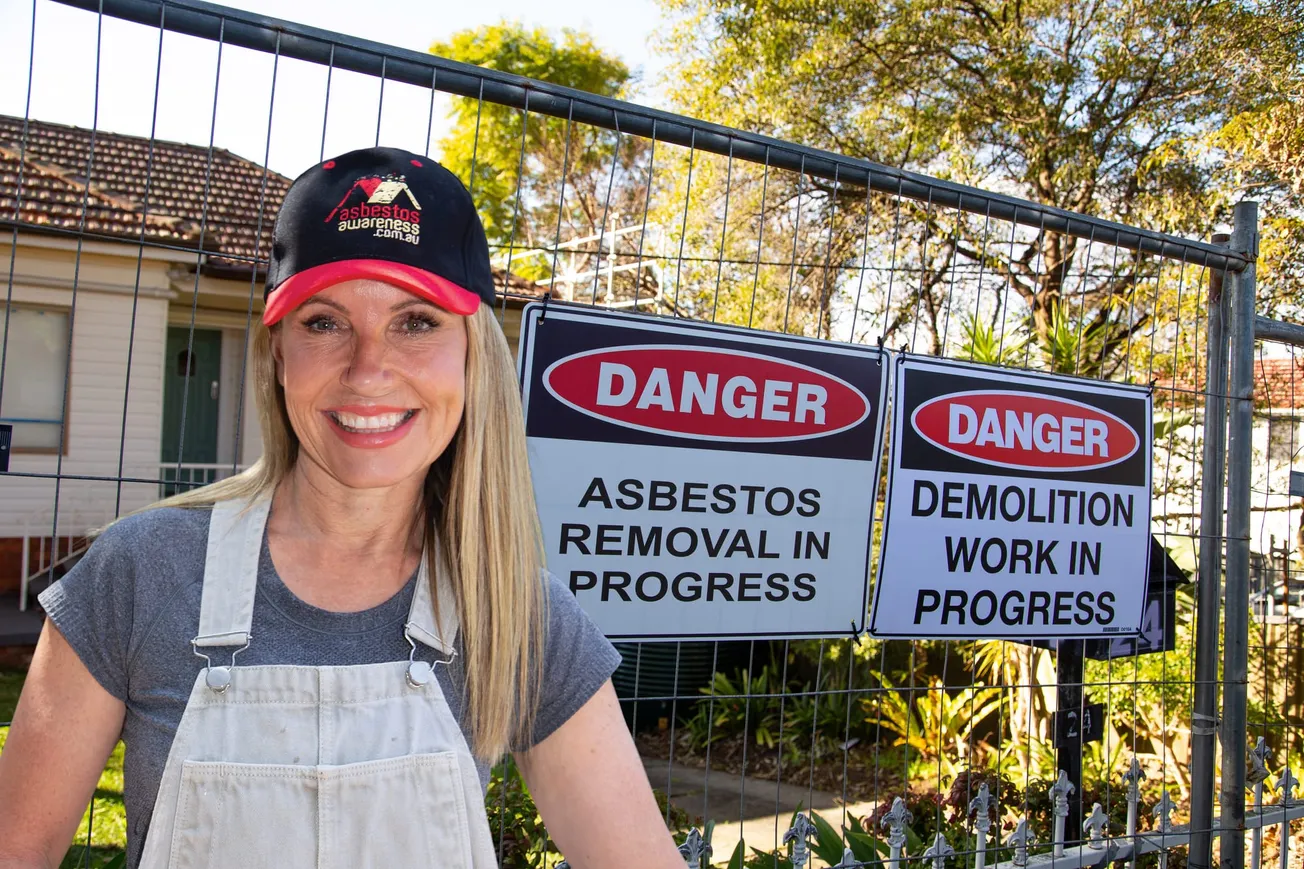
Television renovator Cherie Barber is urging Hawkesbury homeowners to check for asbestos before starting DIY projects, warning that materials hidden in older properties can put entire families at risk.
The National Asbestos Awareness Ambassador is lending her voice to National Asbestos Awareness Week, November 23–29, with a message shaped by personal loss.
“My grandfather died from an asbestos-related disease, and his loss is why I’ve spent over a decade advocating for greater awareness of asbestos dangers lurking in Australian homes,” Barber said.
Australia banned asbestos nationally in 2003, but the ban did not remove materials already installed in buildings. An estimated 4,000 Australians die from asbestos-related diseases each year.
For Hawkesbury residents, the warning extends beyond the family home to older garages, fences, backyard structures and farm outbuildings.
Asbestos was used in more than 3,000 products, including building materials found in homes and sheds constructed before 1990.
“Deaths caused by inhaling asbestos fibres are not a thing of the past,” Barber said in the campaign’s media release.
“Asbestos remains a very real and present danger especially for homeowners of properties built before 1990.”
Barber said financial pressures could encourage people to undertake work themselves without recognising the risks.
“But with rising living costs encouraging more people to tackle DIY projects, I’m concerned that too many homeowners are unknowingly playing renovation roulette with their lives,” she said.
Asbestos-containing materials can be concealed beneath floor coverings, behind tiles, inside walls and around older building fixtures. Their presence cannot reliably be determined simply by looking at them.
Even small maintenance jobs can disturb asbestos. NSW Government guidance warns against drilling, sanding, cutting or water-blasting suspected materials.
The campaign describes a “third wave” of exposure affecting homeowners, renovators and others who encounter asbestos remaining in buildings, following earlier exposure among asbestos industry workers and construction trades.
Its message is that the risk can extend beyond the person holding the tools, including through dust carried on clothing or equipment.
“Your partner, your children and anyone nearby could also be at risk,” Barber said.
That warning has particular meaning for Queensland father and asbestos-awareness advocate Phil Smith.
His wife, Leah, died from malignant mesothelioma on August 22, 2024, aged 49, just eight months after her diagnosis.
Smith believes she was exposed as a three-year-old while spending time around the home her parents were building in Gympie. In his account accompanying the campaign release, he describes an inquisitive child who enjoyed being near her parents and helping with clean-ups.
“This is where we believe Leah was exposed to asbestos fibres,” he said.
After her death, Smith established Ride In Shorts For Leah, an awareness and fundraising initiative named in recognition of her love of horses and her habit of riding in shorts when not competing.
“Our family, friends and the whole community were left devastated when Leah lost her battle with this deadly disease that we knew nothing about,” he said.
He said the initiative aimed to prevent other families experiencing a similar loss.
For homeowners planning work, the first step is to establish whether asbestos may be present before disturbing building materials.
Official guidance distinguishes between intact material and material that is damaged or likely to be disturbed. Asbestos-containing material in good condition should be left undisturbed, with professional advice sought where it is broken, weathered or could be affected by renovations.
If suspected asbestos is uncovered, stop work and seek professional advice. Asbestos waste must never go into a household kerbside bin.
Barber is encouraging residents to use the free resources at asbestosawareness.com.au, including the video Asbestos in Homes: A Guide to Identification, Testing and Removal, property checklists and guides for homeowners and tradespeople.
“DIY should never mean ‘Do It Dangerously’,” she said.
“As someone who has experienced the devastating loss asbestos can cause, I don’t want another Australian family to suffer the same heartbreak.”
Asbestos Awareness Day is Friday, November 27. Further NSW safety information is available at asbestos.nsw.gov.au.