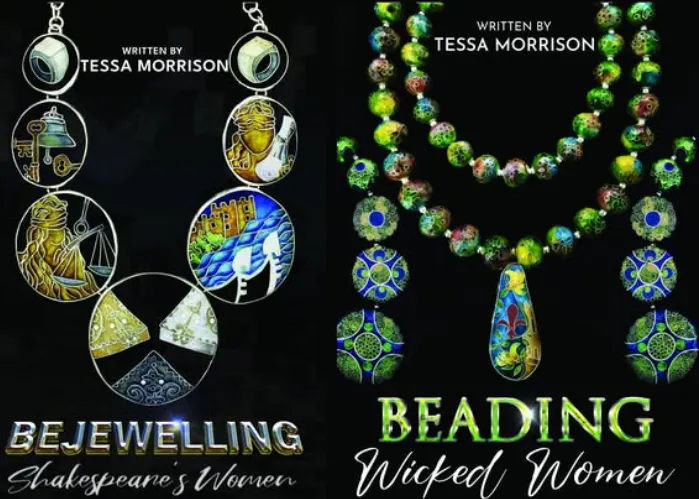
Women branded “wicked” for defying the expectations of their time will be the focus of an author talk at Hawkesbury Central Library during this month’s Write Out West festival.
Author and artist Tessa Morrison will discuss her latest book, Beading Wicked Women, on Thursday, November 26, from 11am to 12.30pm, exploring the lives of 14 historical women through their stories and specially designed beaded necklaces.
Spanning more than 3,000 years, from 1500 BCE to 1542 CE, the book examines women whose reputations were shaped by accusations that they failed to conform to accepted standards of female behaviour.
Morrison’s central argument is that remarkably similar accusations followed these women across different eras and cultures.
The book questions how male chroniclers, the recorders and interpreters of history drew on negative stereotypes of women to support political and social narratives. Those accounts, Morrison argues, became accepted versions of the women’s lives, often without a systematic evaluation of the evidence.
Some of the women were famous in their lifetimes but have since been forgotten. Others remain influential hundreds of years after their deaths.
They were women who held authority or were connected to courts, exercising leadership and enjoying the privileges of their positions, including jewellery.
Morrison has designed a beaded necklace for each woman, connecting her character, culture and political or social standing with the materials, designs and bead-making techniques of her era.
The book explores beads as more than decoration, examining their protective and symbolic meanings and what they reveal about religious beliefs, social circumstances and political history.
An exhibition of 14 handcrafted jewellery pieces by Morrison is on display at Hawkesbury Central Library until November 26. Visitors attending her talk will have a final opportunity to see the collection.
Both author talks and the jewellery exhibition are at Hawkesbury Central Library, 300 George Street, Windsor.
Western Sydney Libraries and Literature Festival
The event forms part of Write Out West: Western Sydney Libraries and Literature Festival, running from Wednesday, November 25, to Sunday, November 29.
The five-day program includes author talks, panel discussions, workshops, Storytimes and history walks for audiences of all ages.
A lost singing voice and an unsettled past: the story behind Sing to Me
Hawkesbury Library Service will also welcome Jelena Curic on Saturday, November 28, from 10.30am to 12.30pm, to discuss her debut novel, Sing to Me.
Curic’s book explores resilience, healing and rediscovering the soul’s song.
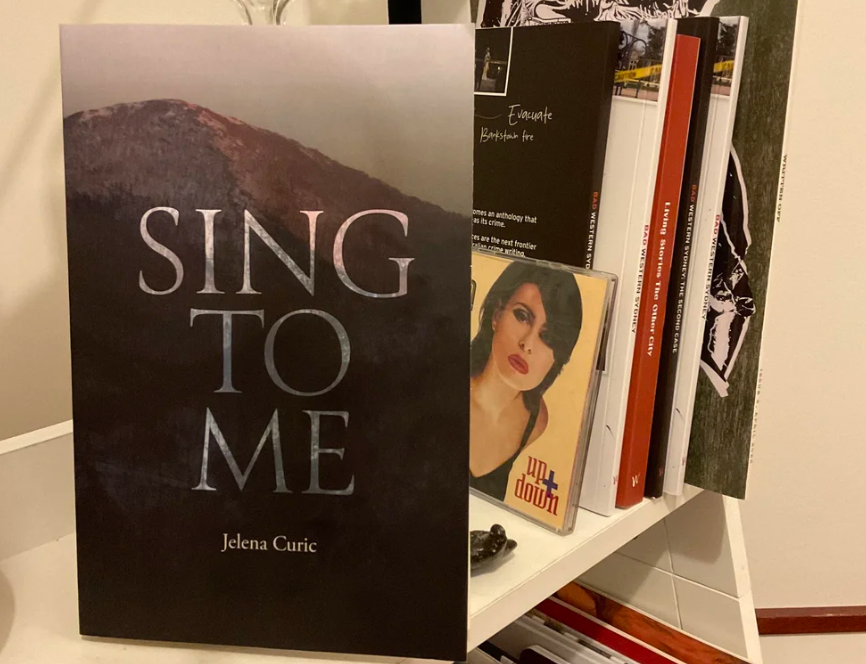
Jelena Ćurić’s debut novel follows a Croatian immigrant from Sydney back to the people, music and memories he left behind.
After four decades performing on stage, Jelena Ćurić has turned to fiction to tell the story of a man who has lost his motivation to sing.
Her debut novel, Sing to Me, follows Pero, a Croatian immigrant whose relationship with music has been strained by secrets, political tensions and fractured relationships.
Hawkesbury readers will have an opportunity to hear Ćurić discuss the book at Hawkesbury Central Library on Saturday, November 28, from 10.30am to 12.30pm, as part of the Write Out West literature festival.
In a review published by Vjesnik on October 29, 2025, Ante Grabovac describes a novel rich in the sights, sounds and emotions of Croatian life.
The story opens in Sydney in 1980 before following Pero to Croatia to visit his sick mother. The journey brings him face to face with a past he left behind, including memories of entertaining local audiences with his companion Bepo.
Grabovac’s review highlights the novel’s depiction of political pressures that divided families and friendships, alongside the personal difficulties Pero encounters as he tries to reconnect with people from whom he has become distant.
For readers familiar with the era, Grabovac suggests, the descriptions will be particularly evocative. Rooms, clothing, food and cigarette smoke combine to recreate the atmosphere of another time.
It is, he writes, “a step back in time”.
Music runs through the story. Croatian lyrics appear alongside English translations, allowing readers unfamiliar with the language to follow the emotions expressed in the songs.
Love, loss, longing and memory provide a connection between Pero’s experiences and the music woven through the novel.
Although Ćurić’s own performing career makes the title fitting, Grabovac makes clear that the book is not a memoir of her years behind a microphone. Its focus is a fictional character gradually confronting the experiences that have shaped him.
Grabovac describes the unfolding story as compelling, calling it “a hard book to put down”.
He also reports that Ćurić described the novel as an achievement a decade in the making. Alongside her writing, she continues performing at weddings and events with Croatian band Sto Na Sat.
For Hawkesbury readers, the forthcoming library talk offers a chance to hear how a performer’s understanding of music and emotion has found expression on the page.
This article draws on Ante Grabovac’s review published by Vjesnik on October 29, 2025.