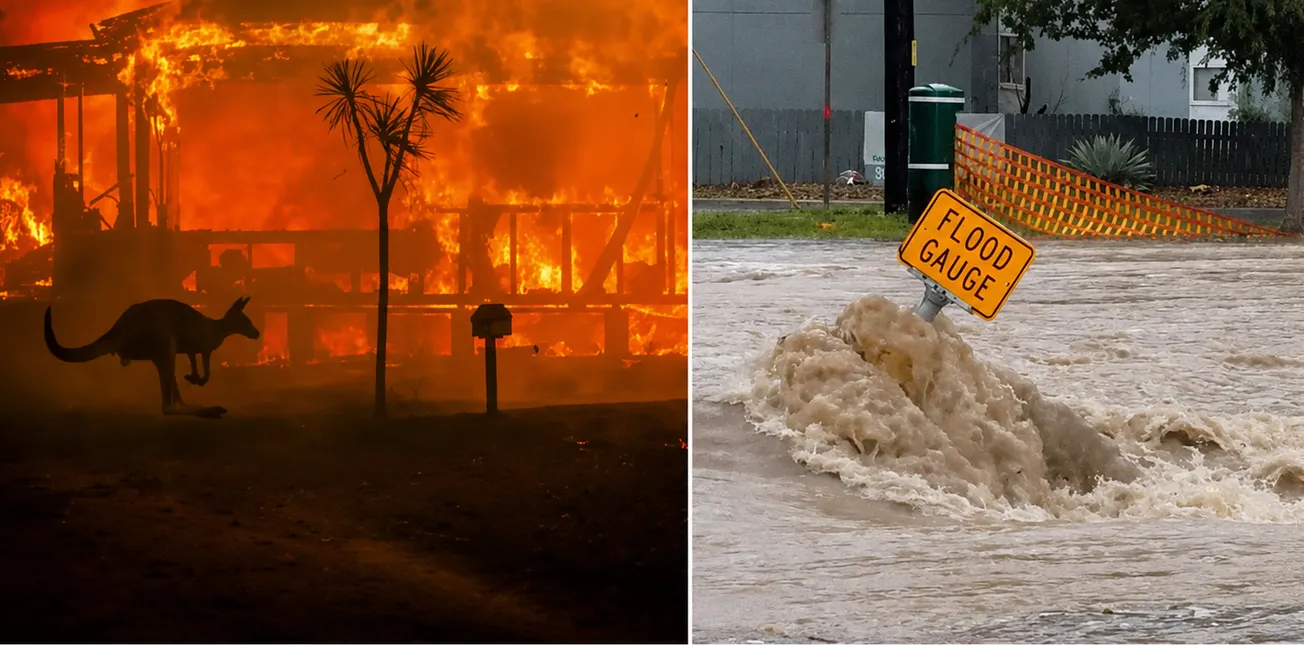
Communities repeatedly hit by floods and bushfires could receive faster and more consistent recovery assistance under a major overhaul of Australia’s disaster funding system proposed by the Federal Government.
The National Emergency Management Agency has released a discussion paper proposing that the existing Disaster Recovery Funding Arrangements be replaced by a new Disaster Recovery Funding Framework.
The Australian Government says the new system would be simpler, fairer and better suited to an era of more frequent, severe and compounding disasters.
The reforms would shift the focus from simply repairing damage to helping communities rebuild infrastructure to withstand future events.
For the Hawkesbury, where residents, businesses and council infrastructure have been repeatedly affected by floods, bushfires, road closures and landslips, the changes could have significant consequences.
In a March 2026 speech to Parliament, Susan Templeman MP highlighted the impact of floods in the Macquarie electorate, noting the need for improved flood mitigation, resilience and insurance, and cited more than $193 million in economic losses from recent flood events in the electorate
Under the proposal, the Commonwealth and State governments would generally share eligible disaster recovery costs on a 50:50 basis once a disaster exceeds a new event-based financial trigger.
For New South Wales, that proposed trigger would be $2.7 million in eligible costs across all areas affected by the same disaster.
The current system relies on annual state expenditure thresholds, which can delay Commonwealth reimbursement and make it difficult for councils and communities to know when funding will become available.
The paper says the new model would allow states to access Commonwealth assistance sooner and reduce the need for governments to negotiate individual recovery measures after each disaster.
Another major change would be the introduction of nationally consistent hardship payments.
At present, the amount and type of assistance available to disaster victims varies between states and territories.
The proposed system could provide standard payments for emergency food, clothing and medication, temporary accommodation, replacement of essential household contents, restoration of damaged homes and the reconnection of electricity, water and sewerage services.
The existing disaster funding categories would also be replaced by clearer packages covering individuals and families, community recovery, local economic recovery, environmental recovery and resilient infrastructure.
Support could include mental health services, disability assistance, short-term clean-up programs and funding for councils to employ community recovery officers for up to two years.
Small businesses and primary producers could receive nationally consistent recovery grants, interest subsidies, freight assistance and emergency fodder.
The paper also proposes support for businesses indirectly affected by disasters, such as tourism operators cut off by road closures or landslips.
A new Resilient Infrastructure Scheme would allow damaged public assets to be rebuilt to a stronger standard rather than simply replaced like-for-like.
Governments could receive up to an additional 15 per cent toward resilience improvements for high-priority assets, with the Commonwealth and state each contributing up to 7.5 per cent.
This could potentially support stronger roads, bridges, drainage systems and other public infrastructure in disaster-prone communities such as the Hawkesbury.
Environmental recovery would also become a formal funding category, potentially covering contaminated waterways, damaged national parks, river systems, weeds, pests and other disaster-related environmental harm.
The Government estimates combined Commonwealth, state and territory disaster recovery costs could total about $70 billion between 2028 and 2038.
Written submissions on the proposed reforms close on 19 August 2026. Readers can download the Disaster Management Reform Discussion Paper 6 July 2026 from the Australian Government National Emergency Management Agency.
The Gazette has contacted Susan Templeman MP for comment on the proposed changes.