One of the Hawkesbury and Blue Mountains region’s most recognisable native flowers is in the running to be crowned Australia’s most amazing wildflower as part of National Science Week 2026.
Australians are being invited to choose between 10 remarkable native plants in an ABC Science poll celebrating not simply their beauty, but the extraordinary ways they have adapted to survive.
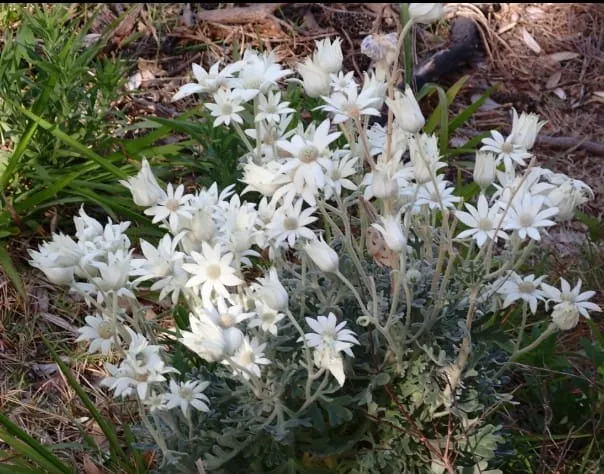
Among the contenders is the flannel flower, Actinotus helianthi, a familiar sight in sandstone country around the Sydney region and the Blue Mountains.
With its soft, woolly white bracts and silvery foliage, the flannel flower may look delicate, but its inclusion in the competition is based on one of its more dramatic characteristics — its ability to produce spectacular displays following fire.
That gives the competition particular resonance in the Hawkesbury, where fire is an integral part of the landscape and residents have repeatedly watched bushland regenerate after major bushfires.
The poll is being conducted for National Science Week, which this year runs from August 15 to 23, with thousands of activities taking place around Australia. National Science Week is designed to encourage Australians of all ages to engage with science and technology.
Ten very different Australian survivors
The ABC, working with experts, has selected 10 native flowering plants, each demonstrating an unusual biological adaptation or ecological story.
The finalists are the blue bladderwort, a tiny carnivorous plant capable of trapping small organisms; creamy candle, known for its sweet night-time scent; flannel flower, renowned for mass flowering following fire; and the extraordinary flying duck orchid, which uses deception to attract its pollinators.
Also competing are mulla mulla, an exceptionally hardy survivor of harsh Australian conditions; murnong or yam daisy, an important traditional First Nations food plant; Tasmania's colourful Richea scoparia, adapted to cold alpine conditions; Calytrix or star flower, which can use colour changes as a signal; and the aptly named triggerplant, whose remarkable pollination mechanism effectively strikes visiting insects.
Completing the field is perhaps the strangest contestant of all — the underground orchid, an unusual orchid that spends virtually its entire life beneath the soil.
The competition is deliberately looking beyond some of Australia's best-known plants such as banksias and waratahs to highlight less celebrated species growing in the nation's understorey.
A flower made for fire country
For Hawkesbury readers, however, the flannel flower may have a home-ground advantage.
The species occurs naturally in eastern NSW and is closely associated with sandstone landscapes.
Its distinctive flowers can sometimes appear in large numbers following bushfire, creating striking white displays across regenerating country.
That capacity makes the flower an appropriate contender from a district where the relationship between fire and the Australian bush is particularly visible.
Fire can be devastating to individual plants and animals, but many Australian species have evolved alongside it. Heat, smoke, changes in light and the removal of competing vegetation can all play a role in stimulating regeneration or flowering in some species.
The flannel flower's apparent softness therefore disguises a plant remarkably well suited to a demanding Australian environment.
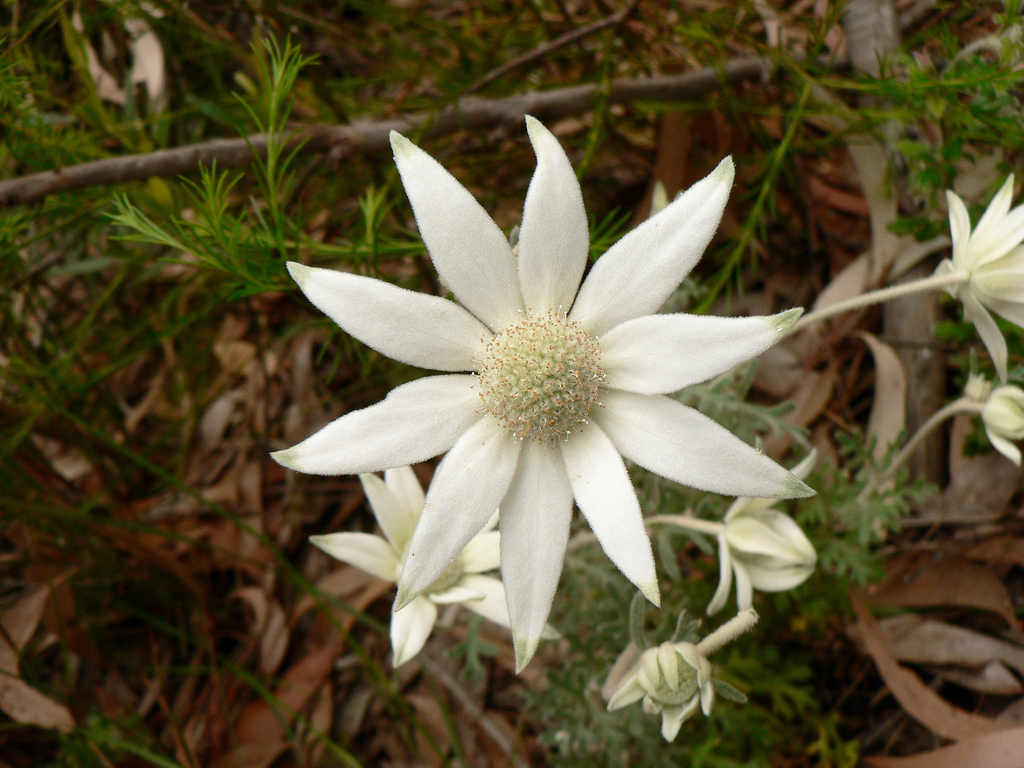
Flannel flowers are among the 10 native plants competing to be named Australia's most amazing wildflower.
Science Week celebrates the natural world
National Science Week is Australia's annual celebration of science and technology and attracts millions of participants through events run by schools, universities, museums, research organisations and community groups.
Organisers say more than 2,500 events are held around the country, ranging from environmental science and Indigenous knowledge to medicine, mathematics, engineering and technology.
The Greater Blue Mountains also has a direct connection to National Science Week's celebration of Australian plant science, with the Blue Mountains Botanic Garden at Mount Tomah listed among NSW's science discovery centres.
For residents of Bilpin, Berambing, Mount Tomah, Kurrajong and other parts of the Hawkesbury's sandstone and mountain country, the national poll provides another reason to look closely at some of the extraordinary plants growing almost on the doorstep.
Have your say
Australians can vote for one of the 10 finalists through the ABC Science wildflower poll.
Voting will culminate in the winning flower being announced during a special “Hour of Flower” on ABC Radio National and an ABC News live blog from noon AEST on Friday, August 21.
So will Australians choose a carnivorous bladderwort, a pollinator-punching triggerplant or the mysterious underground orchid?
Or could the resilient flannel flower, a familiar bloom of our own sandstone and fire country take out the national title?
Hawkesbury residents can cast their vote in the ABC's Australia's Most Amazing Wildflower poll here: Vote for Australia's most amazing wildflower
Below is an ABC Science story describing the full field of contenders for Australia’s Most Amazing Wildflower.
What is Australia's most amazing wildflower? Vote now
ABC News Science Week
The ABC wants to find Australia's most amazing native wildflower and we need your help.
The flower that gets the most votes in our National Science Week 2026 poll will be added to our impressive "hall of favourites".
Last year, the adorable rakali was crowned Australia's most underrated animal by the ABC audience, joining the majestic river red gum (Australia's favourite tree) and the the warbling magpie (our favourite animal sound).
So what's next?
We're going beyond banksias and waratahs to discover blooms from the unsung understorey.
With the help of experts, we've selected 10 flowering plants from across the country as contenders for the title of Australia's most amazing wildflower.
Each wildflower is more than just a pretty face: they all hide a surprising superpower.
There's a vacuum-powered swamp carnivore, a fire-hardy symbol of hope, a First Nations superfood and a colourful bloom that literally punches its pollinators.
Take a look, decide which one you think deserves the flowery crown of Australia's most amazing bloom and then cast your vote below!
Click on the cards to find out more about each of the wildflowers, with help from our experts.
Bladderwort
Traps and eats insects
Creamy candle
Sweet night scent
Flannel flower
Mass blooms after fire
Flying duck orchid
Double deceiver
Mulla mulla
Tough survivor
Murnong (yam daisy)
Super food source
Richea scoparia
Cold survivor
Star flower (Calytrix)
Signals with colour
Triggerplant
Punches pollinators
Underground orchid
Elusive and bizarre
Which wildflower deserves to win?
Vote for the flower you think is the most amazing. The winning flower will be announced on a special "Hour of Flower" on Radio National and a live blog on ABC NEWS from 12:00pm AEST on Friday August 21, 2026.
Choose one wildflowerBlue bladderwortCreamy candleFlannel flowerFlying duck orchidMulla mullaMurnong (yam daisy)Richea scopariaStar flower (Calytrix)TriggerplantUnderground orchid