The Hawkesbury's connection to Australian military history runs deep. When war was declared in August 1914, locals were among the first to volunteer and they did so in remarkable numbers. According to research held by Hawkesbury Library Service, over 600 Hawkesbury locals enlisted and approximately 100 deaths were recorded as a result of the First World War alone. Among the fallen was Roy Charles Streeter, whose death on Gallipoli on 19 May 1915 is recorded on his mother Maria's grave at Windsor Catholic Cemetery, a quiet, enduring memorial that can still be visited today.
The region's agricultural institutions also gave heavily. More than 700 staff and students from the Hawkesbury Agricultural College enlisted and served in the First World War, according to Western Sydney University archives, representing one of the most significant contributions of any single institution in regional New South Wales. They served across the infantry, navy, air corps, camel corps, light horse, artillery, veterinary corps, and field ambulance units, a reminder that the war touched every corner of life in the Hawkesbury.
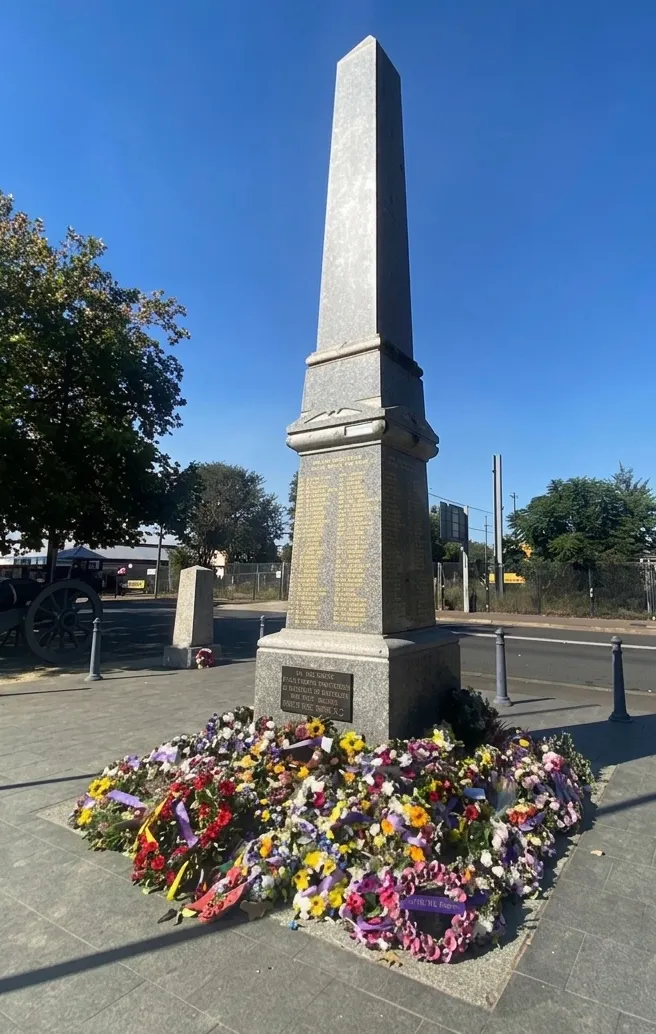
The war memorials that dot the landscape today, from the Hawkesbury Cenotaph at McQuade Park in Windsor to the Wilberforce War Memorial on Macquarie Road, from Richmond War Memorial to the honour rolls at Freemans Reach and Ebenezer, stand as an unbroken chain of remembrance linking the present community to those who left these river flats and did not return.
The National Story, a Local Heart
ANZAC Day itself was first observed on 25 April 1916, one year after the landing at Gallipoli, where Australian and New Zealand forces came ashore at dawn on 25 April 1915 as part of an Allied campaign against Ottoman forces. The campaign, which lasted eight months, became the defining event in the forging of Australian national identity. As the Ryde History Hub notes, the day was initially observed to commemorate the more than 60,000 Australians who died in the First World War. By 1927, every Australian state observed some form of public holiday on ANZAC Day, and by the mid-1930s all the rituals now associated with the day, dawn services, marches, memorial ceremonies, and two-up were firmly established.
For the Hawkesbury, a region settled since the earliest years of the colony, the weight of that history feels particularly close. The landscape itself carries the memory the same river flats that fed the young colony, the same sandstone ridge where Australia's oldest surviving church still stands, and the same network of small towns and hamlets where families first heard the names of Gallipoli, the Somme, and Tobruk from returning soldiers and telegrams of condolence.
Bells Across the Hawkesbury
One of the more distinctive traditions that has taken root in recent years is a grassroots initiative now in its third year: at noon on ANZAC Day, churches across the Hawkesbury ring their bells together as a shared moment of reflection. The initiative, reported by the Hawkesbury Gazette, has grown to include congregations from Windsor, Ebenezer and surrounding areas, drawing on the region's remarkable ecclesiastical heritage.
Among those churches is Ebenezer Uniting Church — built between 1809 and 1823, and recognised as Australia's oldest surviving church. Constructed from sandstone quarried along the banks of the Hawkesbury River by Scottish settler families who arrived on the ship Coromandel in 1802, Ebenezer is a living monument to the pioneering spirit that also sent generations of Hawkesbury men to war. The cemetery in its grounds, one of the most historically significant in Australia, holds six generations of Coromandel settler families.
A local organiser of the bell-ringing initiative told the Gazette: "This is about creating a moment where everyone can stop and reflect together." They emphasised the inclusive nature of the event: "ANZAC Day is a time when Australians of all faiths or none come together to reflect." What began as a gesture by a small group of local churches has now grown into something organisers hope may inspire similar acts of remembrance in communities beyond the Hawkesbury.
As the bells rang out across Windsor, Ebenezer and the river towns this Saturday, they carried the accumulated weight of more than a century of remembrance from the first services held while the war still raged, to the long quiet decades, to the renewed civic energy of today. For a region as old as European settlement in Australia, ANZAC Day is not merely a national occasion observed locally. It is deeply personal a day when the names on the cenotaphs are often the same as the names on the farms, the schools, and the streets.
Lest we forget.