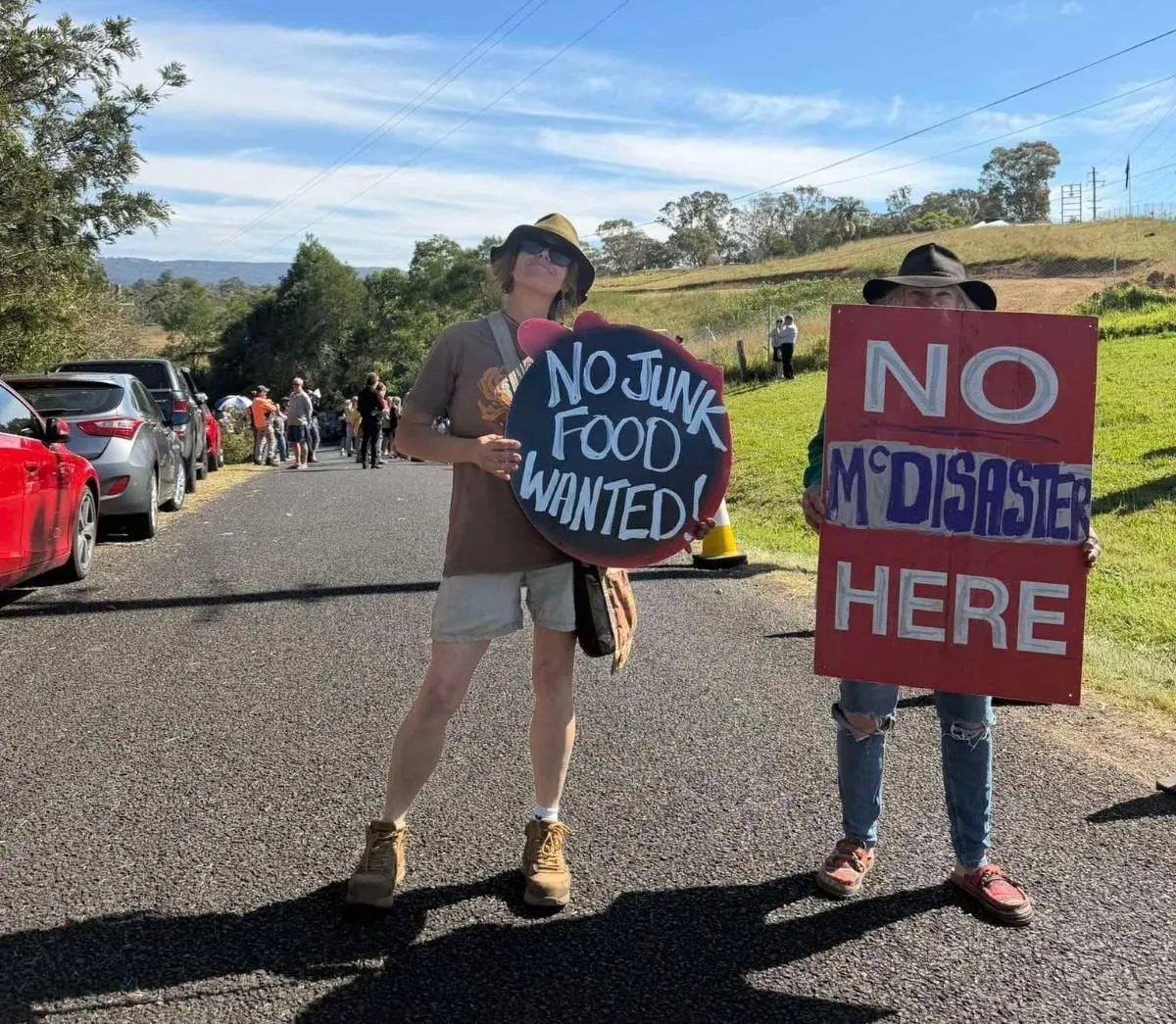
Residents from across the Kurrajong district have formed a new community organisation to campaign for development in appropriate locations, supported by infrastructure and sensitive to the Hawkesbury’s rural character.
The Smart Growth Alliance brings together residents from Kurrajong, Kurmond, Bowen Mountain, North Richmond and surrounding communities.
The organisation says it is not opposed to development, but wants growth directed to appropriate locations, delivered at a suitable scale and supported by roads and other essential infrastructure.
“We are for smart growth: development in the right places, at the right scale, with the infrastructure to support it, so our villages thrive and our rural landscape and wildlife corridors stay intact for the next generation,” the group says on its newly launched website.
The Alliance’s stated priorities include protecting rural landscapes, working farms, village identities and wildlife corridors while encouraging development that supports viable and liveable communities.
It intends to participate in planning processes, help residents understand development proposals and bring local knowledge and professional expertise into discussions with Hawkesbury City Council and other decision-makers.
North Richmond development becomes first campaign
The Alliance’s first campaign is opposing development application DA0060/26 at 291 Bells Line of Road, North Richmond.
The application proposes a mixed-use development consisting of a 100-place childcare centre and two food-and-drink premises, commonly identified as McDonald’s and KFC outlets. It also includes signage, landscaping, civil works and associated parking. The development is estimated to cost about $14.8 million.
Council records place the estimated cost of the development at almost $14.8 million.
The proposal attracted more than 200 public objections after it was lodged in February. Concerns raised during the assessment process included traffic safety, the scale of earthworks, stormwater management, flooding, visual impacts, rural character and the site’s proximity to local schools.
Supporters may argue that the proposal would provide additional services, employment and consumer choice for a growing population. The Alliance, however, considers the location inappropriate for development of that scale and intensity.
It says large illuminated signs, extensive parking areas and drive-through restaurants would be better situated in an established commercial centre of North Richmond, where commercial zoning and supporting infrastructure already exist.
The group also points to the proposed entrances and exits on Bells Line of Road, describing the road as a high-speed regional route already experiencing congestion and safety pressures.
These are the Alliance’s stated concerns and remain matters to be considered through the planning and legal processes. The development applicant is entitled to respond to the objections and pursue approval through the relevant authorities.
The application became the subject of Land and Environment Court proceedings following a deemed refusal. A deemed refusal does not amount to a final determination that a development should be rejected; it permits an applicant to appeal when an application has not been decided within the statutory assessment period.
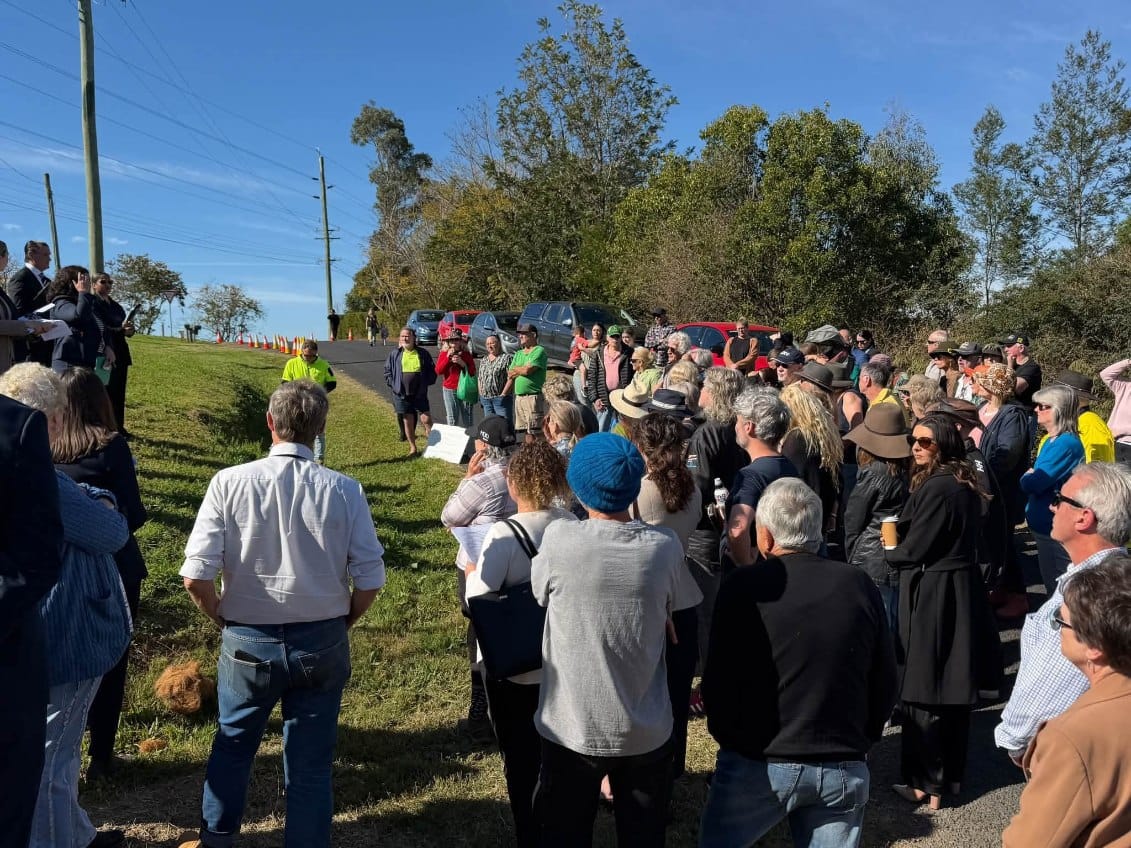
Yesterday, Wednesday 9 September, the NSW Land and Environment Court conducted an on-site section 34 conciliation conference concerning DA0060/26 at 291 Bells Line of Road, North Richmond.
The conference followed the Hawkesbury Local Planning Panel’s refusal of the application and the applicant’s subsequent appeal to the Court.
During today’s proceedings:
- A Court Commissioner attended the site.
- Council, the developer and their professional representatives participated.
- Selected residents and community representatives were able to explain their concerns.
- The public portion was followed by confidential negotiations between the applicant and Hawkesbury City Council, facilitated by the Commissioner.
A Section 34 conference is intended to determine whether the parties can resolve the dispute, potentially through changes to the proposal. It is not necessarily a hearing resulting in an immediate judgment.
If agreement was reached, the Commissioner must be satisfied that the negotiated outcome is one the Court could lawfully approve before making orders. If no agreement was reached, the matter may return to the Court for a future hearing and determination.
The Land and Environment Court’s conciliation guide explains the possible outcomes. Hawkesbury Council had previously resolved to oppose the development over traffic safety, rural character, land-use compatibility, earthworks and its proximity to Colo High School.
Looking beyond a single development
While the North Richmond proposal prompted its first campaign, the Smart Growth Alliance says its purpose extends beyond one development application.
“Significant development pressure is coming to the Hawkesbury in the years ahead, including very large residential proposals along the river,” the organisation says.
“We intend to be a constructive, informed, ongoing voice: engaging early with council and planners, contributing local knowledge and professional expertise, and making sure residents help shape what comes next rather than react to it.”
That wider focus comes as communities across the Hawkesbury confront difficult questions about how population growth can be accommodated without overwhelming roads, schools, health services and emergency evacuation routes.
Development is also occurring in an area constrained by flood risk, bushfire exposure, limited river crossings and significant environmental and agricultural land.
The challenge facing planners is to provide housing, childcare, employment and commercial services while retaining the characteristics that distinguish the Hawkesbury from Sydney’s expanding suburban areas.
Encouraging residents to participate
The Smart Growth Alliance website provides information about its campaigns and guidance intended to help residents participate in planning processes.
The group is encouraging people to join its supporter list and contribute skills in planning, engineering, law, writing, photography and community organising.
It also aims to help residents prepare individual submissions when development proposals are placed on public exhibition. Council assesses submissions on the planning issues they raise, rather than simply treating the process as a count of supporters and opponents.
The formation of the Alliance adds another organised community voice to the debate over the future shape of the Hawkesbury.
No updated Local Environment Plan
Hawkesbury Council has been without an updated Local Environment Plan (LEP) for over a decade. This is the main planning tool used to direct future physical expansion of housing and development across the Local Government Area. The last Local Environment Plan was in 2012, with Housekeeping Amendments (small mistakes rectified) updated in 2015. The LEP 2012 zoning permits the described development.
Hawkesbury City Council’s official records for the Yeoman's Lane Development Proposal DA0060/26 can be accessed through its development application tracking service.


