Australia’s largest recorded cocaine seizure uncovered at a Londonderry property in June has given the Hawkesbury a confronting view of the international illicit-drug trade, now prompting the Australian Federal Police Commissioner to call for a renewed national conversation.
AFP Commissioner Krissy Barrett says Australians need to understand the connection between demand for illicit drugs, the enormous profits collected by organised crime groups and violence occurring in Australian communities.
In a statement published by the AFP this week, Commissioner Barrett said Australians consumed too many illicit drugs and were prepared to pay extraordinarily high prices for them.
She argued that organised criminal groups were competing for control of a highly profitable market, contributing to shootings, intimidation and violence including cases in which innocent people had allegedly been targeted because of mistaken identity.
Commissioner Barrett stressed that responsibility for those crimes remained with the people who carried them out and the criminal organisations trafficking drugs.
However, she said reducing consumer demand was also essential to weakening the financial power of organised crime.
National record uncovered at Londonderry
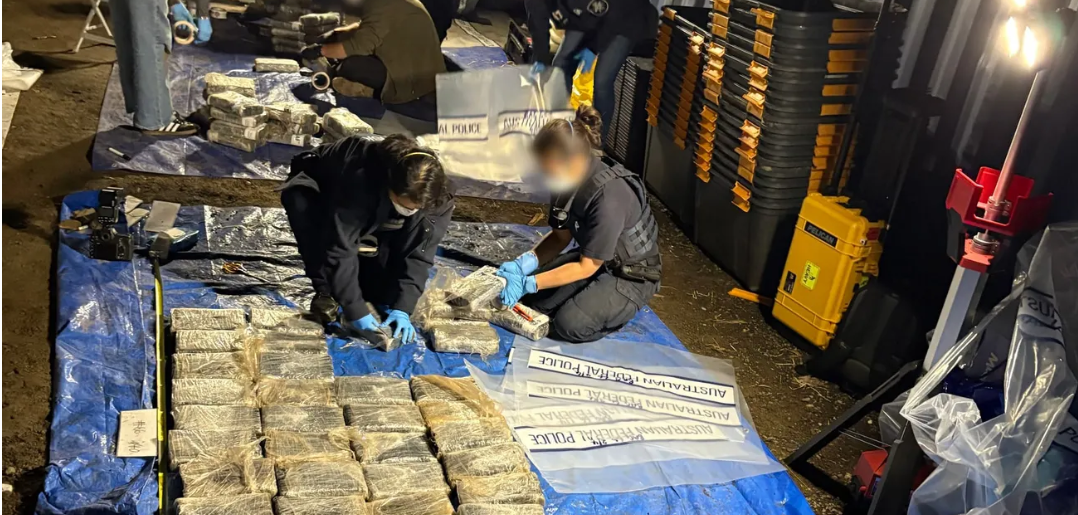
The Commissioner’s warning has particular significance for Hawkesbury residents following the discovery of 2.7 tonnes of cocaine at a semi-rural Londonderry property on June 19.
AFP investigators alleged the cocaine was concealed in plastic tubs within underground bunkers beneath false floors inside three shipping containers.
Authorities estimated the cocaine had a potential street value of approximately $816 million and could have been divided into about three million individual street-level sales.
The seizure was described by the AFP as the largest cocaine haul ever recorded in Australia, exceeding the previous national record.
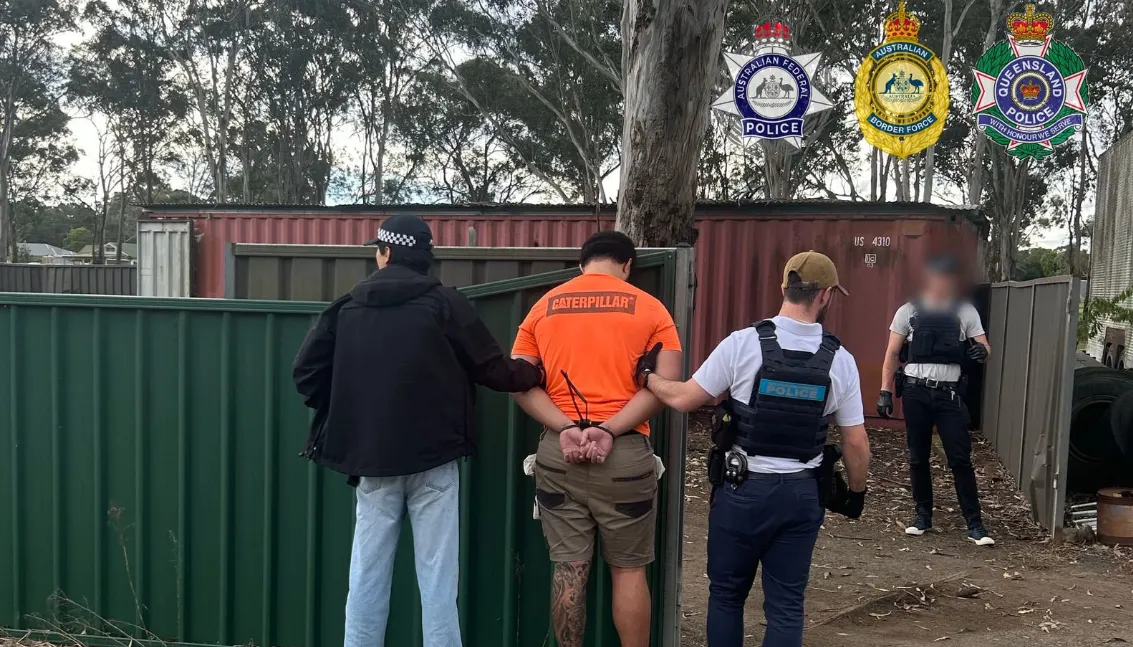
Two Sydney men, aged 21 and 25, were arrested at the property and charged with possessing a commercial quantity of an unlawfully imported border-controlled drug. The allegations remain before the courts, and neither man should be considered guilty unless convicted.
The discovery formed part of Operation Minjiang, a multi-agency investigation into an organised crime network allegedly responsible for transporting and distributing illicit drugs along Australia’s east coast.
Investigators alleged the cocaine was imported near Midge Point in North Queensland before being transported approximately 1,800 kilometres to Western Sydney, Londonderry.
The operation began after police investigating a burnt-out truck reportedly discovered cocaine in nearby waters. Searches connected to the wider investigation also resulted in the seizure of cocaine and methamphetamine elsewhere.
The scale and sophistication of the Londonderry concealment demonstrated that semi-rural communities were not isolated from transnational organised crime.
Criminal networks changing
Commissioner Barrett said criminal organisations were generally willing to deal in any commodity capable of producing substantial profits.
Groups involved in cocaine, methamphetamine and heroin trafficking could also participate in illicit tobacco importation and other criminal markets.
She identified several emerging threats, including increasingly potent synthetic drugs, the use of artificial intelligence to evade detection and cooperation between organised crime groups and hostile state actors.
The AFP is also concerned about a “criminal gig economy” in which established networks allegedly recruit young Australians including children in their early teensto undertake violent reprisals.
Commissioner Barrett said younger offenders could be impulsive and reckless, increasing the danger to members of the public.
Trafficking through Pacific nations was another growing concern, requiring Australian authorities to work with overseas governments and law-enforcement agencies.
The AFP has made “supercharging global operations” one of its priorities, seeking to disrupt drugs in source and transit countries before they reach Australia.
Enforcement and treatment both required
Commissioner Barrett rejected suggestions that authorities should concede defeat because the “war on drugs” had not eliminated illicit-drug use.
She said law enforcement could never raise the white flag, while education and early support should form part of the first line of defence.
A successful response will require more than arrests and seizures. People experiencing dependency need access to evidence-based treatment without shame preventing them from seeking help.
Families also require reliable information and assistance before drug use escalates into serious health, financial or relationship harm.
The record Londonderry seizure prevented an extraordinary quantity of cocaine from reaching the market, but it also exposed the scale of the potential profit available to criminal organisations when Australian demand remains high.
For the Hawkesbury, the discovery was a reminder that international trafficking networks can reach into apparently quiet rural properties and use them as storage or distribution points.
The challenge identified by Commissioner Barrett is therefore both national and local: disrupt the criminal networks, reduce demand, educate communities and ensure people can obtain treatment before further harm occurs.
The Gazette’s original report, “Record Cocaine Bust Uncovered at Londonderry Property”, contains further details about Operation Minjiang and the June seizure.
Anyone concerned about their own or another person’s alcohol or drug use can call the National Alcohol and Other Drug Hotline on 1800 250 015 for free and confidential information, counselling and referral.