By Bob Gribbin
This is the fourth article in the Hawkesbury Gazette investigation into the proposed Special Rate Variation sought by Hawkesbury City Council.
In previous articles, we examined whether the council demonstrated financial need, whether the community was properly engaged, and what the proposed rate increase could mean for households.
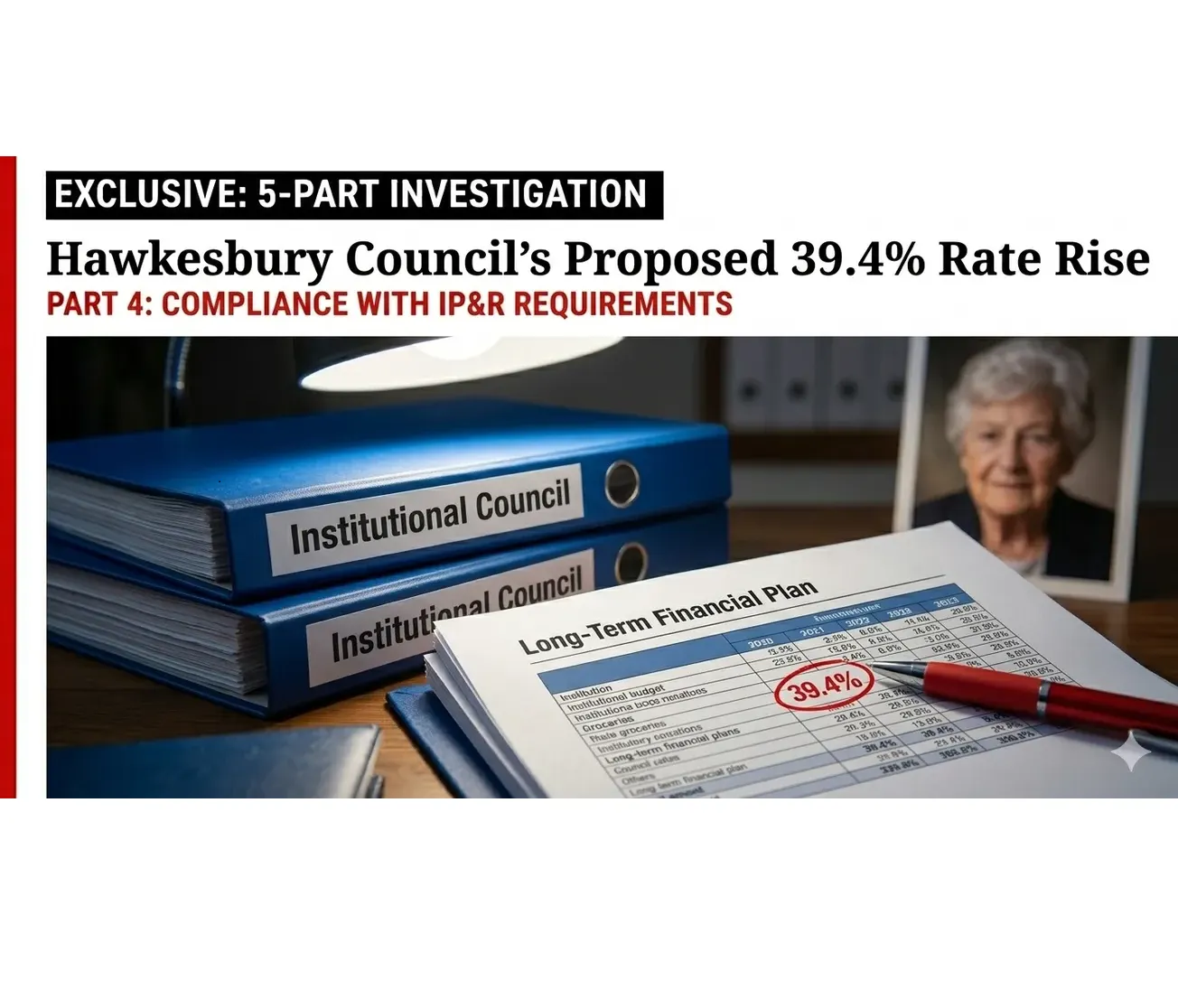
Part Four emphasises Criterion 4 within the Special Rate Variation guidelines, which relates to the display and implementation of essential financial planning documents.
These documents are part of the Integrated Planning and Reporting framework used by local councils across New South Wales and aim to ensure councils plan their finances transparently with community input.
Why Planning Documents Matter
Before seeking approval for a rate increase from the Independent Pricing and Regulatory Tribunal (IPART), councils must show that their proposal is backed by formally filed planning documents under the framework established by the NSW Office of Local Government.
These documents consist of the Delivery Program, which sets out council priorities and spending commitments over four years, and the Long-Term Financial Plan (LTFP), which projects council finances over a decade.
Together, these documents aim to show residents how the council plans to manage its finances, fund infrastructure, and deliver services.
Timing of the Financial Plan
Regarding Hawkesbury's rate rise proposal, the relevant financial planning documents were made publicly available between 2 February and 2 March 2026. These included the Amended Draft Delivery Program 2025–2029 and the Amended Draft Long-Term Financial Plan 2025–2035.
However, the submission reviewed by the Gazette notes that the council's application for the rate increase was submitted to IPART on 2 February, the same day the documents were put on exhibition.
This means the application relied on planning documents that had not yet been finalised or formally adopted by the council when they were used to support the rate increase request.
Consultation Still in Progress
While displaying draft documents is a common part of the planning process, the timing raises concerns about how thoroughly the community's feedback could be incorporated before the application was lodged.
Residents were still reviewing the documents when the rate rise proposal was submitted to IPART.
Critics say this sequence effectively implied that the application moved forward before the consultation process was fully complete.
Supporters of the process point out that councils are allowed to display draft plans as part of the SRV application process. However, the situation does highlight a tension between strict rule compliance and the spirit of community consultation.
A Revised Proposal
Another issue identified in the analysis concerns alterations to the structure of the rate rise proposal itself. The council initially consulted the community on a proposal that would increase rates by 11.73% annually for three years.
The final application proposes an annual increase of 8.66% over four years, resulting in an overall rise of 39.4%.
While the overall increase stayed the same, the revised structure changes how the financial impact is spread over time. The updated modelling for the new structure is included in the amended Long-Term Financial Plan.
However, critics argue that the revised proposal was not subject to a new formal exhibition period for community feedback.
What IPART Must Consider
Under the OLG guidelines, IPART must decide whether the council has shown that its SRV proposal is backed by properly prepared and publicly exhibited financial planning documents.
In Hawkesbury's case, the necessary documents were displayed on public exhibition. The remaining question is whether the process allowed enough time for community input before the application was submitted.
Why This Matters
Integrated planning documents are designed to underpin responsible local government financial management. They enable residents to see how the council plans to manage infrastructure, balance income and expenditure, and prioritise spending within the community.
When those documents remain in draft form during the SRV application process, it raises questions about the extent to which public feedback can realistically influence the final decision.
Ultimately, IPART must determine whether the planning framework backing the proposed rate increase aligns with the intent of the guidelines.
Coming Up Next
Part Five — the final article in the Gazette investigation — will assess whether Hawkesbury City Council has shown adequate productivity improvements and cost savings before requesting ratepayers to cover a 39.4% rate increase.
This final instalment will also examine wider evidence presented in submissions indicating more serious governance and financial management problems within the council.