For many people, a cancer diagnosis brings fear, exhaustion and uncertainty.
For others, it also brings something less visible but just as relentless, the fear of not being able to pay the rent, buy groceries or keep a job while undergoing treatment.
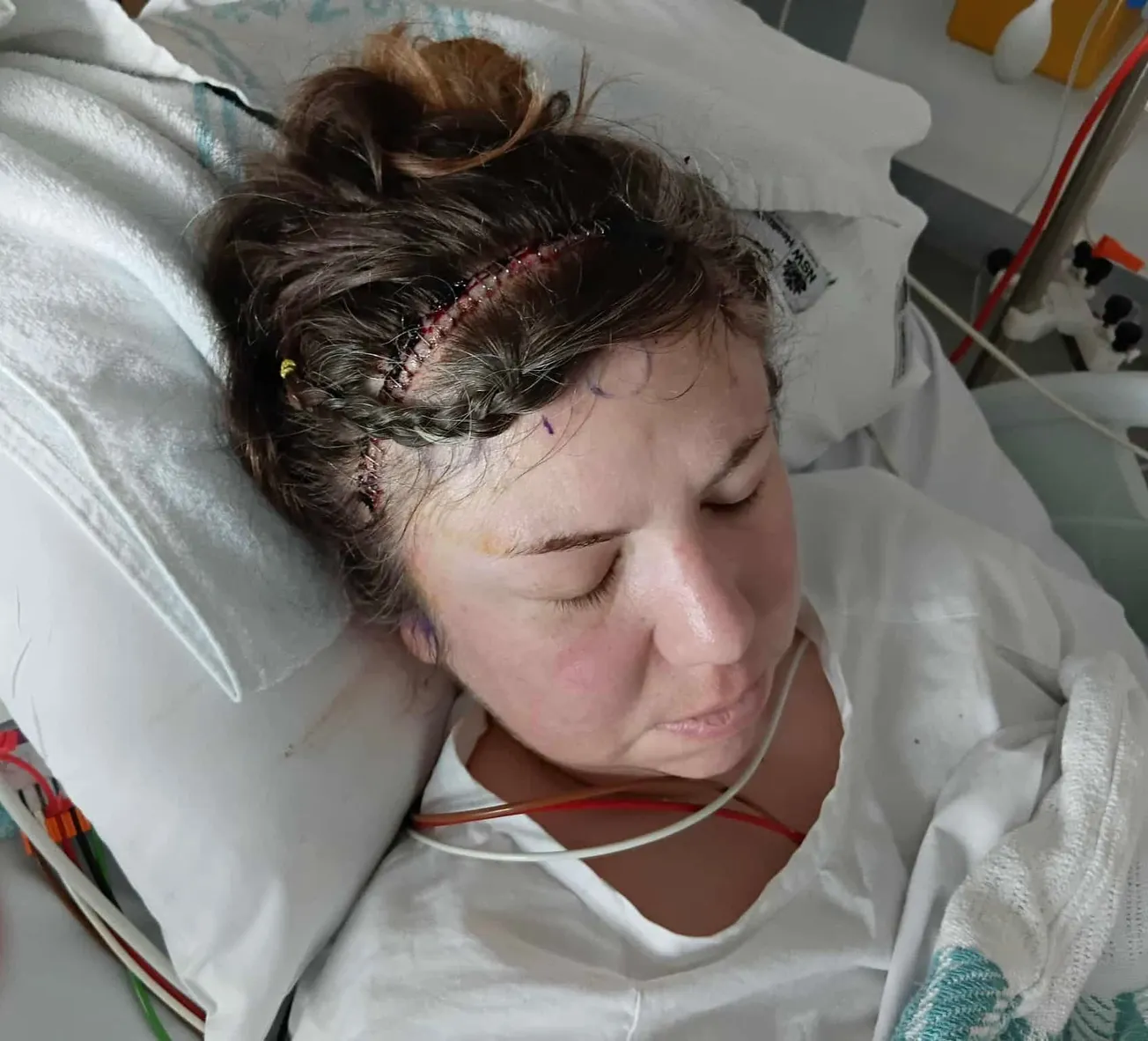
That is the reality facing 38-year-old Bindi, who was diagnosed with brain cancer last September and is now on the final leg of chemotherapy treatment. Bindi previously underwent surgery to remove a tumour from her brain, which was identified after a severe seizure. The surgery was followed by radiation therapy, and then when she was deemed "healthy" enough, chemotherapy began.
Bindi works in The Hills and comes home to the Hawkesbury, where she grew up, most weekends to recover from the working week.
As the cumulative effects of chemotherapy build, simply getting up and getting to work is becoming harder.
Her doctor will only clear her to work limited hours, but those hours are barely enough to cover the basics of living, including rent.
At the same time, Bindi says she cannot access Centrelink benefits or her Superannuation as her diagnosis is not considered to be terminal, despite being unable to participate in full-time employment during her treatment. She will also have to undertake ongoing monitoring in the form of regular scans and oncology appointments for the rest of her life due to the reasonable likelihood the tumour could reform.
The result is that she has effectively joined the ranks of the working poor, still working, still trying to remain independent, but counting every dollar while undergoing cancer treatment.
She is grateful that she can rely on her parents when necessary so she does not go without essentials, but the financial pressure adds another layer of stress to an already difficult recovery.
That stress, she says, makes everything harder: getting well, staying well and coping with the side effects of chemotherapy.
Bindi's experience is far from unique.
A new report from Cancer Council NSW and the McKell Institute estimates that around 3,000 people in NSW are pushed out of the workforce each year because of cancer.
Around 56,000 people in NSW are diagnosed with cancer annually, and about 40 per cent are in their prime working years.
The report argues that existing workplace and welfare systems have failed to keep pace with improved cancer survival rates.
More people are surviving cancer, but many are left struggling with what happens next, how to stay employed, how to maintain income and how to return to work while still managing treatment and recovery.
That reality is reflected in the experience of Bankstown woman Elizabeth Funa.
Funa was just 19 and studying towards a career in exercise and sport science when she was diagnosed with stage four Hodgkin's lymphoma.
She was told doctors might have to amputate her leg.
Her focus changed overnight from career plans to survival.
Funa quit her dual role as a personal trainer and gym membership officer and dropped out of university.
She later said she believed she could have continued in the administrative part of her job during treatment if greater flexibility had been available, including reduced hours or working from home.
Now 28 and in remission, she has changed career direction and moved into human resources, motivated in part by her own experience and a desire to help other workers facing serious illness.
The Cancer Council NSW and McKell Institute report estimates that the loss of people from the workforce because of cancer is costing more than $240 million in lost wages each year, along with lost tax revenue and increased reliance on social security.
The problem is not always that people with cancer cannot work.
Often, they can work but only in a reduced capacity.
For people such as Bindi, that distinction is critical.
A person may be medically capable of working 10, 15 or 20 hours a week, but financially unable to survive on the resulting income.
At the same time, they may not qualify for sufficient government support to fill the gap.
Cancer Council NSW policy and advocacy manager Brad Gellert said the system had not kept pace with the reality faced by people undergoing cancer treatment.
The organisation says the impact can be severe, affecting both mental wellbeing and the financial security of patients and their families.
The report also identifies a gap for people aged under 65 who are dealing with cancer.
While some workers have income protection through superannuation, government income support can be difficult to access.
People may not qualify for the NDIS, are too young for aged care and can find JobSeeker requirements unsuitable while undergoing treatment.
McKell Institute chief executive Ed Cavanough said the principle behind the report's recommendations was to help maintain the relationship between an employer and an employee during cancer treatment.
One of the central proposals is a targeted wage subsidy.
Under the model outlined in the report, employers and the State and Federal governments could help fund up to 60 per cent of a cancer patient's salary for as long as a year while the person's capacity to work is reduced.
Supporters argue that such a scheme could help people remain connected to their workplaces, reduce long-term welfare dependence and allow employers to retain valued and experienced workers.
Other recommendations include payroll tax concessions for employers who retain workers undergoing cancer treatment, a cancer and chronic illness leave bank that could be accessed after ordinary sick leave is exhausted, and expanded rights to flexible work and carer's leave.
NSW Industrial Relations Minister Sophie Cotsis has said the State Government will review the report and its recommendations with Commonwealth counterparts.
The Federal Government has also indicated that current minimum workplace entitlements, including personal leave, compassionate leave, unpaid carer's leave and flexible working arrangements, are under review.
For people such as Bindi, those policy discussions are not abstract.
They are about whether someone battling cancer can remain housed, fed and financially independent while doing everything they can to remain in the workforce.
Cancer treatment can already mean appointments, scans, medications, exhaustion, nausea and uncertainty.
Adding the constant fear of whether there will be enough money for rent, petrol or groceries can make recovery even harder.
Bindi continues to work because she wants to work.
But like thousands of others, she is caught between being too unwell to work full-time and not unwell enough, under the current system, to receive the financial assistance she needs.
Her experience raises a simple question for governments and employers:
If people with cancer are willing and medically able to keep working in a reduced capacity, should the system be doing more to help them stay there?
Acknowledgement: This story contains information originally written by Rachel Rasker SMH https://www.smh.com.au/national/nsw/huge-impact-thousands-of-sydney-cancer-patients-pushed-out-of-work-each-year-20260802-p60krj.html
EXPLAINER: What Centrelink support is available when cancer cuts your ability to work?
For a working-age Australian undergoing cancer treatment, losing the ability to work full-time does not automatically mean qualifying for a disability pension.
For many people, the main Centrelink safety net is actually JobSeeker Payment, even when they still have a job and are trying to keep working through treatment.
That distinction is important for cancer patients who find themselves caught in the gap between being too sick to work their normal hours but not considered permanently disabled.
While Centrelink pays most benefits fortnightly, the figures below have been converted to weekly amounts to make it easier to compare them with wages, rent and ordinary household costs.
You can still work and receive JobSeeker
A person does not necessarily have to lose their job before claiming JobSeeker.
Someone undergoing chemotherapy or other cancer treatment who can only work reduced hours may potentially qualify if their income is sufficiently low and they meet Centrelink's other eligibility requirements.
A treating doctor can provide a Centrelink medical certificate explaining the person's illness, treatment and temporary inability to meet normal work requirements.
Centrelink can then assess whether the person has a temporary reduced work capacity or a partial capacity to work.
For a single person without children, the maximum ordinary JobSeeker payment is currently equivalent to about: $404.35 a week.
For a person assessed as having a partial capacity to work of fewer than 15 hours a week, the maximum rate is about: $433 a week.
These are maximum amounts. What a person actually receives depends on their income, assets, relationship status and other circumstances.
What if you are still earning wages?
A cancer patient can continue working some hours and potentially still receive part of JobSeeker.
For a single person without dependent children, roughly:
- the first $75 a week in employment income does not reduce JobSeeker;
- income between about $75 and $128 a week reduces the payment at 50 cents for every additional dollar earned; and
- income above about $128 a week reduces the payment at 60 cents in the dollar.
For an ordinary single JobSeeker recipient, the payment generally cuts out once employment income reaches approximately $765 a week.
For someone formally assessed as having capacity to work fewer than 15 hours a week, the cut-off is approximately $819.25 a week.
That means a cancer patient working limited hours should not assume that having a job automatically means they cannot receive Centrelink assistance.
Rent Assistance may add about $110 a week
For someone renting privately and receiving an eligible Centrelink payment, Commonwealth Rent Assistance may also be available.
For a single person renting alone, the maximum Rent Assistance is equivalent to approximately:
$109.70 a week.
For someone receiving the higher JobSeeker rate because they have a partial capacity to work, that could theoretically produce maximum combined support of about:
**$433 JobSeeker
- $109.70 Rent Assistance
= $542.70 a week.**
Employment income can reduce the JobSeeker component.
Even at the maximum rate, $542.70 a week does not go far for somebody paying rent in Sydney while also facing the additional costs that can accompany cancer treatment.
Why not the Disability Support Pension?
A diagnosis of cancer does not automatically qualify somebody for the Disability Support Pension.
Generally, a person's condition must be expected to persist for more than two years, be diagnosed, reasonably treated and stabilised, meet disability impairment requirements and prevent them from working at least 15 hours a week over the relevant period.
This creates a difficult situation for some cancer patients.
A person undergoing chemotherapy may be very sick now, but their doctors hope their condition and capacity to work will improve when treatment finishes.
They can therefore be too sick to work enough hours to support themselves, while at the same time not meeting the requirements for a payment intended for long-term disability.
For many, JobSeeker becomes the alternative.
There is no general Centrelink “cancer payment”
Australia does not have a standard income-support payment specifically for people undergoing cancer treatment.
Some workers have income protection insurance through their superannuation, but this varies greatly between funds and individual insurance arrangements.
Others have enough accumulated sick leave to maintain their wages for part of their treatment.
But once sick leave runs out, somebody whose ability to work has been substantially reduced can face a sharp fall in income.
That is where JobSeeker may become important.
Assets and partners also count
Centrelink also applies income and assets tests.
For a single homeowner, assessable assets above approximately $333,000, excluding the person's principal home, can affect eligibility.
For a single non-homeowner, the relevant asset limit is considerably higher, at around $600,000.
If the person has a partner, their partner's income can also reduce or eliminate their Centrelink entitlement.
This can create another problem for households where one person's earnings are expected to support both partners despite the additional expenses associated with serious illness.
What about a Health Care Card?
Even where someone cannot receive JobSeeker, they may be able to qualify for a Low Income Health Care Card.
For a single person without children, the current income threshold is approximately $811 a week, assessed over an eight-week period.
Unlike many income-support payments, there is no assets test for the Low Income Health Care Card.
It can provide access to cheaper Pharmaceutical Benefits Scheme medicines and other concessions.
For someone undergoing cancer treatment, those concessions can be valuable even when Centrelink provides no cash payment.
The cancer income gap
Consider the situation of a 38-year-old undergoing chemotherapy.
Her doctor says she is medically capable of working only limited hours.
She wants to keep working.
Her employer still has a job for her.
But the number of hours she can safely work is not enough to pay the rent and meet normal living expenses.
That person can find herself in a peculiar position.
She is employed, but poor.
She is sick, but may not satisfy the requirements for the Disability Support Pension.
She needs temporary income support precisely because she is trying to remain connected to the workforce.
Yet the principal Centrelink payment potentially available to her is called JobSeeker.
That is the gap highlighted by cancer advocates calling for reform.
The issue is not that there is absolutely no Centrelink assistance available to a working-age cancer patient.
The problem is that Australia has no dedicated income-support payment designed around the reality of cancer treatment, where somebody may retain a job but temporarily lose most of their ability to earn.
For those patients, the financial equation can become brutally simple.
At maximum rates, a single person assessed as capable of working fewer than 15 hours a week might receive around $433 a week in JobSeeker, potentially rising to about $542.70 a week with maximum Rent Assistance.
For a cancer patient paying Sydney rents, buying food, travelling to medical appointments and meeting normal household bills, that can still leave a very large gap.
And that financial stress arrives at precisely the time when their energy is supposed to be directed towards getting well.
.