
Questions have been raised over Hawkesbury City Council’s use of staff and communications resources to produce promotional material featuring Acting General Manager Will Barton while he is a confirmed candidate for the permanent General Manager position.
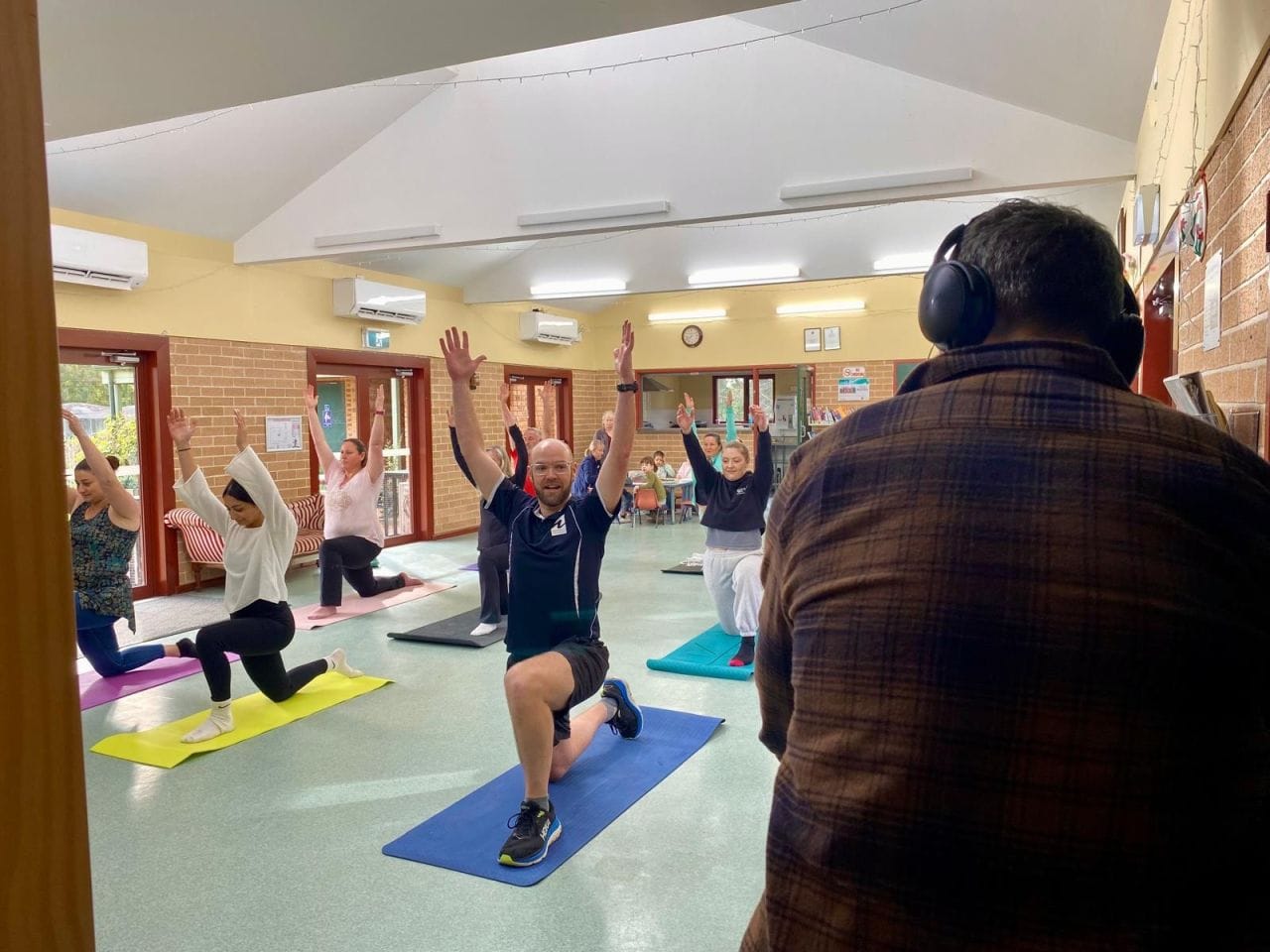
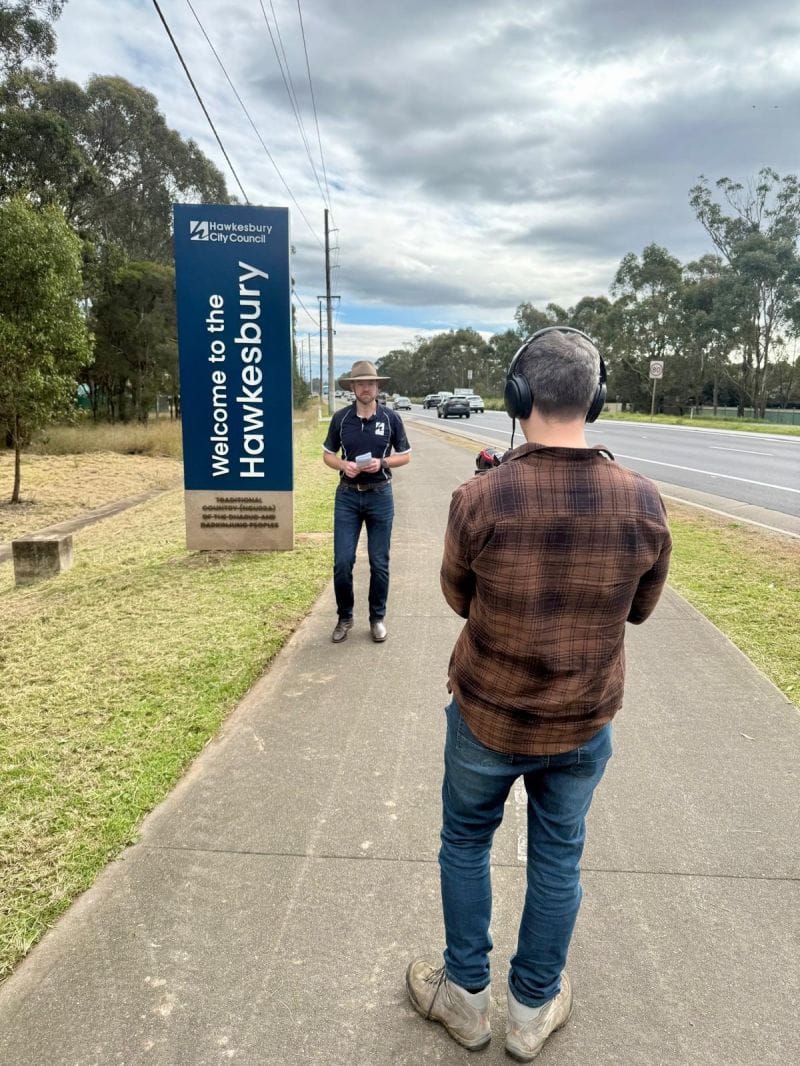
Mr Barton, who identifies himself as "Interim General Manager" published a LinkedIn post about the promotional filming approximately three weeks ago, while Council’s recruitment process for a new permanent General Manager is still underway.
“If you’re going to be stitched up by your media and comms team for half a day of shooting promos for Hawkesbury City Council, there’s worse places to do it!” Mr Barton wrote.
“What a fun morning getting well and truly outside of my comfort zone.”
He thanked Council staff Adriana Bellomo and David Catt for “the scripts, patience and laughs” and added the hashtags “#sacrifice” and “#dignity”.
There is no suggestion that the promotional material itself was improper or that the Council employees involved acted improperly.
However, Mr Barton is a candidate for the permanent General Manager position, raising a legitimate public-interest question about whether Council-funded communications resources should have been used to produce promotional material prominently featuring one candidate while the recruitment process was underway.
Recruitment commenced in April
The process to appoint a new permanent General Manager commenced following the resignation of former General Manager Elizabeth Richardson on Friday, April 17, 2026.
Mr Barton was announced in a Council media release as Acting General Manager following Ms Richardson’s resignation and subsequently became a candidate for the permanent position.
That has meant that throughout the recruitment process Mr Barton occupies Council’s most senior administrative position while simultaneously competing for the permanent appointment.
There is nothing inherently unusual about an acting General Manager applying for the permanent position.
However, an internal candidate has access to Council staff, communications channels, public events and other institutional resources that external candidates do not.
That makes the management of public resources, perceptions of impartiality and equal treatment particularly important.
Promotional shoot while candidacy was active
Mr Barton’s LinkedIn post shows the promotional filming occurred approximately three weeks ago and before councillors made their final selection.
The timing therefore does not establish any connection between the filming and the Council meeting held on Friday 7 August to decide on the appointment of a candidate to the General Manager position.
It does, however, establish that the promotional activity occurred while the recruitment process was active and while Mr Barton is a candidate.
That raises a different but still significant governance question.
Was the filming simply part of Mr Barton carrying out his ordinary duties as Acting General Manager, or did the use of Council staff, scripts and promotional resources also have the effect of increasing the public profile of one candidate during a live recruitment process?
There may be a completely legitimate explanation.
Councils routinely produce promotional material featuring their senior executives, and an Acting General Manager would normally be expected to participate in Council communications.
The issue is whether any safeguards were considered once the person being featured was also competing for the permanent position.
Councillors eventually make their decision
On Friday, August 7, councillors convened at 3pm to consider the appointment of the permanent General Manager.
The meeting continued for more than six hours.
At about 9.15pm councillors emerged from the confidential session without publicly announcing the name of the successful candidate.
Instead, Council announced that Mayor Les Sheather had been authorised to negotiate an employment contract with the selected candidate.
The Gazette understands Mr Barton is among the candidates considered for the position.
The Gazette has sought confirmation from Council about when the successful candidate will be publicly named, when contract negotiations are expected to conclude and when the new General Manager is expected to commence duties.
Public resources and perceptions of advantage
The central issue is not whether Mr Barton was entitled to carry out the normal functions of Acting General Manager.
Clearly he was.
Nor is the Gazette suggesting the promotional material influenced councillors or that the communications staff involved intended to advance Mr Barton’s candidacy.
The question is whether Council should have considered the appearance of an advantage when an internal candidate for the permanent position was being professionally filmed and scripted using Council resources during the recruitment period.
The Gazette has asked whether equivalent opportunities applied to other candidates, with the provision of the same access to Council’s communications staff, corporate platforms or institutional profile.
That distinction does not automatically make the arrangement unfair.
But it does create an obligation for Council to be able to explain how it ensured the recruitment process remained impartial and was seen to be impartial.
What was the promotional material for?
Council could address the issue by explaining the purpose and approval process for the filming.
Relevant questions include:
- What campaign or Council activity was the promotional material produced for?
- When was the filming commissioned?
- Who authorised Mr Barton’s participation?
- How many Council employees were involved?
- How much staff time and other Council resources were used?
- Was Mr Barton’s status as a candidate for the permanent General Manager position considered when the filming was approved?
- Was any conflict-of-interest or recruitment-integrity assessment undertaken?
- Was consideration given to using another Council representative while the recruitment process remained active?
- When and where will the finished promotional material be published?
There may be straightforward answers to all of these questions and any response by Council will be published.
Acting GM and candidate
Mr Barton has occupied a particularly powerful position during the recruitment process.
As Acting General Manager, he has been responsible for the day-to-day administration of Council while also seeking appointment to the position permanently.
That inevitably creates situations in which he must continue performing public-facing duties while being assessed as a candidate.
The issue is therefore not that Mr Barton appeared in Council communications.
It is whether appropriate boundaries were maintained between his legitimate role as Acting General Manager and his personal interest in securing the permanent position.
Gazette remains excluded
The recruitment process has also occurred against the backdrop of Council’s continuing exclusion of the Hawkesbury Gazette from Council premises for media purposes.
The restriction was introduced in April by Mr Barton and Mayor Les Sheather reportedly as a precautionary workplace health and safety measure and has continued throughout Mr Barton’s period as Acting General Manager.
At the same time, Council has continued operating its own communications and media functions, producing material using Council employees and official platforms.
The Gazette does not suggest that the media restriction is connected to Mr Barton’s promotional filming or his candidacy.
However, the circumstances underline why transparency around Council’s use of its own media resources is important.

Fairness must also be seen
The appointment of a General Manager is one of the most consequential employment decisions made by a council.
Residents are entitled to expect the process to be conducted fairly and in accordance with merit based employment procedures required by the NSW Government.
They are also entitled to expect Council to avoid circumstances that could reasonably create a perception that an internal candidate enjoyed an institutional advantage over competitors.
The fact that the promotional filming occurred approximately three weeks before the final Council decision significantly changes the chronology.
It does not support any suggestion that Council staged a promotional exercise immediately before councillors voted.
But it does leave a legitimate public-interest question:
While the recruitment process was active, was it appropriate for Council-funded communications resources to be used to produce promotional material prominently featuring one of the candidates for the job?
The answer may ultimately depend on what the material was for, when it was commissioned, who authorised it and what safeguards Council put in place to ensure the integrity of the recruitment process.
EXPLAINER: What NSW councils must do to comply with Equal Employment Opportunity laws
Every NSW council is legally required to have and implement an Equal Employment Opportunity management plan covering its workforce.
Equal Employment Opportunity, usually shortened to EEO, is designed to ensure that people are not unfairly disadvantaged in employment because of characteristics such as race, sex, marital or domestic status or disability.
For NSW councils, the principal requirements are contained in the Local Government Act 1993.
What does the law require?
Section 344 of the Local Government Act 1993 sets out the objectives of the EEO provisions.
They include eliminating discrimination in council employment and promoting equal employment opportunity for women, members of racial minorities and people with disabilities.
Section 345 then places a direct obligation on councils.
“A council must prepare and implement an equal employment opportunity management plan.”
What must be in the EEO plan?
An EEO management plan must provide for policies and programs designed to achieve equal employment opportunity.
It must have a system for examining how people are recruited, employed, trained, promoted and treated.
Recruitment must be based on merit
The Local Government Act contains separate requirements governing recruitment.
Section 348 generally requires council positions to be advertised in a way that allows suitably qualified people to apply.
Section 349 requires appointments to be made on merit.
The person with the greatest merit must be selected from eligible applicants, based on matters including the duties of the position and the applicants' abilities, qualifications, experience and work performance.
Importantly, section 349 also expressly requires councils to have regard to the EEO objectives in section 344 when determining merit.
So merit recruitment and EEO are intended to operate together.
What does EEO mean in everyday council employment?
In practical terms, councils should be checking whether their employment systems create unfair barriers.
That includes questions such as:
Are job advertisements accessible to a reasonable field of applicants?
Are selection criteria genuinely relevant to the job?
Are interview and recruitment procedures applied consistently?
Are employees receiving equitable opportunities for training and career development?
Are promotion and transfer decisions based on relevant employment factors?
Are workplace conditions unintentionally disadvantaging particular groups?
Are complaints about discrimination being properly dealt with?
Who inside Council is responsible?
Section 345 requires the EEO management plan itself to identify people within Council who are responsible for implementing it.
The council as an organisation that has the statutory obligation to prepare and implement the plan.
Managers and supervisors also have responsibilities because EEO must operate through actual recruitment, employment and workplace decisions rather than simply through a policy document.
Does Council have to measure whether the plan works?
The plan must also contain provisions for its own revision and amendment. There is also a public reporting requirement.
Under the Local Government (General) Regulation 2021, a council's annual report must include a statement outlining the activities it undertook during the year to implement its EEO management plan.
That provides residents and employees with one way of checking whether Council is doing more than simply maintaining a policy.
Who checks councils are complying?
The Office of Local Government oversees the local government legislative and governance framework and has a broader role in supporting and monitoring governance and employment practices across NSW councils.
There is also a specific statutory safeguard in section 347 of the Local Government Act.
If the Minister for Local Government is dissatisfied with how a council has prepared, amended or implemented its EEO management plan or with a council's failure or omission concerning the plan the Minister may refer the matter to either the Anti-Discrimination Board or the Public Service Commissioner.
That is an important provision because it means implementation of EEO plans is capable of external scrutiny.
What if an individual employee believes they have been discriminated against?
Employees or job applicants who believe they have experienced unlawful discrimination may be able to complain to Anti-Discrimination NSW.
Workplace grievance procedures, industrial remedies and employment-law processes may also apply depending on the particular allegation.