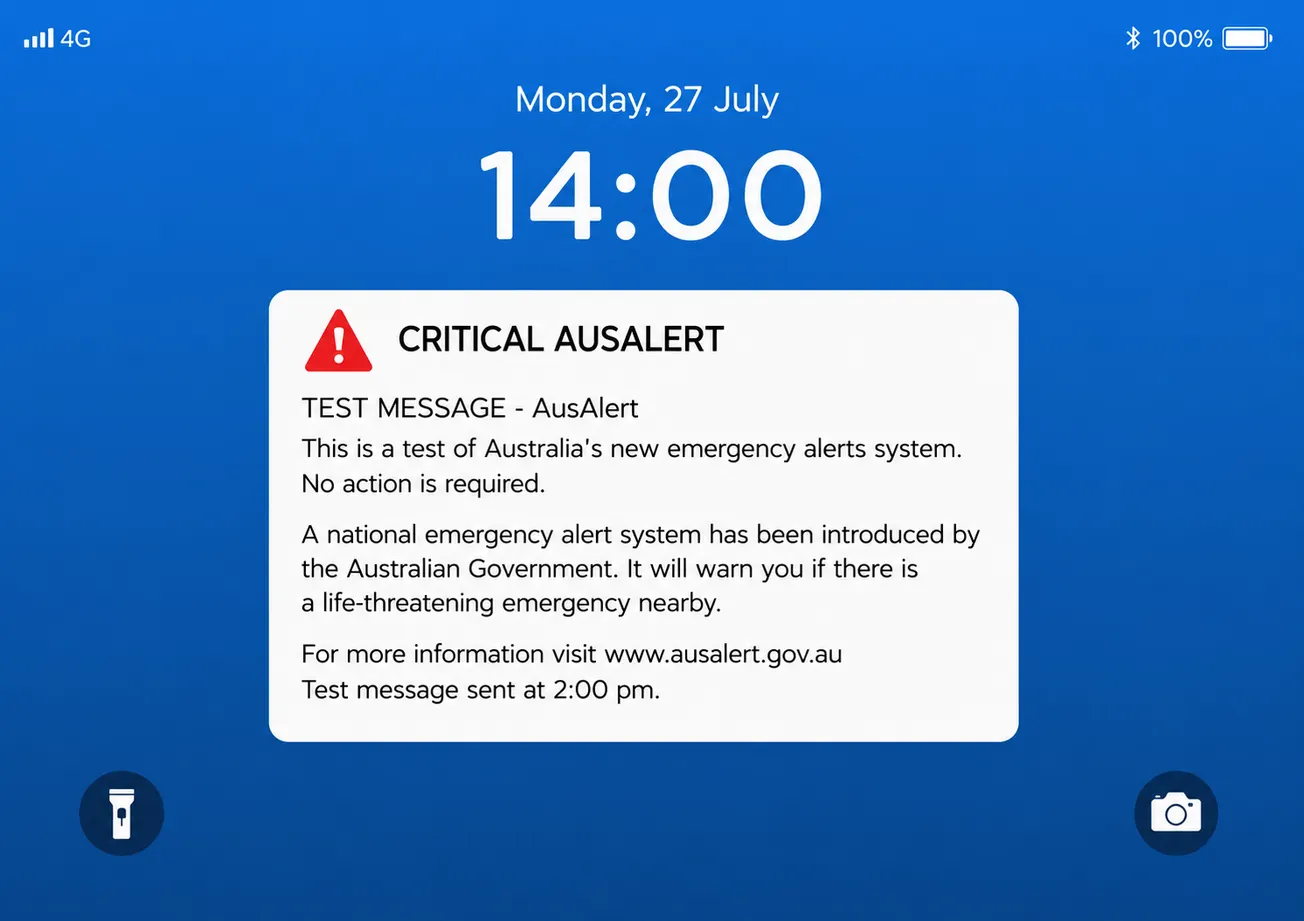
Some Hawkesbury residents were left wondering why they did not receive Australia's first nationwide AusAlert emergency warning test on Monday afternoon, but emergency authorities say there is no cause for alarm and they want to hear from people who missed the alert.
At 2pm on Monday, millions of compatible mobile phones, smartwatches and tablets across Australia sounded a distinctive 10-second emergency siren before displaying a test message as part of the national trial of AusAlert, Australia's new emergency warning system due to commence operation in October.
However, not every device received the warning.
According to the National Emergency Management Agency (NEMA), whether a person received the alert depended on several factors, including the type of device, operating system, mobile network, software version and whether the device was connected to a participating mobile tower at the time of the broadcast.
Unlike the existing Emergency Alert system, which relies on SMS messages, AusAlert uses cell broadcast technology, allowing emergency warnings to be transmitted simultaneously to compatible devices connected to mobile towers within the affected area. The alerts override silent mode and "Do Not Disturb" settings to maximise the chances of people receiving life-saving warnings.
Emergency Management Minister Kristy McBain has encouraged Australians who did not receive the alert to provide feedback, stressing that the nationwide test was designed to identify how the system performs under real-world conditions.
The National Emergency Management Agency said:
"The purpose of testing is to understand these real-world differences, confirm the system is working as intended, and improve public information before AusAlert is used in real emergencies."
Black Spot Communities Still Face Challenges
For many Hawkesbury residents, particularly those living in the Bells Line of Road corridor, the issue may go beyond phone compatibility.
Communities including Berambing, Mount Tomah and surrounding localities continue to experience unreliable or non-existent mobile phone coverage in some areas. Residents have long argued that these mobile black spots place them at greater risk during bushfires and other natural disasters because emergency warnings cannot be received where there is no mobile signal.
The national AusAlert test has highlighted a fundamental limitation of the new technology it can only deliver alerts to devices that are connected to a functioning mobile network.
The Gazette has previously reported concerns that opportunities to improve mobile coverage in parts of the upper Hawkesbury were lost after Hawkesbury City Council maladministration failed to progress a proposed mobile phone tower project, resulting in the loss of funding that could have improved communications in the Berambing and Mount Tomah area.
This means some residents living in high bushfire-risk areas remain dependent on alternative warning systems, despite the introduction of Australia's newest emergency alert technology.
While there is no evidence that Monday's missed alerts in those communities were caused by the absence of mobile infrastructure, the test serves as a timely reminder that no mobile coverage means no cell-broadcast emergency warning.
Residents Encouraged to Report Their Experience
Hawkesbury Gazette is encouraging readers particularly those living in known mobile black spot areas including Berambing, Mount Tomah, Mount Wilson, Mount Irvine, Bilpin, Mountain Lagoon, Colo, St Albans, Upper McDonald and other locations with unreliable reception to report whether they received Monday's test.
Feedback will help emergency authorities understand where the system worked well and where improvements may be needed before AusAlert is introduced nationally in October.
Residents can provide feedback through the official AusAlert feedback page:
The website also provides information on compatible devices, software .
As another bushfire season approaches, reliable emergency communications remain one of the most important public safety measures for Hawkesbury residents.
For those living beyond the reach of reliable mobile coverage, Monday's test has reinforced a question, how can an emergency warning save lives if it cannot reach the people who need it most?