What should the Hawkesbury look like in 10 or 20 years and who has the ideas, commitment and courage to help take it there?
The Hawkesbury Gazette is launching Hawkesbury’s Future Hope, a series profiling community members and potential political leaders who are active in public life and prepared to explain their vision for the region.
Council elections are not due until 2028. This series is not an endorsement of any person or an early election campaign. It is intended to give residents time to consider different ideas, question those advancing them and examine whether their proposals are practical, affordable and in the public interest.
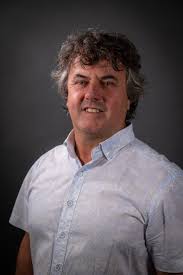
The series begins with Hawkesbury resident and small-business owner Andrew Cadman, whose vision combines the protection of agricultural land with carefully located development, stronger tourism and greater support for local enterprise.
Previous Council campaigns
Andrew Cadman is not new to local politics.
In a statement prepared ahead of the Council election originally scheduled for September 12, 2020, he announced his intention to stand for Hawkesbury City Council.
That election was postponed because of the COVID-19 pandemic, first until September 2021 and subsequently until December 4, 2021.
NSW Electoral Commission records show that an Andrew Cadman group contested the rescheduled Hawkesbury election in 2021. Mr Cadman also stood at the 2024 Council election. He was not elected on either occasion.
Mr Cadman has not formally declared himself a candidate for the 2028 election in the material supplied to the Gazette. His inclusion in this series is an opportunity for residents to examine his experience, priorities and vision well before nominations open.
Business and family life in the Hawkesbury
When Mr Cadman first announced his Council ambitions in 2020, he described himself as the owner of an asphalting company he had operated for 15 years.
His work took him throughout the Hawkesbury, Sydney and the Blue Mountains, providing direct experience of roads, construction and infrastructure across the region.
“I enjoy coming home to the Hawkesbury every day,” he said at the time.
Mr Cadman said he and his wife had raised their two sons in the Hawkesbury and had lived in the region for 16 years when he issued that statement.
His connection with the district, however, began much earlier.
“I remember visiting the Hawkesbury with my parents growing up,” he said.
“Visiting friends and going to functions from Wisemans Ferry through to Bilpin was a fairly regular thing.”
Born in Dubbo, Mr Cadman grew up at Galston on a stone-fruit orchard and spent many school holidays with relatives on farms around Dubbo.
That background helps explain the strong emphasis he places on agriculture, productive land and the Hawkesbury’s potential as a food-producing region.
Son of former federal MP Alan Cadman
Andrew Cadman is the son of former federal Liberal MP Alan Cadman, whose parliamentary career extended for more than three decades.
Alan Cadman represented the federal electorate of Mitchell from May 1974 until his retirement in October 2007. Before entering Parliament, he studied agriculture at the University of NSW and worked as an orchardist and company director.
During his parliamentary career, he served as parliamentary secretary to prime minister Malcolm Fraser from 1981 to 1983 and as parliamentary secretary to the minister for workplace relations and small business from 1997 to 1998. He received the Medal of the Order of Australia in 2009.
The boundaries of Mitchell once extended into Richmond and the Hawkesbury River district.
“From the mid-1970s, for many years, my dad represented the Hawkesbury, then part of the Mitchell electorate, in the Federal Parliament,” Andrew Cadman said.
Alan Cadman also participated in local community projects. In 1980, he officially opened Bellbird Hill Reserve at Kurrajong Heights after Commonwealth funding assisted Colo Shire Council to acquire the land for public use.
His successor in Mitchell, Alex Hawke, later told Federal Parliament that community opposition to proposals for a second Sydney airport in the Hawkesbury had helped propel Alan Cadman into Parliament in 1974.
Following his parliamentary career, Alan Cadman remained involved in public health and education, including serving as chairman of Life Education NSW.
Andrew Cadman’s family background gives him a longstanding familiarity with politics, agriculture and community advocacy. His proposals for the Hawkesbury, however, must be assessed on their own merits.
A region at a financial crossroads
The discussion comes as Hawkesbury City Council faces substantial long-term financial and infrastructure challenges.
Council’s audited financial statements recorded approximately $1.3 million in borrowings at June 30, 2021. Subsequent budgets and financial plans have proposed significantly higher borrowing to deliver infrastructure, flood recovery and major construction projects.
The Gazette’s review of Council financial documents indicates borrowings have risen or are forecast to rise to about $56 million, with further planned borrowing potentially taking the total beyond $100 million during the long-term financial plan.
Council’s accounts have also recorded an approximately $154 million downward revaluation of infrastructure assets. An asset revaluation is an accounting adjustment rather than an immediate cash expense, but it can raise questions about asset condition, valuation methods and future renewal costs.
Major projects have experienced delays, redesigns and rising costs. Council says much of its expanding budget reflects flood recovery, asset renewal and projects supported by state and federal funding.
The Gazette will examine these figures in greater detail in a separate Council report card, including the distinction between current debt, approved borrowing and projected future debt. Council will be invited to explain the increase, the projects being financed and how the debt will be repaid.
The Hawkesbury as the “heart of Australia”
Mr Cadman describes the Hawkesbury as the “heart of Australia”—a reference to its role in helping feed the early colonial settlement and its continuing potential as a food-producing region.
“Australia survived as a fledgling nation because of what the Hawkesbury provided as the food bowl for the country,” he said.
“I would love to see the Hawkesbury become known across the nation for what it has offered and still offers as a food resource, for its history and abundant beauty, and for the ingenuity, creativity, perseverance, humour and courage of its people.”
He believes the Hawkesbury’s strength comes from its unusual combination of agriculture, industry, manufacturing, small business, tourism, historic towns, bushland and wilderness.
“My family and I love the Hawkesbury,” he said.
“My wife and I have raised our children here in this great community. My desire is to see the Hawkesbury’s farms, businesses, families and individuals flourish and bring greater prosperity to the region.”
Protecting agricultural land
Protecting productive farmland is at the centre of Mr Cadman’s vision.
“I don’t want to see our farmland swallowed up and become a sea of roofs,” he said.
“Too much of Sydney’s highly fertile land has already been consumed by housing. Once the Hawkesbury becomes just another collection of suburbs, we lose the unique nature of what makes this place special.”
Mr Cadman believes most future urban development should be directed towards the southeastern side of the Hawkesbury River, while the northwestern portion should retain its rural landscapes, agricultural production and tourism potential.
That proposition would need to be examined against planning laws, flood and bushfire risks, infrastructure capacity, environmental protections and state housing targets.
Mr Cadman nevertheless believes retaining agricultural land could allow the Hawkesbury to become a major supplier of fresh food to Sydney while using Western Sydney International Airport to reach interstate and international markets.
“We can become a farming powerhouse for Sydney,” he said.
“With support from state and federal governments, we could also use the airport to export food interstate and overseas.”
He also supports planning changes allowing appropriate secondary dwellings on acreage, an issue of particular significance to farming families and rural landowners.
Building tourism and connecting communities
Mr Cadman wants better walking and cycling connections to open less-visited parts of the Hawkesbury to residents and visitors.
“Bike and footpaths that take people through otherwise unseen parts of the Hawkesbury would be a great asset for locals and tourists,” he said.
He also sees opportunities for businesses offering guided canoe trips, river sightseeing, birdwatching and other nature-based activities.
“The Hawkesbury needs to sell itself to every kind of tourist international, interstate and visitors from elsewhere in NSW and Sydney,” he said.
Mr Cadman argues that sustained professional promotion is needed to establish the Hawkesbury as a recognised destination.
He imagines town centres that combine the district’s historic and rural character with modern restaurants, cafés, retail businesses, cultural attractions and visitor experiences.
“I can see the main streets of our towns flourishing as bustling mini-metropolises if they are given the right environment and support,” he said.
“With careful, properly funded marketing, the Hawkesbury farming community could become a premium supplier to Sydney and markets across the world.”
The conversation begins
Mr Cadman’s proposals raise questions that require detailed answers.
Where should new housing be constructed? Which farmland must be protected? How would new infrastructure be funded? Who should pay for expanded tourism marketing, and how would its success be measured?
Those questions are the purpose of Hawkesbury’s Future Hope.
The Gazette will invite people active in community life to explain what they value, what they believe must change and what practical steps they would take to build a stronger Hawkesbury.
Their ideas will not be published as unquestioned campaign statements. Residents will be encouraged to scrutinise them, challenge their assumptions and ask whether their proposals are achievable and in the public interest.
The next Council election may be two years away, but the work of imagining and interrogating the Hawkesbury’s future begins now.