The Libertarian Party has adopted new local government transparency and free speech policies in direct response to Hawkesbury City Council's controversial decision to exclude the Hawkesbury Gazette and Hawkesbury Radio from council meetings and facilities.
Freedom of the press is integral to the defence of democracy; local media must have access to council meetings.
As such, I intend to move legislation in the next parliament that will require local councils across New South Wales to allow local media access to public meetings; both online and in person. Hon John Ruddick MLC
The policy changes represent one of the first examples of a political party developing formal policy positions arising from the Hawkesbury media ban, which has attracted state-wide media attention and criticism from journalists, media organisations, politicians and free speech advocates.
The Hawkesbury controversy began in April when Council imposed an indefinite exclusion on representatives of the Hawkesbury Gazette and Hawkesbury Radio from attending council meetings and entering council premises for media purposes.
The decision triggered widespread debate about the balance between workplace health and safety obligations and the role of the media in holding public institutions accountable.
The matter has since attracted attention from the NSW Minister for Local Government, the Office of Local Government, major metropolitan media outlets and members of the NSW Parliament.
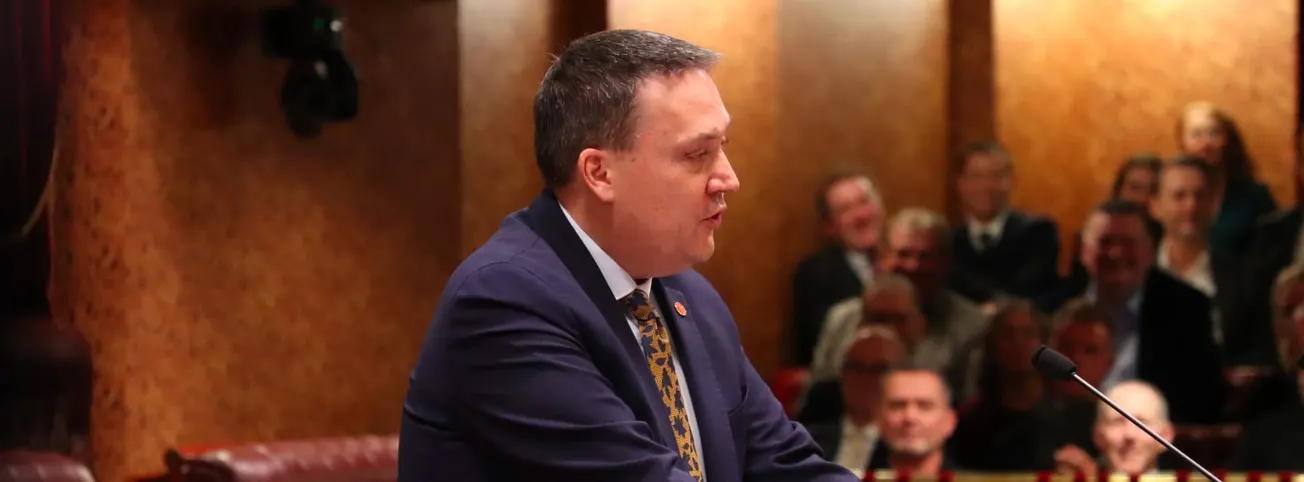
Notably, Libertarian Upper House MP John Ruddick was among the first parliamentarians to publicly take up the issue. Mr Ruddick lodged a Notice of Motion in the NSW Legislative Council condemning the exclusion of local media from council meetings and raising concerns about transparency, accountability and press freedom in local government.
The parliamentary intervention elevated the dispute from a local controversy to a matter of state political debate and foreshadowed the Libertarian Party's subsequent policy response.
Now the party has formally adopted two new policy positions aimed at strengthening transparency and protecting democratic debate in local government.
Open Meetings by Default
Under the party's new policy, all council meetings and committee meetings would be required to be open to the public by default and livestreamed online in real time.
The policy also states that ratepayers and all local media should have reasonable access to attend meetings, record proceedings and participate in dedicated public forum sessions.
The proposal goes beyond current legislative requirements and would effectively make public access and media attendance a fundamental principle of local government.
Supporters argue that councils exercise significant powers over planning, rates, infrastructure, development and community services and therefore should operate with maximum transparency.
The policy appears designed to prevent circumstances similar to those that occurred in the Hawkesbury, where local media organisations were excluded from physical attendance at council meetings despite continuing to report on council affairs.
Protecting Councillors' Free Speech
The second policy addresses a separate but related issue.
The Libertarian Party is advocating for elected councillors to receive protections similar to parliamentary privilege for statements made during council meetings.
Under the proposal, councillors would receive a form of qualified privilege shielding them from civil liability for statements made in the course of council debate.
The party argues that councillors should be able to raise matters of public interest without fear of defamation proceedings or other civil action designed to discourage robust discussion.
Advocates of the proposal point to Parliament, where elected representatives enjoy privilege protections that enable open debate on matters affecting their constituents.
The policy would not provide unlimited protection but would create a framework similar to qualified privilege, balancing freedom of expression with accountability.
The proposal has particular relevance in the Hawkesbury, where the debate over the media ban has been accompanied by allegations of councillor-on-councillor bullying, public disclosures by Councillor Mike Creed regarding the impact of the dispute on his wellbeing, and a subsequent SafeWork NSW investigation into matters raised during the controversy.
Supporters argue stronger protections would allow councillors to speak openly about governance concerns without fear of legal repercussions.
Hawkesbury at the Centre of the Debate
The policy announcement places Hawkesbury City Council at the centre of a broader discussion about transparency, democratic accountability and freedom of speech in local government.
The media ban has already prompted intervention from NSW Local Government Minister Ron Hoenig, who emphasised the importance of media scrutiny in maintaining public accountability.
It has also featured in national media coverage, including discussion on ABC news programs, A Current Affair and major metropolitan newspapers.
For supporters of greater transparency, the Libertarian Party's policy response demonstrates how events in a regional council chamber can influence broader political debates across the state.
Critics may argue that councils require flexibility to manage workplace safety and operational issues.
However, supporters contend that public confidence in local government depends upon ensuring that meetings remain accessible to ratepayers and the media.
A Growing Policy Debate
The Hawkesbury dispute has raised questions that extend well beyond one council area. Should councils be able to exclude media organisations from public meetings?
Do councillors require stronger legal protections to speak openly about matters of public interest? Should local media have guaranteed access to observe local government decision-making?
The Libertarian Party's answer to each of those questions appears to be yes.
Whether other political parties follow suit remains to be seen.
What is clear is that a local dispute that began in Hawkesbury council chambers has now influenced parliamentary debate and the development of state-level policy positions on transparency, media access and democratic accountability.
Proposed Policies
Transparency and Public Access
- All council meetings open to the public by default.
- Committee meetings open by default.
- Mandatory real-time livestreaming.
- Reasonable access for all local media.
- Public ability to attend and record proceedings.
- Dedicated public forum segments.
Councillor Free Speech
- Qualified privilege protections for councillors.
- Protection from civil liability for statements made in council meetings.
- Encouragement of open debate on local issues.
- Safeguards against legal action designed to silence dissent.
From Hawkesbury to Macquarie Street - how did we get here?
April 2026 – Hawkesbury Gazette and Hawkesbury Radio excluded from Council meetings and premises.
May 2026 – Councillor Mike Creed raises concerns during Council debate on the ban.
May 2026 – John Ruddick MLC lodges a Notice of Motion in the NSW Upper House concerning the exclusion of local media.
June 2026 – Minister for Local Government Ron Hoenig publicly stresses the importance of media scrutiny of councils.
June 2026 – SafeWork NSW confirms an investigation into councillor-on-councillor bullying allegations connected to matters raised during the media ban dispute.
June 2026 – Libertarian Party adopts new policies supporting guaranteed media access, open council meetings and enhanced councillor free speech protections.
Result: A local government dispute in the Hawkesbury becomes the catalyst for parliamentary debate and new state-level policy proposals.