Hawkesbury City Council has appointed Will Barton as its new General Manager after a recruitment process that ended with more than six hours of confidential deliberations and questions have been raised about the advantages available to an internal candidate.
Mayor Les Sheather announced Mr Barton’s appointment at Tuesday night’s Council meeting, August 11, saying councillors had overwhelmingly selected him as their preferred candidate at an Extraordinary Meeting last Friday.
Mr Barton’s appointment is effective immediately.
He had served as Acting General Manager since April following the resignation of former General Manager Elizabeth Richardson and had previously been Council’s Director of Infrastructure Services since November 2021.
Mayor Sheather described Mr Barton as the “outstanding candidate” from a high-quality field.
“Mr Barton brings more than two decades of experience in local government and infrastructure leadership, including extensive senior executive experience across regional and metropolitan councils,” Mayor Sheather said.
The Mayor credited Mr Barton with playing an important role in Council’s recovery from the series of floods between 2020 and 2024 and said councillors had confidence in his ability to lead the organisation.
But Mr Barton takes over the top administrative job with significant questions confronting Council over its finances, infrastructure history and the recruitment process that resulted in his appointment.
Sewer scheme part of Barton's infrastructure legacy
Mr Barton became Director of Infrastructure Services in November 2021, at a time when Council was dealing with major infrastructure challenges following flooding and problems affecting the Windsor Sewer Scheme.
Wastewater facilities sat within Council’s Infrastructure Services operations. Council material confirms its Waste Management Branch within Infrastructure Services was responsible for wastewater environmental management functions.
The Windsor scheme subsequently became one of the most expensive and controversial infrastructure issues confronting the organisation.
Historical borrowing associated with repairs to the sewer system following the March 2021 flood has left an outstanding sewer loan of approximately $20 million.
Council transferred responsibility for providing wastewater services to Sydney Water from July 1 this year. Council says the arrangement provides lower ongoing wastewater charges and reduces the financial and operational risks of running the system itself.
However, Council also recorded an approximately $152 million accounting write-down of sewer infrastructure associated with the transfer.
Council stresses that the write-down is an accounting treatment rather than a $152 million cash loss.
Customers connected to the Windsor Sewer Scheme nevertheless remain responsible for repaying the historical infrastructure debt.
Affected properties will pay Council a separate Sewer Infrastructure Charge of $344.84 a year for the next 10 years, in addition to the wastewater charges they receive from Sydney Water.
Council says customers are expected to remain financially better off overall because Sydney Water’s ongoing wastewater service charges are substantially lower than Council’s former charges.
The Gazette has previously reported extensively on the failure of the sewer rising main, the cost of its repair and the financial consequences that followed.
Mr Barton’s appointment therefore places the former Infrastructure Director in ultimate administrative control of an organisation still dealing with the consequences of one of the largest infrastructure and financial episodes in Council’s recent history.
The Gazette is not suggesting that Mr Barton was personally responsible for creating the original pipe failure or all of the subsequent financial decisions. Many decisions concerning the scheme involved Council resolutions, other senior staff, contractors and events extending across several years.
However, his senior infrastructure role during much of that period makes the management of the scheme a legitimate part of the record against which his performance as General Manager can be assessed.
Promotional video filmed during recruitment
Questions have also arisen over Council’s use of its communications resources while Mr Barton was competing for the permanent General Manager position.
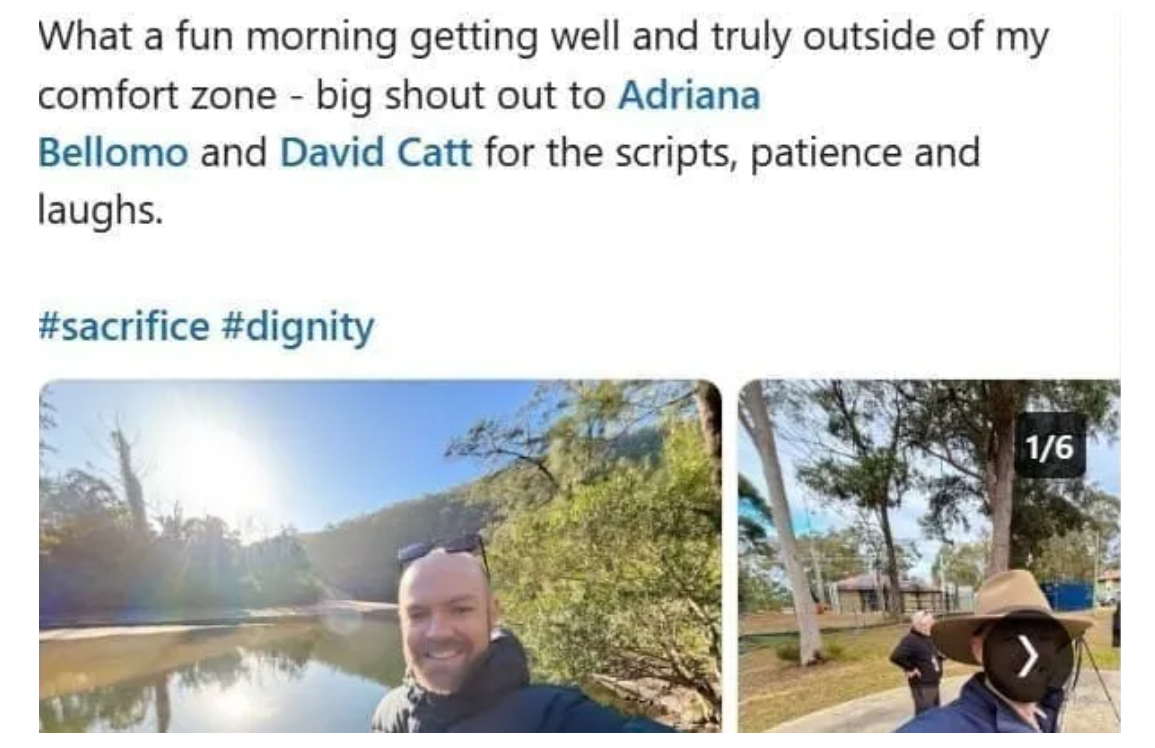
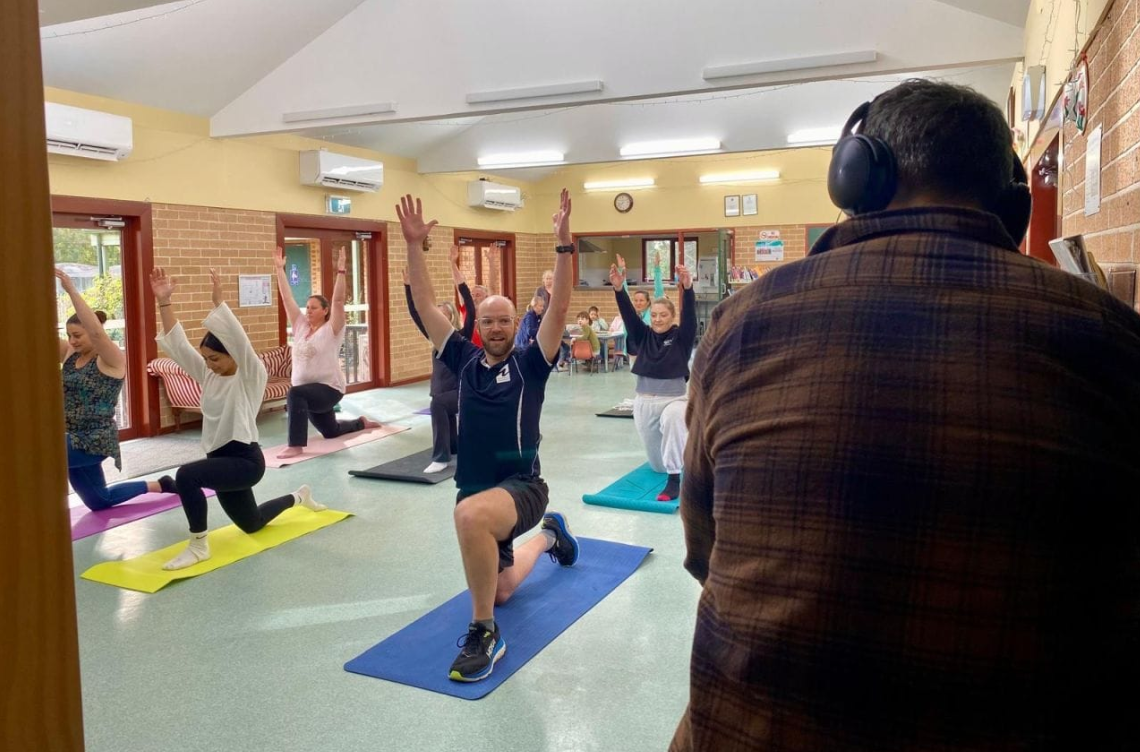
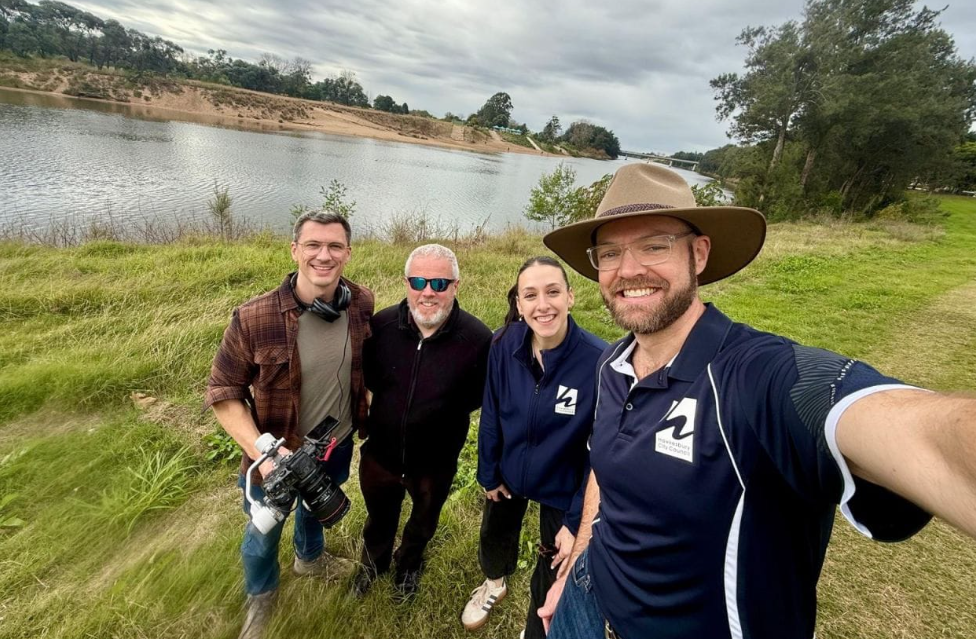
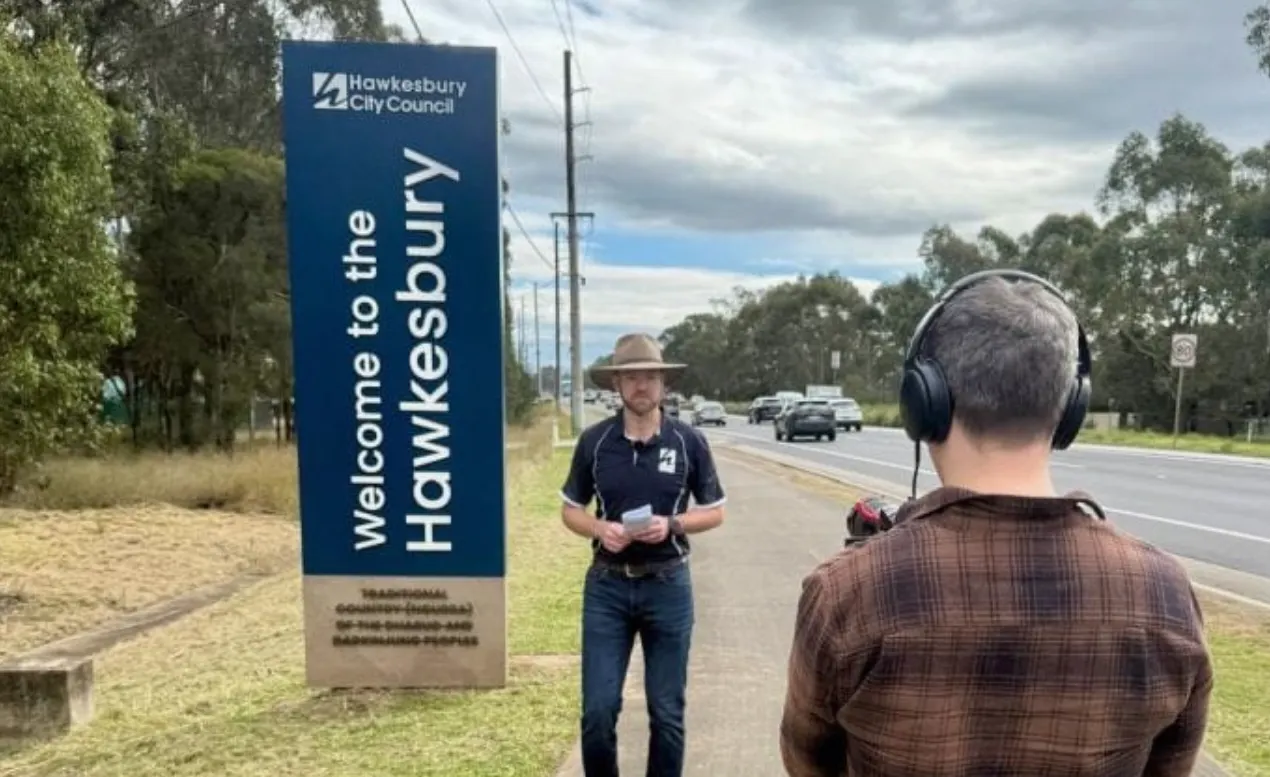
Approximately three weeks before councillors made their selection, Mr Barton disclosed on LinkedIn that he had spent half a day filming promotional material with Council’s media and communications team.
“If you’re going to be stitched up by your media and comms team for half a day of shooting promos for Hawkesbury City Council, there’s worse places to do it!” Mr Barton wrote.
He described the filming as taking him “well and truly outside of my comfort zone” and thanked Council employees Adriana Bellomo and David Catt for “the scripts, patience and laughs”.
There is no suggestion the communications staff involved acted improperly, or that producing promotional material featuring an Acting General Manager is itself improper.
The issue is the timing.
The filming occurred while the permanent General Manager recruitment process remained active and while Mr Barton was a confirmed candidate for the job.
As Acting General Manager, Mr Barton necessarily continued performing public-facing duties.
But his position also provided access to Council staff, communications channels and institutional exposure unavailable to external applicants.
That creates a legitimate governance question about what safeguards, if any, Council applied to ensure an internal candidate did not receive an actual or perceived advantage during a live recruitment process.
Other candidates raise fairness question
The Gazette is aware of at least three other candidates who applied for the General Manager position.
At least two had substantial professional qualifications and extensive employment histories relevant to senior local government or infrastructure management.
At least one unsuccessful applicant has indicated concern to the Gazette about the promotional filming and whether the recruitment process provided an even playing field between the internal and external candidates.
The Gazette is not alleging that the promotional video influenced councillors’ votes or that Mr Barton was selected other than on merit.
The question is instead whether the process was both fair and visibly fair to all applicants.
NSW local government law requires appointments to council staff positions to be based on merit, with applicants assessed according to matters including their abilities, qualifications, experience and standard of work performance.
Six hours behind closed doors
Councillors met at 3pm last Friday to determine their preferred candidate.
The confidential deliberations continued for more than six hours.
At about 9.15pm councillors emerged without announcing who had been selected.
Instead, Council resolved to authorise Mayor Sheather to negotiate an employment contract with the preferred candidate. The Gazette recorded the meeting continuing for more than six hours before that decision was reached.
Council now says Mr Barton was “overwhelmingly selected”.
The length of the meeting does not by itself establish that his appointment was opposed or that the final vote was close.
It does, however, show councillors undertook lengthy deliberations before reaching their decision.
Given Council says the final selection was overwhelming, residents may reasonably want to know what occupied councillors for more than six hours and whether the deliberations involved detailed comparison of candidates, contractual issues or other matters.
Those discussions occurred in confidential session and have not been publicly disclosed.
Internal candidate now takes the top job
There is nothing unusual about an Acting General Manager applying to become the permanent General Manager.
Internal candidates can provide continuity, detailed knowledge of an organisation and established relationships with staff and elected representatives.
Mr Barton also entered the process with almost five years' experience as one of Hawkesbury Council’s most senior executives.
But internal candidacy creates its own governance challenges.
While external applicants compete largely through their applications and interviews, an acting chief executive continues to run the organisation, appear publicly on its behalf and work directly with the councillors who ultimately determine the appointment.
During the recruitment process, the Gazette asked whether Council had considered Mr Barton’s status as a candidate when approving the promotional filming, whether any recruitment-integrity or conflict assessment had been undertaken and whether equivalent promotional opportunities existed for external candidates.
Those questions have become more significant now that the person featured in the Council-funded promotional material has secured the permanent position.
A powerful job at a critical time
Mr Barton inherits responsibility for an organisation facing major decisions involving infrastructure, flood recovery, finances, planning, staff management and community confidence.
His appointment also brings continuity.
He has been effectively running the organisation since April and has occupied a senior infrastructure role since 2021.
Mayor Sheather said councillors believed Mr Barton was the right administrator to lead Hawkesbury City Council.
The test will now move from recruitment to performance.
After a recruitment process in which an internal candidate appeared in Council promotional material produced while the recruitment was underway, Council also has an interest in demonstrating that the process was not only conducted on merit, but was seen to be fair.
Related story: https://www.hawkesburygazette.com/council-promo-featuring-gm-candidate-prompts-questions/