NSW is preparing for the biggest firearms buyback in the state since the Port Arthur reforms, with up to 274,000 registered firearms expected to be surrendered as a suite of new gun laws begins to take effect.
The reforms were introduced following the December 2025 Bondi Beach terrorist attack, in which 15 people were killed. The NSW Government says the changes will give the state the toughest firearms laws in Australia.
The buyback will begin on 2 November 2026 and will be administered by NSW Police, with the Commonwealth and NSW Governments sharing the cost. It will compensate licensed owners who are required to surrender firearms because they exceed new ownership limits or because particular firearms have been reclassified.
For the Hawkesbury, where firearms are commonly used legitimately by farmers, primary producers, pest controllers and sporting shooters, the reforms are likely to have a significant local impact.
Four-gun limit for most owners
One of the most significant changes is a new cap on the number of firearms an individual can possess.
Most licence holders will be restricted to four firearms, while eligible primary producers will be permitted to hold up to 10.
The reforms also restrict straight-pull, pump-action and button- or lever-release firearms to primary producers, reduce magazine capacity for Category A and B firearms and prohibit firearms using belt-fed magazines.
Gun club membership will also become mandatory for firearms licence holders under the reforms.
Another major change is the reduction of standard firearms licence periods from a maximum of five years to two years, requiring more frequent licensing and suitability checks. That change commenced on 1 July 2026.
The reforms also remove the previous pathway for firearms licence decisions to be reviewed through the NSW Civil and Administrative Tribunal, replacing it with an internal review process. The Government says the change allows sensitive police intelligence to be considered without the risk of that material being exposed through tribunal proceedings.
Buyback starts in November
The first phase of the NSW buyback is expected to cover ordinary firearms affected by the new laws.
Compensation announced so far includes up to $1,000 for some rifles and revolvers, with other firearms attracting lower fixed amounts depending on type. A second phase scheduled for early 2027 is expected to deal with higher-value firearms, with compensation of up to $10,000 in some circumstances.
NSW expects approximately 50,000 gun owners to surrender as many as 274,000 firearms around one quarter of the registered firearms in the state.
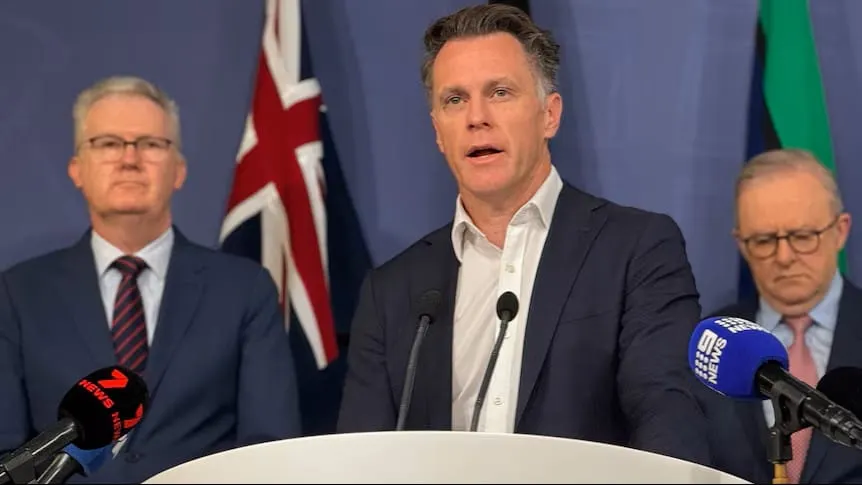
Premier Chris Minns said the principle behind the program was simple: reducing the number of dangerous firearms in the community would make NSW safer.
Prime Minister Anthony Albanese said Australia now has more registered firearms than it did at the time of the 1996 Port Arthur buyback. Australia had approximately 4.1 million registered firearms last year, including more than 1.1 million in NSW.
Farmers given higher limit
The distinction for primary producers will be especially important in rural areas such as the Hawkesbury.
Farmers routinely use firearms for purposes including pest and feral animal control, livestock protection and humane destruction of injured animals.
The Government has recognised those operational needs by allowing eligible primary producers to own up to 10 firearms and retain access to some firearm types that will be more tightly restricted for other licence holders.
However, the reforms have generated strong opposition from sections of the farming, shooting and firearms industries.
Critics argue that the laws disproportionately affect people who already comply with licensing, registration and safe-storage requirements and question whether reducing legally held firearms addresses the causes of terrorism and criminal gun use.
Opposition has also focused on whether buyback payments will adequately compensate owners for firearms that may have cost considerably more than the fixed surrender price.
Political divide
The reforms have become politically contentious.
The NSW Government and Commonwealth argue that the Bondi attack demonstrated the need for stronger controls on the number and type of firearms that can legally be accumulated by individuals.
Opponents, including One Nation and sections of the Nationals, argue that the laws penalise licensed shooters and farmers rather than criminals and extremists who obtain or use weapons unlawfully.
The Commonwealth has offered the buyback arrangements to every state and territory, but participation has not been uniform, with several jurisdictions declining to join the national scheme in its current form.
What Hawkesbury firearm owners need to know
For licensed firearm owners in the Hawkesbury, the changes mean it will be important to check whether:
- the number of firearms they possess exceeds their new statutory limit;
- any firearm they own has been reclassified or restricted;
- they qualify for the higher primary-producer limit;
- their licence renewal date is affected by the new two-year maximum term; and
- they will be required to surrender firearms when the buyback commences on 2 November.
NSW Police says the reforms are being introduced in stages to give the Firearms Registry time to implement the changes and licensed owners an opportunity to become compliant.
The NSW Firearms Registry is publishing implementation information as each stage takes effect.
A major change for rural NSW
The reforms represent one of the largest changes to NSW firearms regulation in a generation.
For metropolitan communities, the debate is likely to focus heavily on public safety and preventing the accumulation of large numbers of weapons.
For rural districts such as the Hawkesbury, the consequences are more complicated.
Firearms remain legitimate working tools for many primary producers, and sporting and recreational shooting has a long-established presence in regional communities.
The challenge for government will be demonstrating that tighter limits improve community safety while allowing farmers and other legitimate firearm users to continue carrying out necessary work.
With the buyback beginning in November, thousands of NSW licence holders will soon have to determine whether their firearms remain lawful under the new rules and whether the compensation being offered reflects what they are being required to surrender.