Residents along Bells Line of Road have welcomed a $200 million commitment to rebuild and improve the Great Western Highway at Victoria Pass, saying reopening the route cannot come soon enough for communities that have carried increased truck and general traffic since the highway closure.
The Australian Government has committed $100 million towards the project, matching $100 million already allocated by the NSW Government, bringing total funding for the reconstruction to $200 million.
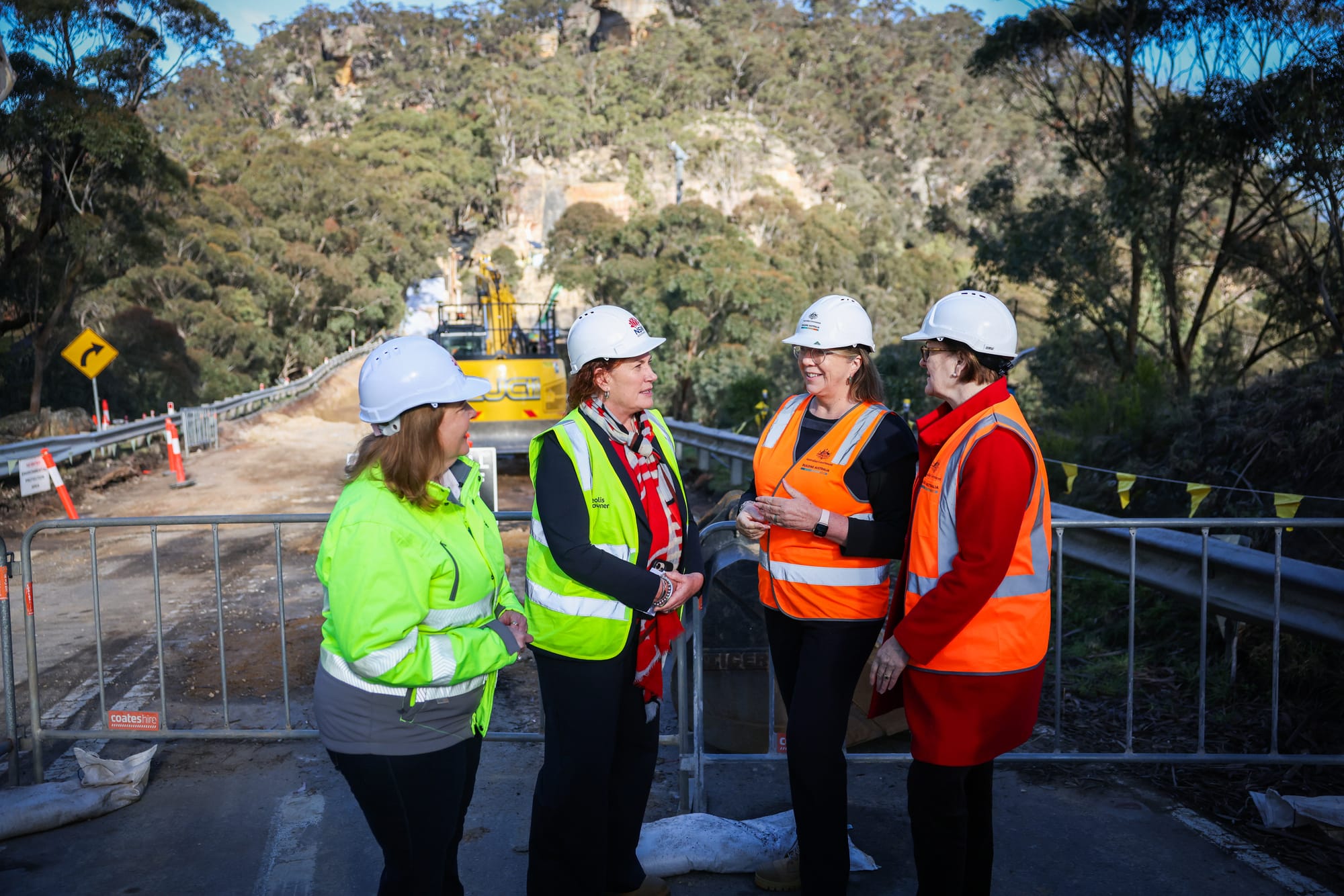
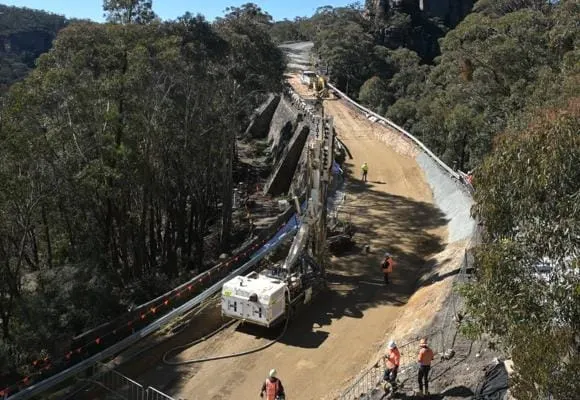
The Great Western Highway at Mitchell’s Causeway and Victoria Pass has been closed since March 2026 after serious cracking and ground movement was detected. Transport for NSW subsequently developed a plan to build a new road deck above the existing causeway, supported by piles anchored into bedrock. More than 150 workers have now been inducted to deliver the project.
The reconstructed road will not simply replace the existing highway. An additional eastbound climbing lane will also be built, allowing motorists to overtake slow-moving trucks and other vehicles travelling up Victoria Pass.
The Great Western Highway is expected to reopen to traffic in the second quarter of 2027, although work on the additional climbing lane may continue beyond the initial reopening of the two traffic lanes.
NSW Roads Minister Jenny Aitchison said reconnecting the existing two lanes remained the Government’s first priority, with work and design for the third lane progressing alongside the main reconstruction.
“The quicker we can get that done, the quicker everyone’s back to normal,” Ms Aitchison told a press conference at Mount Victoria.
For communities on the northern side of the Blue Mountains, “back to normal” also means easing the extraordinary pressure that has been placed on Bells Line of Road.
Residents from Mt Tomah through Bilpin, Kurrajong and down to Richmond have welcomed every effort to reopen Victoria Pass and restore the Great Western Highway as a major freight and passenger route.
Since the closure, Bells Line of Road has had to absorb additional traffic, including heavy vehicles and trucks that would normally use the Great Western Highway.
Local residents say the extra traffic has increased pressure on a road which was not designed to permanently carry the additional freight burden created by the closure.
There is now a strong hope within Bells Line of Road communities that the NSW and Australian Governments will recognise the consequences of the prolonged diversion and allocate additional funding to repair deterioration caused by the increased traffic.
For residents living beside Bells Line of Road, reopening Victoria Pass is therefore not simply a Blue Mountains or Central West issue. It is also about getting trucks and displaced traffic off Bells Line of Road and restoring safer and more manageable conditions through Mt Tomah, Bilpin, Kurrajong and the approaches to Richmond.
The State Government has already spent heavily on the main designated detour route via the Darling Causeway.
Ms Aitchison said the NSW Government had committed $50 million to the Darling Causeway and had placed about 30,000 tonnes of asphalt on the route to improve friction, strengthen pavement and accommodate the substantially increased traffic volumes.
The Hawkesbury communities affected by increased Bells Line of Road traffic will be looking for similar recognition of the impact the highway closure has had on their road.
Federal Infrastructure Minister Catherine King said the Commonwealth contribution would allow the Victoria Pass project to do more than simply repair the damaged road.
The $100 million federal commitment forms part of a 50-50 funding arrangement for the $200 million project, including construction of the new road structure and third climbing lane.
Member for Macquarie Susan Templeman said the highway closure had had a profound impact on communities in the Blue Mountains and Central West and described the new funding as an opportunity to construct a more resilient highway rather than simply replace what had failed.
In the joint announcement, Ms Templeman said the completed project would provide lasting benefits for freight, emergency services, local communities and the broader regional economy.
For Hawkesbury residents, however, attention will also turn to what happens to Bells Line of Road after the Great Western Highway reopens.
After months of additional trucks and traffic being pushed through the northern Blue Mountains and Hawkesbury, residents want governments to assess the condition of Bells Line of Road and provide the money needed to repair any damage caused by its temporary role as an increasingly important alternative route.
The message from Mt Tomah to Richmond is straightforward: the sooner Victoria Pass reopens, the sooner pressure can be taken off Bells Line of Road but communities do not want the damage left behind by the diversion to become their long-term problem.