As Australians gather around televisions and screens to cheer on the Socceroos at the 2026 FIFA World Cup, few will realise that one of the nation's oldest football traditions has its roots not in a stadium, but on the battlefields of the First World War.
The story of the ANZACs and football is largely forgotten today, overshadowed by rugby league, AFL and cricket. Yet football, known then simply as soccer played an important role in the lives of Australian and New Zealand soldiers serving overseas.
In the trenches, camps and military bases of Egypt, Gallipoli and the Western Front, football provided a welcome escape from the horrors of war.
Matches were played wherever space could be found. Soldiers formed teams, organised competitions and used sport to maintain morale during one of the darkest periods in modern history.
The connection between football and the ANZAC spirit survives today in one of the world's most unusual sporting trophies.
The Soccer Ashes
Australia and New Zealand share a sporting rivalry that stretches back more than a century.
In football, that rivalry is symbolised by the "Soccer Ashes", a trophy first contested in 1923.
The trophy is unlike any other in world sport.
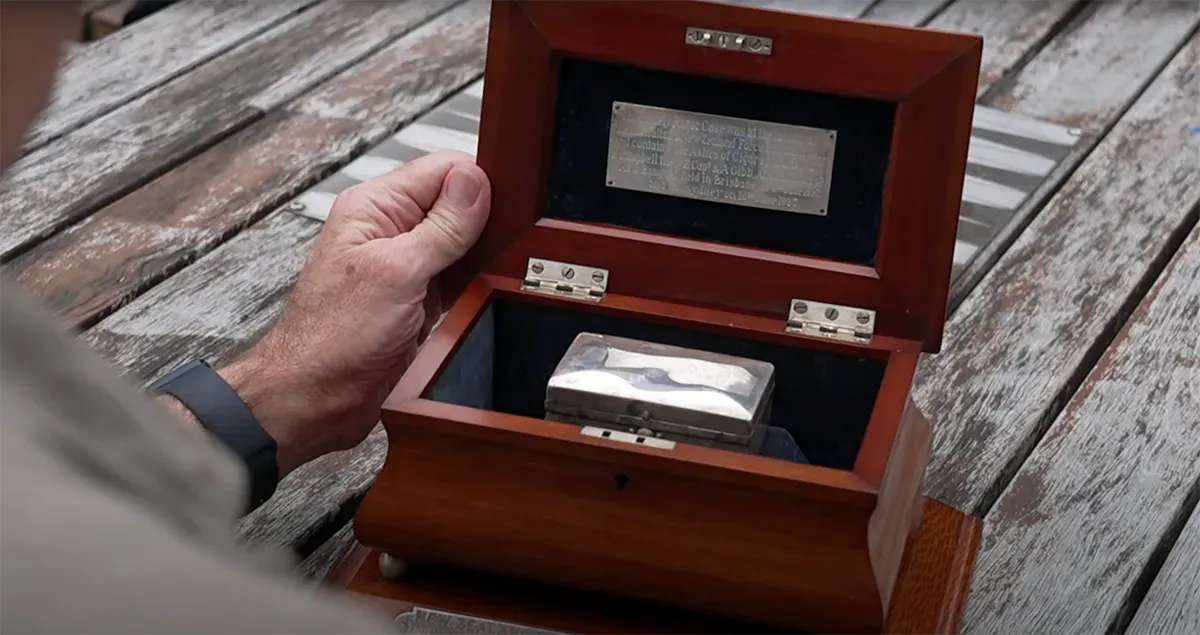
It contains the ashes of cigars smoked by the captains of the Australian and New Zealand teams after a trans-Tasman football series more than 100 years ago.
Those ashes were placed inside a silver-plated razor case that had been carried by an Australian soldier during the Gallipoli campaign.
The razor case was then mounted in a wooden casket crafted from Australian and New Zealand timbers.
The result is a trophy that symbolises not only a sporting rivalry, but also the shared sacrifice and history of the ANZAC nations.
For decades the Soccer Ashes disappeared from public view and many believed it had been lost forever.
It was eventually rediscovered in New Zealand and returned to football, restoring a remarkable piece of sporting and military history.
Football's Forgotten ANZAC Legacy
The image of Australian soldiers kicking a football across dusty parade grounds may seem far removed from the modern World Cup.
Yet the connection remains significant. Many of the young men who played football before enlistment would never return home.
Others carried their love of the game back to Australia and helped establish football clubs and competitions throughout the country during the decades that followed.
Their contribution helped lay the foundations for the sport that millions of Australians now follow.
The Socceroos Carrying the Tradition Forward
Today, the Socceroos compete on football's biggest stage.
Australia's appearance at the 2026 World Cup continues a journey that has transformed football from a migrant and working-class game into one of the country's most popular participation sports.
Every World Cup campaign creates new heroes and new memories.
But behind the modern spectacle lies a history stretching back more than a century a history that includes soldiers kicking footballs between battles, trans-Tasman friendships forged through sport, and a trophy containing a relic from Gallipoli itself.

A Reminder for Hawkesbury
The Hawkesbury has a long tradition of military service. Generations of local men and women have served Australia in times of war and peace.
As local families cheer on the Socceroos during this World Cup, the story of the Soccer Ashes offers a timely reminder that sport and service have often been intertwined.
The ANZAC spirit is usually associated with courage, sacrifice and mateship.
Perhaps it is fitting that one of Australia's oldest football trophies celebrates exactly those same values.
When the Socceroos next take the field, they do so as representatives of a game whose Australian story reaches back not only through generations of players and supporters, but also to the ANZACs who carried a football with them into history.
Did You Know?
- The Soccer Ashes were first contested in 1923.
- The trophy contains the ashes of cigars smoked by the Australian and New Zealand captains.
- The ashes are housed in a razor case carried by a Gallipoli veteran.
- The trophy disappeared for decades before being rediscovered.
- It is considered one of the oldest international football trophies in the world.
- Australian and New Zealand soldiers regularly played football during World War I to maintain morale and fitness.
For further information visit https://socceranzacs.com.au/