The Hawkesbury district has quietly been one of New South Wales’ important beekeeping regions for more than a century. Its combination of fertile farmland, orchards and surrounding bushland has made it an ideal environment for both honey production and pollination services.
The Hawkesbury was one of the first agricultural regions established after European settlement in 1788, with farms operating from the 1790s along the fertile river flats.
European honey bees (Apis mellifera), the species used in beekeeping today, were introduced to Australia by settlers in the early 1800s. As farming expanded in the Hawkesbury, bees became important for pollinating crops, producing honey and wax and supporting mixed farming systems.
While detailed early records specific to Hawkesbury apiaries are limited, beekeeping would have been a natural extension of early colonial agriculture, particularly in an area already supplying food to Sydney.
By the late 19th century, beekeeping in New South Wales was becoming more structured. Commercial equipment was being manufactured (e.g. Pender Brothers from the 1890s) and Beekeeping knowledge was spreading through journals and agricultural networks. The Hawkesbury region played a role in this shift through education and training.
Hawkesbury Agricultural College 1891 and apiculture
A major milestone for local beekeeping was the establishment of Hawkesbury Agricultural College in 1891 at Richmond.
It was one of Australia’s earliest agricultural colleges and played a major role in training farmers and advancing practices like dairying, horticulture and beekeeping in the Hawkesbury region.
The college included apiaries and formal teaching of apiculture. Historical film from the 1920s even shows apiaries operating on the campus and Beekeeping was taught as a practical agricultural skill to students.
By the mid-20th century, the Hawkesbury had become a centre for beekeeping education with Lecturer Neville Cutts taught apiculture there from 1953 to 1987.
Beekeeping knowledge was often passed down through families in the district. This helped embed beekeeping as both a professional and community practice in the region.
Beekeeping in the Hawkesbury today
As agriculture diversified, bees became essential to the region’s economy. Today, as in the past, bees support orchards (especially apples), market gardens and flower production.
The Hawkesbury still has hundreds of hives and beekeepers, reflecting its strong agricultural base.
In recent decades, beekeeping has expanded beyond farms and hobby or “backyard” beekeeping has grown significantly. Local beekeepers provide swarm collection and mentoring services. Small-scale producers sell honey and beeswax locally.
Modern local apiaries (like small family-run operations) continue a long tradition of community-based beekeeping tied to the landscape.
Like the rest of NSW, Hawkesbury beekeepers face new pressures with biosecurity threats such as the varroa mite, strict regulations under the Biosecurity Act, the need for registration and compliance.
Despite this, beekeeping remains an important and resilient part of the region.
Pollination: The Hidden Industry

Today, pollination is often more valuable to farmers than honey itself.
Bees play a crucial role in the productivity of crops grown in and around the Hawkesbury including citrus orchards, stone fruit, berries, vegetable seed crops and turf farms.
Without managed bee colonies, many of these crops would experience significant reductions in yield.
Across Australia, pollination services provided by honeybees are estimated to contribute billions of dollars annually to agricultural production.
Bushland and Biodiversity
The Hawkesbury is surrounded by extensive national parks and bushland, including areas of the Blue Mountains National Park and Wollemi National Park.
These landscapes contain rich native flowering plants that provide important nectar flows for bees.
Native flora such as eucalypts, banksias, paperbarks and tea trees can produce distinctive Australian honeys and contribute to the floral diversity now being studied by researchers.
A Region Linked to Bee Research
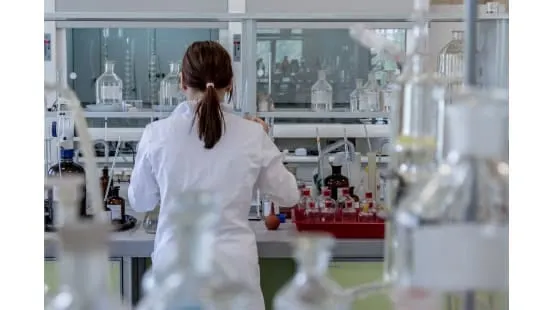
The Hawkesbury’s agricultural landscape means local beekeepers often work closely with researchers and training institutions such as Tocal College, which operates the Bee Research and Training Centre.
Research into bee health, hive microbiology and honey chemistry is increasingly important as Australia faces challenges such as the spread of the Varroa destructor, a parasitic mite that has devastated bee populations overseas.
Protecting healthy bee populations is essential for both honey production and the pollination of crops across regions like the Hawkesbury.
The Future of Bees in the Hawkesbury
Recent scientific studies exploring the microbiology of honey suggest that diverse landscapes rich in native plants may produce honey with stronger antimicrobial properties.
For regions like the Hawkesbury where farmland, bushland and river flats meet this diversity may be one of the district’s greatest strengths.
While bees have long been part of the region’s agricultural heritage, new research suggests they may also play a role in future scientific discoveries.
We have a great community of beekeepers who are interested in both honeybees and Australian native bees.
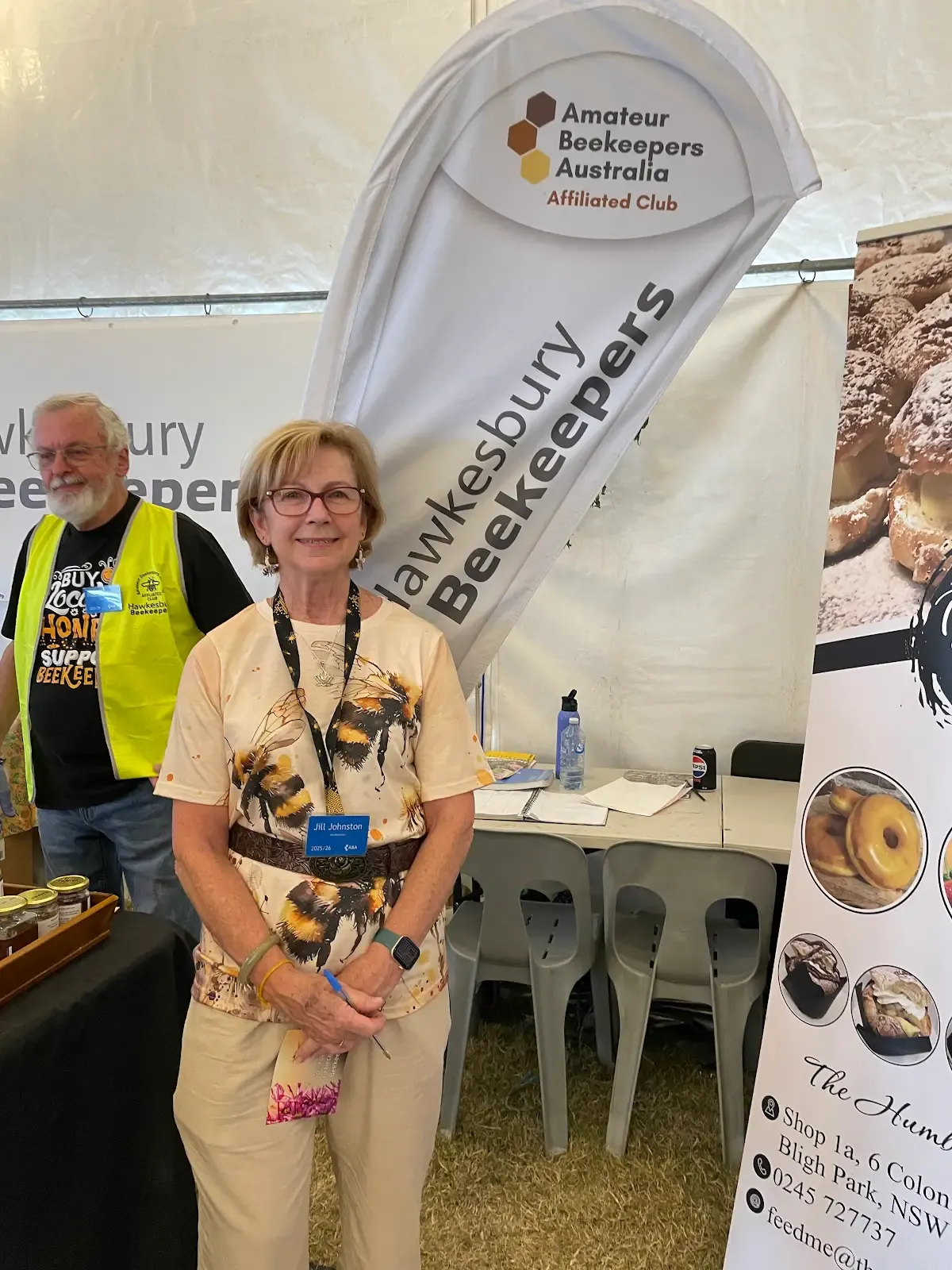
Jill Johnston is an prize winning member of Hawkesbury Beekeeper Inc. According to Jill and the Club webiste
Our club and members are focused on improving our knowledge of the gentle art and complex science of beekeeping. We have an active presence in the community including stalls at the Hawkesbury Show, the Secret Garden Fairs and Kurrajong CWA market days.
The club runs “Beginning in Bees” courses for people interested in getting into beekeeping.
That is how I started says Jill with a big smile. Its a very friendly and informative Club for anyone interested in bees and bee keeping.
From pollinating orchards to producing unique Australian honeys, the humble honeybee continues to be one of the most important and often overlooked contributors to the Hawkesbury economy and environment.
Everyone is welcome at Hawkesbury Beekeeper Amateur Beekeepers Australia. For further information see https://www.beekeepers.asn.au/hawkesbury