For many Hawkesbury residents, the October long weekend means a family gathering, a trip away or time to catch up on jobs around the house.
But the holiday’s origins lie in a struggle over something more fundamental: how much of a person’s life should be spent at work.
Monday, October 5, is Labour Day in NSW. Observed on the first Monday in October, it recognises workers’ contribution to society and the campaigns that helped secure shorter working hours.
The weekend we enjoy today developed through generations of organising, negotiation and legislation. An eight-hour working day, a five-day week and paid holidays were separate achievements, won at different times.
During the nineteenth century, long working days left many people with little opportunity for recreation, education or family life. Workers campaigning for shorter hours argued that earning a living should leave room for living.
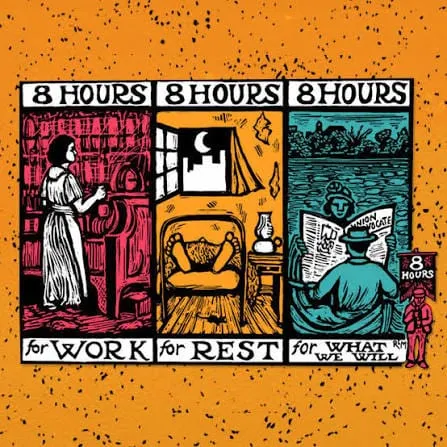
Their demand became a memorable formula: “Eight hours’ work, eight hours’ recreation, eight hours’ rest.”
The early victories
Sydney stonemasons were among Australia’s pioneers, securing an eight-hour working day in 1855. Their achievement preceded the better-known Melbourne campaign the following year.
On April 21, 1856, Melbourne stonemasons walked off construction sites, including work at the University of Melbourne, after negotiations over shorter hours broke down.
Led by campaigners including James Stephens, they sought an eight-hour day without losing pay. Their success became an enduring milestone in Australian labour history.
The movement argued that shorter hours would benefit workers physically and give them opportunities to participate in education and civic life. However, the early victories primarily benefited particular groups of skilled workers. They did not immediately establish the same conditions for everyone.
The eight-hour day also did not necessarily mean a modern working week. Someone working eight hours on six days still worked 48 hours. Securing a shorter day was one step; winning more days away from work was another.
From campaigns to institutions
As unions developed, campaigns over working time became part of a broader effort to improve wages and conditions.
The Trades and Labour Council of NSW formed in 1871, providing a collective voice for affiliated unions. In the following decades, industrial legislation and arbitration institutions created additional avenues for settling disputes and establishing employment conditions.
Marches, banners and annual celebrations kept the eight-hour movement visible. Labour Day grew from that tradition of recognising workers’ achievements and the importance of time outside employment.
In 1916, NSW and Victoria passed eight-hours legislation, marking another stage in the movement’s development.
Progress continued unevenly. Different occupations and industries secured improvements at different times, and working conditions remained far from equal.
Winning weekends and paid leave
During the twentieth century, the focus increasingly extended beyond daily hours to the length of the working week and the ability to take a holiday without losing income.
NSW’s Annual Holidays Act 1944 introduced a standard entitlement to two weeks’ annual holiday leave. In 1974, following an industrial test case, NSW legislation established a standard entitlement to four weeks.
Another major milestone came in 1948, when the Commonwealth Arbitration Court’s decision establishing a 40-hour week took effect. It helped underpin the familiar five-day working week and two-day weekend, although working patterns continued to vary between industries.
These developments gradually gave more workers time for family, sport, travel and community involvement.
Labour Day today
Under today’s National Employment Standards, full-time employees in the national workplace relations system generally have a maximum working week of 38 hours, plus reasonable additional hours.
Full-time and part-time employees covered by those standards receive four weeks’ paid annual leave, with an additional week for certain shiftworkers. Casual employees do not receive paid annual leave.
Yet debates about working time continue. Digital communication, irregular rosters and the demands of balancing employment with caring responsibilities give the old question renewed relevance: when does work end and personal time begin?
In the Hawkesbury, the public holiday will provide a welcome break for some. Others will continue working.
Health and aged-care workers will care for patients and residents. Hospitality and retail staff will serve customers. Farmers will tend animals and crops, while emergency-service personnel remain ready to respond.
Labour Day recognises their contribution too.
Behind the October long weekend is a history of people insisting that work should leave time for rest, relationships and participation in community life. The holiday invites us to remember how those opportunities were secured and how important they remain.