By Bob Gribbin
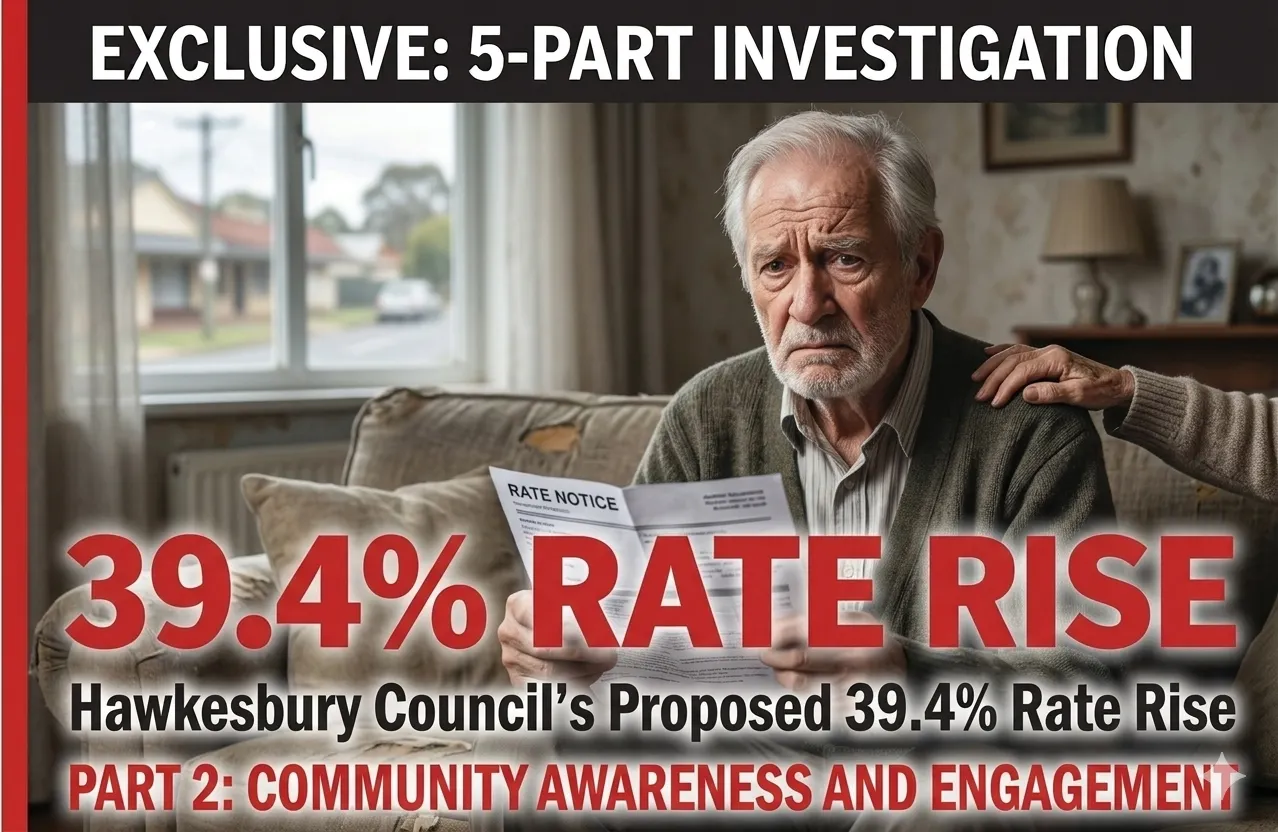
This is the second article in the Hawkesbury Gazette's investigation into the
proposed 39.4% rate increase sought by Hawkesbury City Council.
In Part One, we assessed whether the council demonstrated genuine financial need
in accordance with the assessment criteria set by the NSW Office of Local
Government.
This second article focuses on Criterion 2: Community Awareness and Engagement, a vital requirement that must be satisfied before the Independent Pricing and Regulatory Tribunal (IPART) can approve a Special Rate Variation (SRV).
Under the guidelines, councils must demonstrate not only that residents were
informed of the proposal, but also that the community had sufficient information to understand the reasons for the increase and its likely impacts.
The question is therefore not just whether people knew about the proposal, but
whether they were given enough information to make an informed judgement.
High Awareness - But Was the Community Fully Informed?
The council's application demonstrates significant community participation during the consultation on the proposed rate rise. According to the engagement data:
- Over 7,500 people accessed the council website during the consultation.
- Approximately 2,300 submissions were received from residents.
- A statistically valid survey of 400 residents found that 69% were aware of the
proposal.
On the surface, these figures show a high level of public awareness of the issue.
However, the main concern raised by critics is whether residents received all the
information necessary to properly assess the proposal.
The First-Rate Rise: Missing From the Conversation?
One of the main concerns raised is the limited explanation given to residents about
the result of the previous Special Rate Variation approved in 2018. That earlier rate increases raised rates by 31.29% over three years and was meant
to:
- enhance financial sustainability
- reduce the infrastructure backlog
- funding for capital works
Critics argue that consultation materials did not clearly explain how the funds from the previous rate increase were used or why a second rise is being proposed so soon.
Without that information, ratepayers might not have been able to fully assess
whether additional revenue would be directed differently.
Cost Blowouts and Major Projects
The consultation process has also faced criticism for not adequately explaining the
financial risks associated with several major projects.
Some projects funded through the NSW Government’s Western Sydney
Infrastructure Grants Program, formerly WestInvest, were already experiencing cost overruns and delays during the consultation period, according to the submission reviewed by the Gazette.
Critics argue that residents were not informed that the council might ultimately need to contribute additional funds to complete those projects. If that happens, it could put more pressure on council finances and possibly lead to higher rates.
What Did Residents Actually Say?
'While the council highlighted awareness levels during the consultation process, the community feedback results reveal a more complex picture.'
Based on the engagement data provided in the submission:
* 70% of survey respondents were against the proposed rate increase.
* Only 30% backed the proposal.
* Of around 2,300 written submissions, less than 5% expressed support.
* A petition against the rate rise collected 1,937 signatures.
The Council’s Engagement Insights Report also recognised that most community
responses expressed concern or opposition to the proposed increase. These figures indicate that although awareness of the proposal was high, community
backing was low.
Consultation After the Proposal Changed
Another issue raised concerns the changes made to the rate proposal during the
consultation period.
The Council initially suggested a larger yearly increase over three years, but then
changed the proposal to 8.66% annually over four years, resulting in the same total
increase of 39.4%.
While the council updated online information to reflect the change, critics argue that the revised proposal was not subjected to a new formal consultation period.
Because the revised proposal alters the timing and financial impact of the rate
increase on households, some argue residents should have been given another
chance to comment before the application was submitted to IPART.
Engagement Versus Consent
The debate ultimately highlights an important question about the way community
engagement should be understood. The Council can show that thousands of residents were aware of the proposal and participated in the consultation.
However, the data also indicates that most participants opposed the rate increase.
Under OLG guidelines, councils do not need to secure majority support for a rate
increase, but they must show that the community has been properly informed and
genuinely consulted.
Whether that standard has been met is a key question IPART will ultimately
determine.
Why This Matters
The Hawkesbury Gazette’s investigation takes place within the wider context of
comments from Local Government Minister Ron Hoenig, who has stated that the
State Government generally will not intervene in council affairs unless illegal activity is identified.
Instead, the Minister has stated that the final judgment on council performance is left to residents during elections.
For that reason, open public debate about council finances and governance has
never been more crucial.
Coming Next
Part Three of the Gazette’s investigation will examine the true financial impact of the proposed rate hike on Hawkesbury households and businesses, including the
combined effect of two special rate variations over ten years.