Music can be a strange elixir. As William Shakespeare famously observed across his works, it is the “food of love”, it can “kill care and grief of heart”, and even “make bad good, and good provoke to harm”.
Centuries later, science is catching up with the Bard.
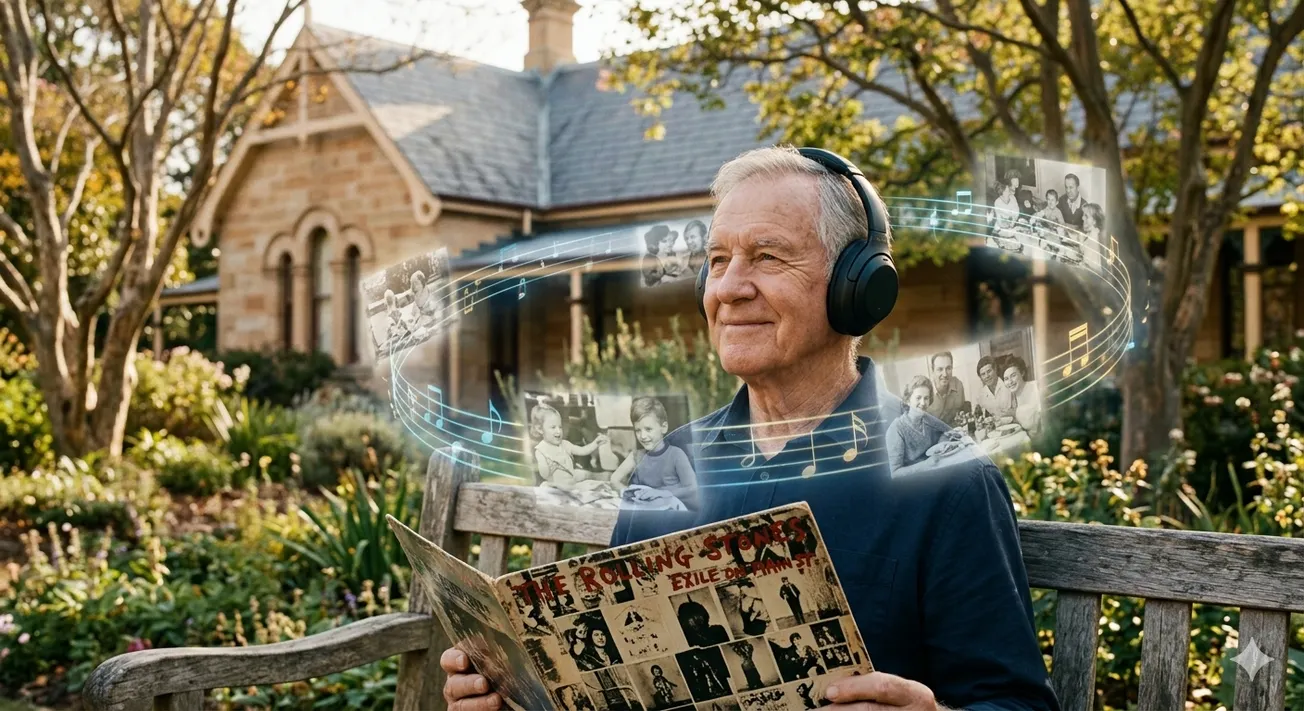
It has long been understood that music can unlock memories in people living with severe dementia, helping them reconnect with moments, people and emotions thought lost. Now, emerging research suggests music may also help delay the onset of cognitive decline in the first place.
A major study led by Monash University, involving more than 10,800 older adults, has found that regularly engaging with music could significantly reduce the risk of developing dementia.
The findings are striking.
Listening to music after the age of 70 was associated with a 39 per cent reduction in dementia risk. Playing a musical instrument was linked to a 35 per cent reduction.
Those who reported always listening to music saw the strongest benefits, including a 39 per cent lower risk of dementia and a 17 per cent reduction in cognitive impairment. They also recorded higher scores in overall cognition and episodic memory—the type of memory used to recall everyday events.
Participants who both listened to music and played instruments regularly experienced a 33 per cent decrease in dementia risk and a 22 per cent reduction in cognitive impairment.
While researchers are still working to understand exactly how music delivers these benefits, the early evidence points to its unique ability to engage the brain on multiple levels at once.
Studies into Alzheimer’s disease suggest that music with personal meaning—such as a wedding song or a track tied to a significant life moment—can strongly activate the parts of the brain most affected by the condition.
US-based geriatrician Scott Kaiser says music and the arts can have a powerful protective effect on brain health.
“A lot of that practice and patterns are deeply ingrained, so people can continue to do the things that they’ve done for a long time,” Dr Kaiser said.
Researchers are now exploring how to turn these insights into practical therapies. One emerging area of interest is combining music with physical activity—such as exercise, dance or singing—to maximise cognitive benefits.
While it is already well established that exercise improves blood flow and stimulates growth factors in the brain, there has been limited research into the impact of pairing movement with meaningful music.
“That’s where future studies may be particularly revealing,” Dr Kaiser said, noting that combining familiar music with activities like dancing or singing could potentially deliver even stronger results.
The research comes at a time when population ageing is becoming a major global public health challenge. Advances in medicine and technology are helping people live longer, but longer lifespans also bring increased rates of age-related conditions, including dementia.
Encouragingly, experts say brain ageing is not determined solely by genetics or age. Lifestyle and environmental factors—such as staying socially, mentally and physically active—can play a significant role.
Music appears to be one of the simplest and most enjoyable tools available.
Researchers believe its benefits include stimulating multiple brain regions linked to memory, emotion and attention, helping to build what is known as “cognitive reserve”. Regular engagement with music has also been associated with improved memory and overall cognitive performance over time.
Even in the later stages of dementia, familiar songs can help people reconnect with their identity and personal history.
For those looking to support their brain health, the advice is straightforward: make music part of everyday life.
Listen to favourite songs regularly, sing along—whether at home or in a group—and, if possible, take up or return to a musical instrument.
It may not be a cure, but as both Shakespeare and modern science suggest, music has a unique power to heal, connect and, perhaps, protect the mind.
This article was originally published by National Seniors Australia December 2025
Related reading: Pacific Neuroscience Institute, Monash