Hawkesbury residents completing the 2026 Census will be asked new questions about gender identity and sexual orientation, while changes to the ancestry section will allow people to provide a fuller account of their cultural background.
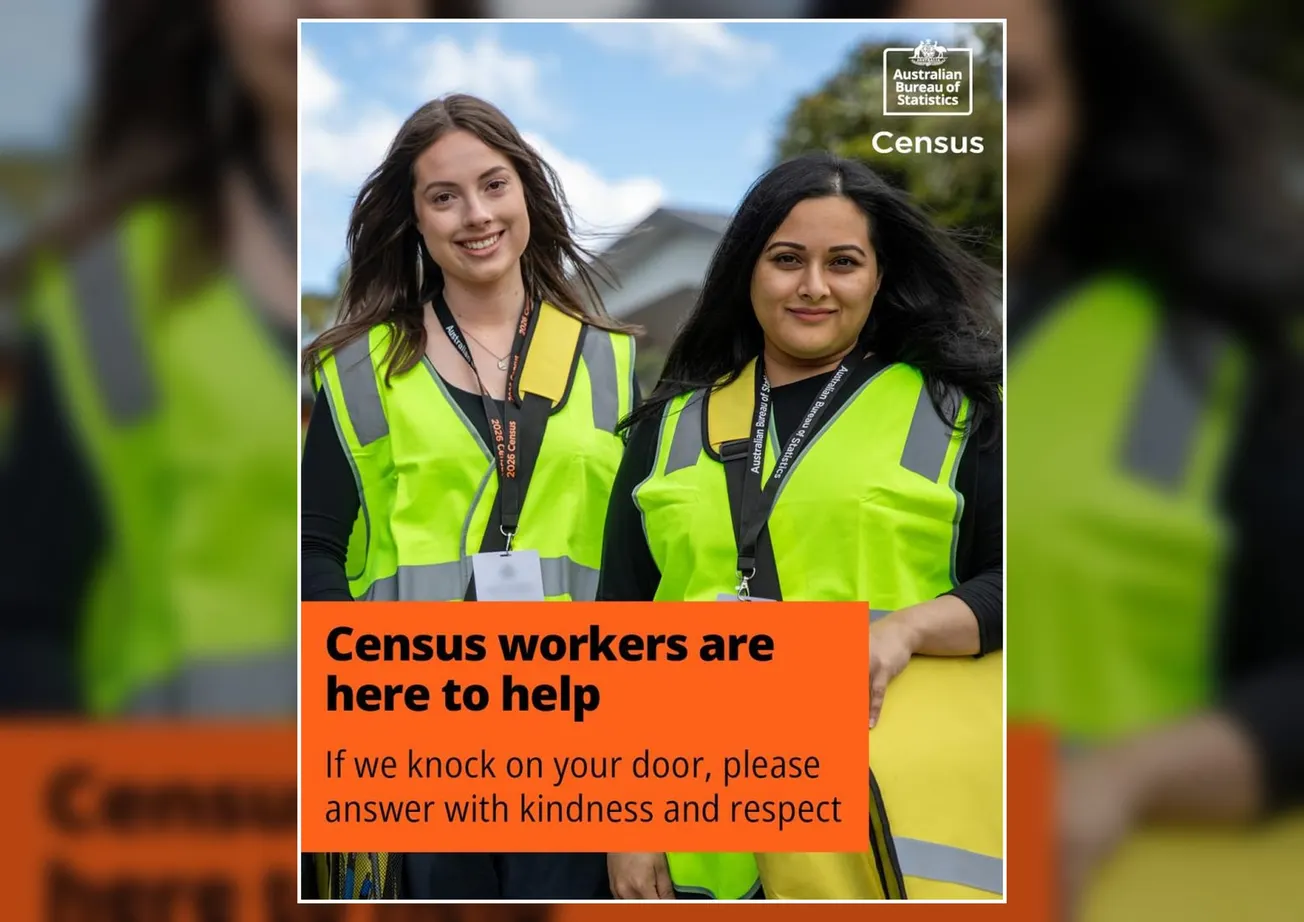
The Census of Population and Housing will be held on Tuesday, August 11, and will collect information used by governments, councils and community organisations to plan services, infrastructure and funding.
For the first time, people aged 16 years and over will be able to answer separate questions about their sex recorded at birth and their current gender.
Respondents will be able to describe their gender as male, female, non-binary or use another term.
An optional question about sexual orientation will also be included for people aged 16 and over, with response options including straight, gay or lesbian, bisexual, or another term entered by the respondent.
The changes follow years of calls from LGBTQI+ organisations for Australia’s national population count to include information about communities that have previously been largely absent from Census data.
LGBTIQ+ Health Australia chief executive Nicky Bath said inclusion in the Census would be significant for people who wanted their lives and identities reflected in national statistics.
She said the information could help determine the availability, funding and location of community and health services.
Equality Australia chief executive Anna Brown said better data could improve decisions relating to health, housing, education, aged care and community services.
Until now, governments and service providers have had no complete national picture of the number and distribution of LGBTQI+ Australians.
Questions remain about who will not be counted
The new gender question will not be asked of people younger than 16.
Advocates say this means parents and carers will not be able to record the gender identities of transgender or gender-diverse children through the Census.
The Census will also not include a separate response category intended to count people born with variations in sex characteristics, sometimes described as intersex.
The Australian Bureau of Statistics has said its standards do not support including “intersex” as a response to a general sex question because it may produce unreliable data and reinforce the misconception that intersex people are neither male nor female.
Advocacy groups have indicated they will continue seeking a reliable method for collecting information about Australians with innate variations of sex characteristics.
More room to record ancestry
Another major change will allow people to provide up to four ancestry responses.
Previous Census forms permitted only two.
The ABS says the change is intended to provide richer information about Australia’s cultural composition and better reflect people with multiple family, cultural or ethnic backgrounds.
For the Hawkesbury, the expanded responses could provide a more detailed picture of the district’s long-established families, newer migrant communities and residents with mixed cultural backgrounds.
The Federation of Ethnic Communities Councils of Australia has supported the change, saying it could produce important information about both culturally diverse and First Nations communities.
The ABS has also expanded the number of Aboriginal and Torres Strait Islander languages that can be recorded on the Census form as part of efforts to improve the national count of First Nations people and better reflect cultural identity.
Bicycle and e-bike travel recognised
The question asking employed people how they travelled to work will also contain a separate bicycle category, including e-bikes.
The ABS says the update reflects contemporary transport choices.
That information could be particularly useful to councils and transport planners when assessing cycling routes, road safety, parking, public transport connections and travel patterns.
Why the Census matters locally
Census data helps determine where schools, hospitals, aged-care services, roads, public transport and community programs are needed.
It also provides Hawkesbury City Council, government agencies and local service organisations with information about population growth, household composition, income, employment, housing and cultural background.
The first 2026 Census data is expected to be released from June 2027, with results published in three stages.
For Hawkesbury residents, this year’s Census will not simply record how many people live in the district. It will provide a more detailed account of who they are, how they identify, where their families came from and how the community is changing.