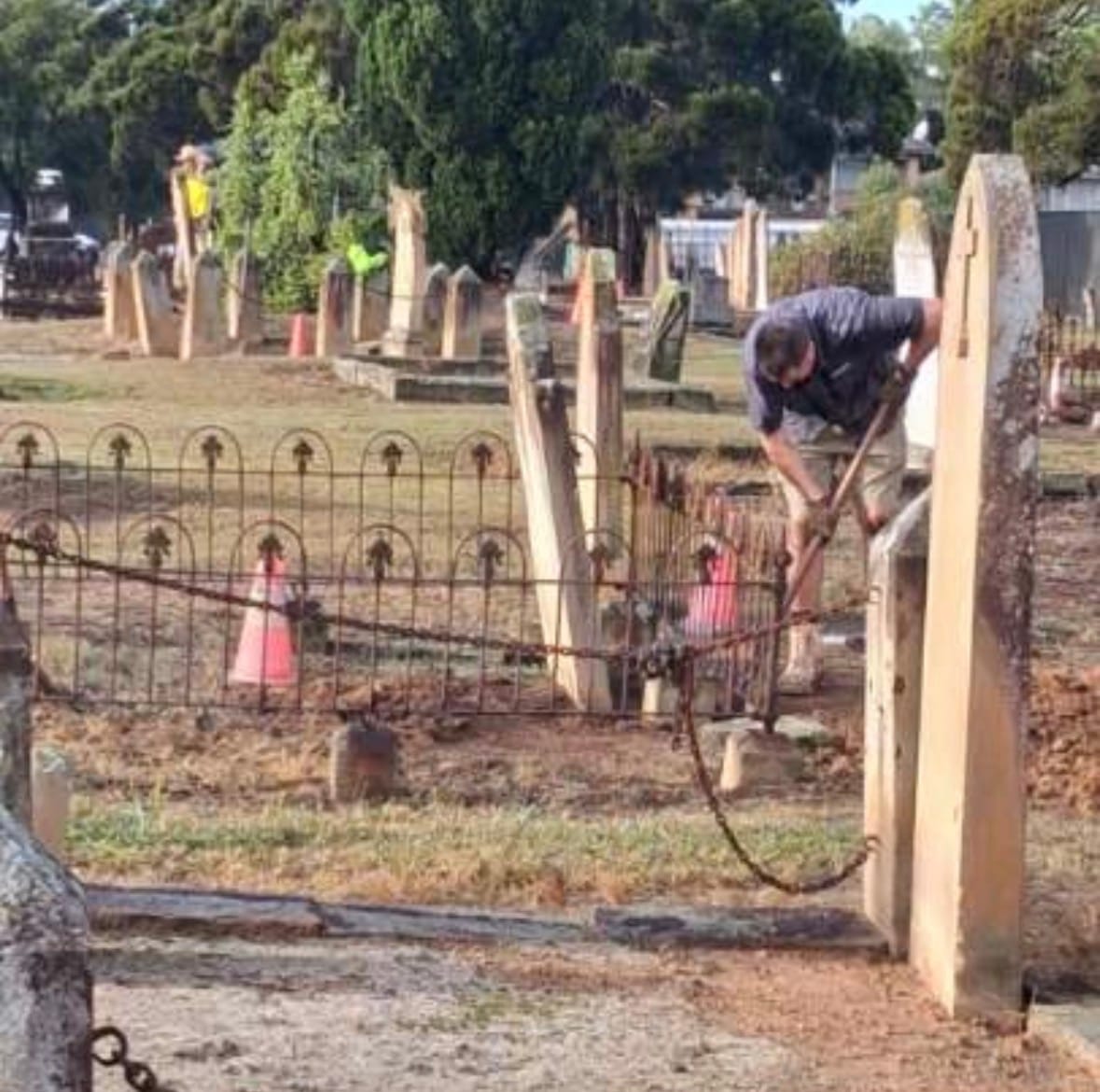
A delicate rescue operation is underway in one of Australia’s oldest burial grounds, as specialist crews work carefully among the weathered graves and fading sandstone monuments of Windsor’s historic Catholic cemetery.
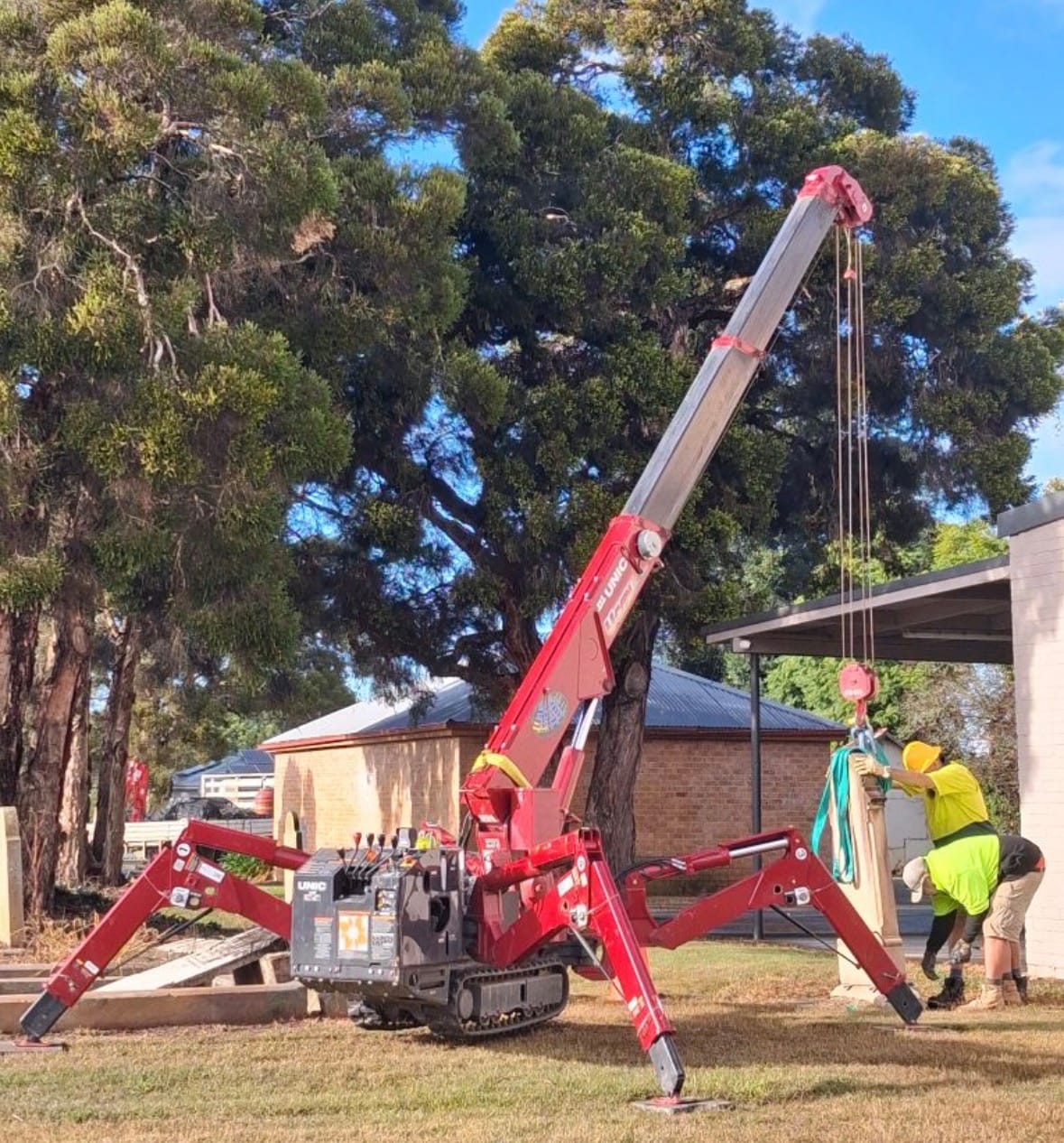
Using a tight-access crane specially designed for confined heritage spaces, workers spent today stabilising and recovering fragile structures within the two-century-old burial ground, a site deeply woven into the tragic and turbulent history of the Hawkesbury.
The cemetery, first promised by Lachlan Macquarie in 1821, is far more than an old graveyard.
It is the resting place of some of the Hawkesbury’s most haunting stories.
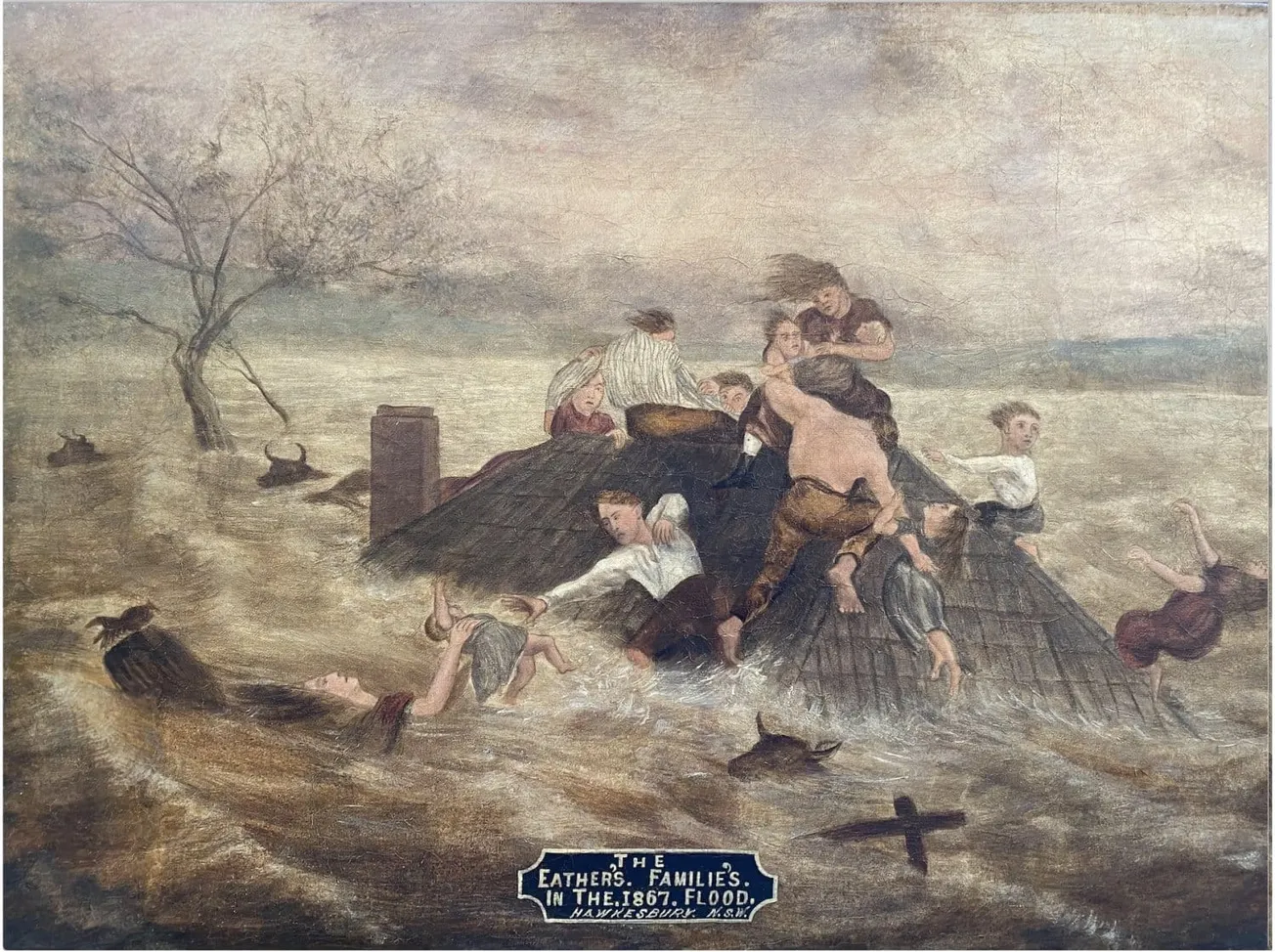
Among those buried there are the only recovered remains connected to what is widely regarded as Australia’s greatest natural disaster to devastate a single family, the drowning of twelve members of the Eather family during the catastrophic Great Flood of 1867.
Ten children and their two mothers were swept away while clinging to the roof of their home as raging floodwaters tore through the Hawkesbury.
The tragedy became one of colonial Australia’s most heartbreaking flood stories and remains etched into local memory more than 150 years later.
The burial ground also contains the remains of a victim of Windsor’s second great disaster, the devastating fire of 1874 that destroyed more than 50 buildings and ranks among the worst urban fires in colonial Australian history.
Together, the graves tell the story of a community repeatedly shaped by flood, fire, hardship and survival.
Today’s conservation work is aimed at preserving that history before time, weather and repeated natural disasters erase it forever.
The operation required the use of specialised equipment capable of navigating the narrow and fragile cemetery grounds without causing further damage to historic gravesites or monuments.
For many locals, the rescue effort is about far more than stone and soil.
It is about protecting the memory of the Hawkesbury itself.
The cemetery stands as a rare physical connection to the district’s earliest settlers and the tragedies that shaped one of Australia’s oldest river communities.
Local historian Michelle Nichols, author of Disastrous Decade: Flood & Fire in Windsor 1864–1874, has spent years documenting the human stories behind the region’s disasters and is currently leading cemetery history tours throughout the month.
Her research highlights how deeply flood and fire shaped the Hawkesbury’s identity, not simply as historical events, but as shared community trauma carried across generations.
The rescue effort has also prompted calls for greater recognition of the site’s historical significance and stronger heritage presentation standards.
Renowned Hawkesbury artist Greg Hansell has reportedly expressed support for a commemorative plaque and interpretive artwork to become part of a formal Windsor heritage walking trail connected to the cemetery.
Michelle Nichols OAM is also described as strongly supportive of recognising the importance of the burial ground, with her long-running cemetery tours helping preserve community awareness of the site and its stories.
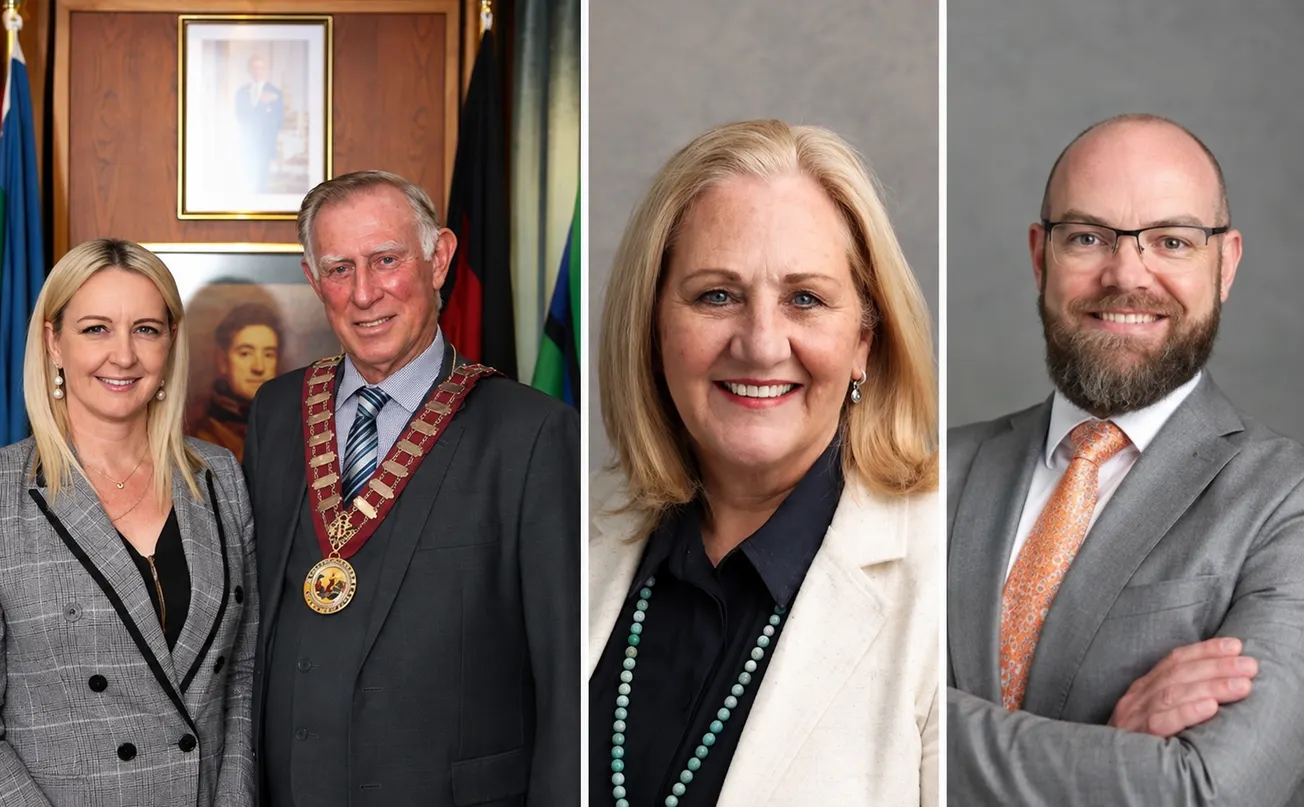
According to material supplied to the Gazette, local heritage advocate Grant was recently shown the gravesite by Mayor Cr Les Sheather, who reportedly stood at the grave of Catherine Eather and expressed support for improving recognition of the cemetery’s significance.
The site also retains strong connections to local schools and families. Ben Ticehurst reportedly noted that descendants of the Eather family have remained connected to the Hawkesbury community across generations.
In a region still defined by floods today, the old cemetery serves as a powerful reminder that the Hawkesbury’s relationship with disaster is not new.
It has been written into the landscape and into the graves of its people for more than two centuries.
And thanks to today’s rescue operation, some of those forgotten stories may continue to survive a little longer.