Anti-immigration signs in Richmond. A social media post on an Oakville community page calling for “anti-immigration youth activism.” The Deputy Mayor photographed at a “March for Australia” rally. The Hawkesbury’s long tradition of welcoming newcomers is being tested as the national migration debate spills into local streets and social media feeds.
The issue was raised in the NSW Parliament last month by Peter Primrose MLC, who represents constituents in north-west Sydney. Mr Primrose warned of “increasingly divisive rhetoric” on migration and multiculturalism in the growing outer suburbs, including the Hawkesbury.
In part 1 of this 4 part series, we looked at how the national migration debate is beginning to affect community cohesion in the Hawkesbury. One reason these debates so often generate more heat than light is that the categories at their centre, citizen, permanent resident, and temporary visa holder, get blurred together in everyday conversation. The legal differences are real, and the public services each group can access vary widely.
Citizens, and Permanent residents visa holders
An Australian citizen has full legal membership of the nation. Citizenship is acquired by birth in Australia (in some circumstances), descent from Australian parents, or by conferral after meeting residency and character requirements and passing the citizenship test.
A permanent resident has the indefinite right to live, work and study in Australia but remains a citizen of another country. Permanent residency is most commonly granted through skilled migration, family visas, employer sponsorship, or humanitarian pathways. Many permanent residents, including a large number of UK migrants, live in Australia for years or decades before deciding whether to apply for citizenship.
A temporary visa holder in Australia holds a time-limited visa: international students, working holiday makers, temporary skilled workers and others. Temporary visa holders make up the majority of Australia’s net overseas migration figure each year, but their rights and entitlements are much more limited.
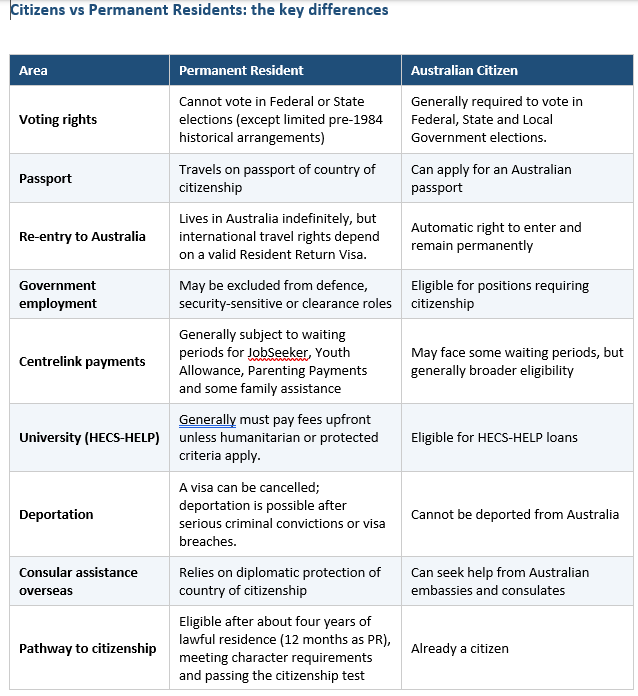
The differing rights of citizens and permanent residents are set out below.
Proposed changes to Permanet Residents rights
The Leader of the Liberal Party National Party Coalition opposition, Angus Taylor has argued that access to certain government-funded welfare and support programs should be reserved for Australian citizens.
"If you are not an Australian citizen, then you don't get the privileges of an Australian citizen." Angus Taylor Leader Liberal Party National Party Coalition.
Under proposals discussed publicly, some Commonwealth benefits currently available to eligible permanent residents could become restricted to citizens.
Programs potentially affected include:
- JobSeeker.
- Youth Allowance.
- Family Tax Benefit.
- Paid Parental Leave.
- Carer payments.
- The National Disability Insurance Scheme (NDIS).
- Certain pension and income-support programs.
The Coalition has argued that citizenship should carry additional privileges and that access to taxpayer-funded benefits should form part of the incentive to become an Australian citizen. Supporters of the proposal argue that citizenship should represent a clear commitment to Australia and should provide benefits beyond those available to permanent residents.
Why Is It Controversial?
Critics argue that permanent residents already contribute significantly to Australian society.
Many pay taxes, own businesses, employ staff, volunteer in community organisations and work in essential industries such as health care, aged care, agriculture and construction.
Some permanent residents also come from countries that do not permit dual citizenship. Becoming an Australian citizen may require them to surrender citizenship of their country of birth, a decision that can have personal, financial and family consequences.
Critics say restricting access to benefits could create a two-tier system in which people who have lived, worked and paid taxes in Australia for many years would receive fewer entitlements than citizens.
Supporters counter that citizenship should have tangible benefits and that the distinction between citizens and non-citizens should be meaningful.
What Does This Mean for Hawkesbury?
The Hawkesbury has traditionally been a diverse community shaped by migration.
While many local residents are Australian citizens, the district is also home to permanent residents who contribute to sectors including:
- Agriculture and horticulture.
- Aged care.
- Childcare.
- Health services.
- Hospitality.
- Small business.
- Transport and logistics.
Local employers in many industries already report difficulty attracting workers. Any change affecting migration settings, citizenship pathways or access to government services is therefore likely to have local consequences. The debate also comes at a time when housing affordability, population growth and infrastructure provision remain major political issues across Australia.
What about Australian Values? Take the citizenship test.
All applicants for Australian citizenship must undergo identity checks and demonstrate an understanding of the responsibilities and privileges of Australian citizenship. This is done in part, by passing the citizenship test.
The Australian Citizenship Test, is designed to ensure they understand Australia's history, democracy, laws, rights and responsibilities, and the values that underpin our society.
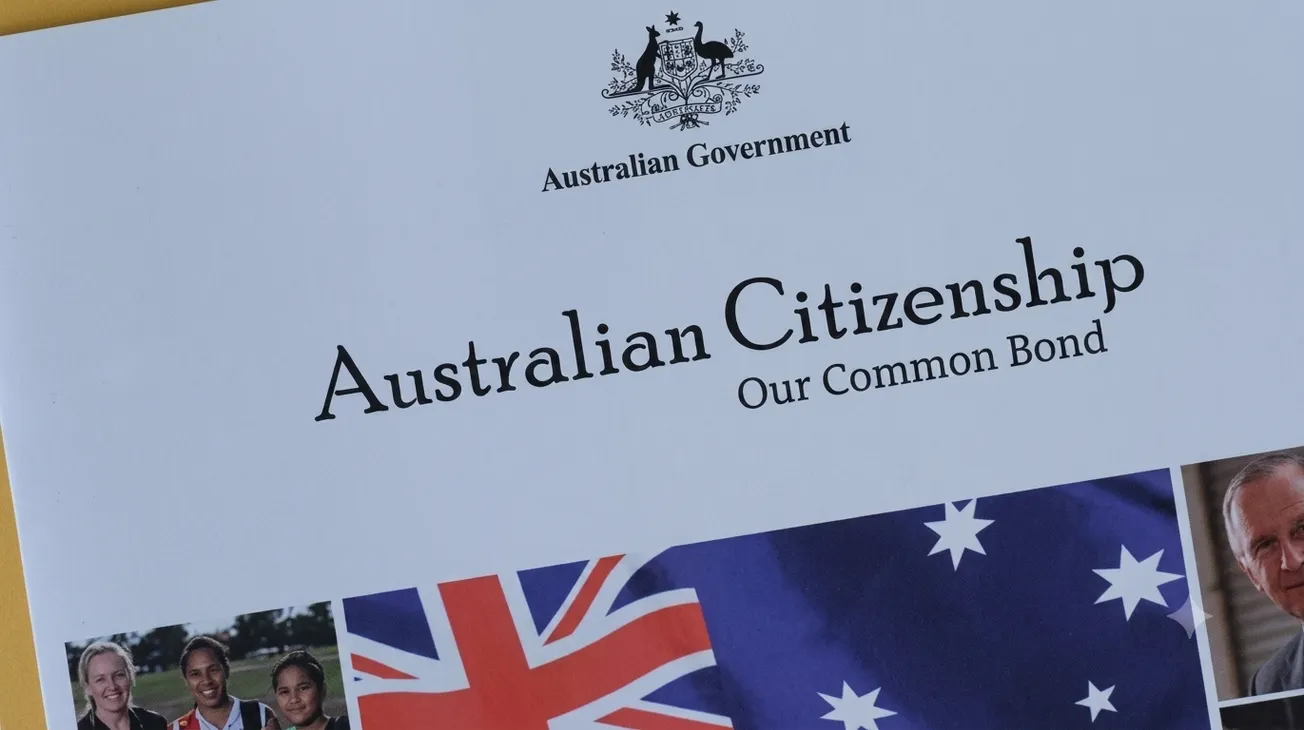
The test is based on the Australian Government's official resource book, Australian Citizenship: Our Common Bond. Applicants must correctly answer questions about Australian values and achieve an overall pass mark of at least 75 per cent, and 100% correct answer all questions relating specifically to Australian values.
Take the official citizenship practice test: citizenshippracticetest.homeaffairs.gov.au
Citizen or Permanent Resident?
The discussion highlights a broader question that Australia has grappled with for decades. Should citizenship simply formalise a status that permanent residents already largely enjoy?
Or should Australian citizenship provide rights and privileges that are unavailable to those who choose not to take that final step? Regardless of where people stand politically, the debate serves as a reminder that citizenship and permanent residency are not the same thing.
For some Australians, the distinction is largely symbolic. For others, it may soon have practical consequences affecting access to services, financial support and government programs.
As the national discussion continues, many Hawkesbury families may find themselves paying closer attention to a question that once seemed largely academic: What does it actually mean to be Australian?
Missed Part 1: https://www.hawkesburygazette.com/hawkesburys-social-glue-is-stretched-as-migration-debate-intensifies/
Next: Part 3: What about all these new migrants I see in Richmond and Windsor? Temporary visa holders and why the matter so much to Hawkesbury's future.